- MAKKAH: Budding philanthropists often increase their charitable activities during Ramadan.
The most popular form of charity in Makkah is distributing iftar meals to the poor and pilgrims. The distributors position themselves on roads leading to the Grand Mosque hours before iftar.
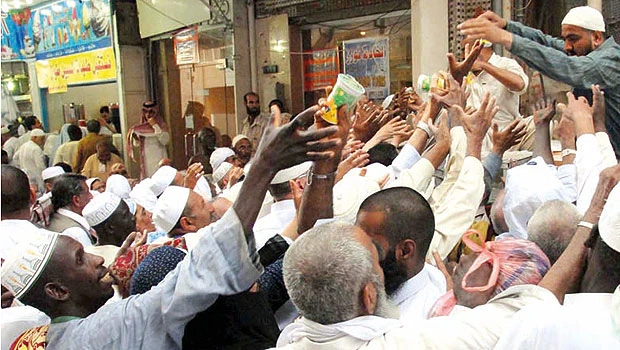
Because this form of charity is not organized and depends largely on individual effort, there is every chance of the good intentions going awry, especially with the crowd milling around the distributor for their share or more. The crowding, in some cases, results in injuries.
The philanthropists distribute the meals using small pickup trucks and sometimes their own cars.
Charity organizations, meanwhile, feel that this haphazard distribution defeats the very purpose of giving during this holy month. Because there’s a lack of organization in this type of iftar meals distribution, many poor people are not benefiting.
People fight to get the meals. Apart from the push and the crush, people’s action in snatching the meals from the back of the vehicles or from the hands of the beneficiaries themselves trigger flash fights. The fact that the person fighting for the free iftar meals may not need the food is immaterial.
The irony is that those deserving these meals are the ones that are pushed to the ground or forced into fistfights, while others collect large quantities of these iftar meals from distributors. Some of these collectors take the meals home, while some sell them later.
Despite the abundant free food available around the Grand Mosque, people collect these iftar meals and store them. The people who hoard these meals do not realize that their actions are contributing to more wastage of food.
The food in the meal packs is cooked and cannot be kept for long, and it perishes. People who have picked these packs hoping to savor the contents later, or failing to sell them off in the allotted time, find the food has rotted and have to throw them into the bin.
Najlaa Reda, former head of Umm Al-Qura Charity Society for Women, said that there are many philanthropists who refuse to give their food to charity organizations and responsible authorities for distribution.
She blamed neighborhood groups for not encouraging them to direct their aid to the right organizations instead of distributing them individually.
She said: “There are some philanthropists who organize food baskets for the poor with the help of charity organizations. These baskets find their way to the homes of poor families.”
An official from the Saudi Red Crescent said the jostling among people to get free iftar meals caused injuries and led to people fainting. He said that there have also been cases of people suffering from food poisoning.
Muhammad Al-Sahli, head of Islamic studies at Umm Al-Qura University in Makkah, agreed philanthropists need to distribute free iftar meals in a systematic way.
“Iftar meals drop to the ground and are wasted. The philanthropists should cooperate with responsible authorities to make sure that it reaches the needy. Then there are people who take more than they need and this should be checked,” he added.