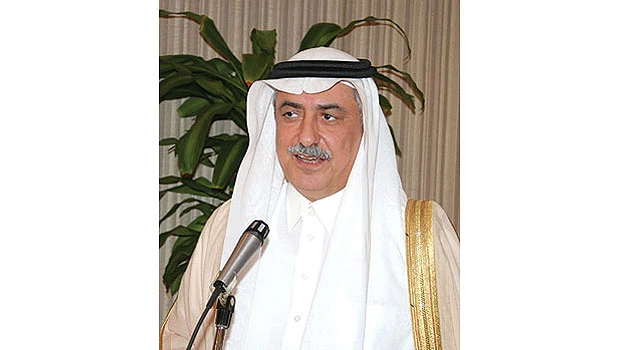
- JEDDAH: The amount allocated for new development projects in the 2012 budget is several times more than the figure five years ago, Finance Minister Ibrahim Al-Assaf told Saudi Television on Monday night.
He also pointed out that public debt has been cut down from 102 percent to 6.3 percent of the gross domestic product.
"Annual spending on new projects was about SR92 billion four or five years ago. But in the new budget the amount allocated for new projects is SR265 billion," he said while explaining the major features of 2012 budget.
He said the increased spending on welfare and infrastructure projects during the past years has put pressure on government departments and contracting companies.
"This year we have spent about SR280 billion on new projects," he pointed out.
He downplayed the issue of stalled projects, saying many indicators show substantial improvement in the implementation of projects. "The Ministry of Education has received 900 school buildings this year and about same number last year," he said.
According to contractors, several public and private projects worth SR550 billion are delayed due to many reasons including red tape, lack of manpower and shortage of funds. But Al-Assaf put the blame on contractors and technical reasons for the delay. "It has nothing to do with budget allocations," he insisted.
Al-Assaf said the new budget, which has allocated a record SR690 billion for public spending, SR110 billion more than that of 2011, has focused on major sectors such as education and manpower training, health, infrastructure, water and electricity.
The minister said the Kingdom’s economic performance in 2011 was the best in 20 years with a growth rate of 7.8 percent. “All indicators show that the performance of the national economy this year was excellent, especially when we take into consideration the global financial scene,” he added.
Speaking about public debt, Al-Assaf said, “About 20 years ago, the Kingdom’s public debt was 102 percent of the GDP. As a result of an increase in revenue and growing national economy we have been able to slash it to 6.3 percent of the GDP. This is a good rate.”
He said the budget had given utmost importance to tackle unemployment among the Saudis. “We have taken a number of measures in this respect, most importantly preparing young Saudi men and women to meet job market requirements. The new universities and institutes will focus on courses tailor-made for the economy,” he stated.
Labor Minister Adel Fakeih commended the new surplus budget. “The huge amounts contained in the budget reflect the Saudi leadership’s desire to further boost the country’s development and strengthen the Kingdom’s competitiveness,” he said, adding that it would also create more job opportunities for Saudis.
He thanked the government for allocating SR168 billion for education and manpower training, saying it would support his ministry’s efforts to employ more Saudis in the public and private sectors and reduce Saudi unemployment.
“The payment of unemployment allowance and the introduction of Nitaqat system and Hafiz employment program have improved the condition of Saudi jobseekers,” Fakeih said, while commending his ministry’s e-government services for the public.
Custodian of the Two Holy Mosques King Abdullah, who unveiled the new budget during a Cabinet session at Al-Yamamah Palace in Riyadh on Monday, said the budget was aimed at strengthening the Kingdom's development and creating more jobs for Saudis.
The budget, which projected SR702 billion in revenue, has allocated SR87 billion for health and social development, SR58 billion for water, industry, agriculture and infrastructure, SR35 billion for transport and communication and SR29 billion for municipal services.
Fahd bin Abdullah Al-Mubarak, the newly appointed governor of the Saudi Arabian Monetary Agency, said the 2012 budget reflected the Kingdom’s economic and financial strength. “The continuing increased spending will lead to the growth of many sectors and will have a positive impact on the banking and financial sector,” the governor said, adding that Saudi banks would continue to finance development projects and extend innovative services to their clients.