
- NEW YORK: Global stocks and the dollar seesawed on Monday, pressured by disappointing Chinese data and a day ahead of a Federal Reserve meeting at which policymakers could signal reduced chances for more monetary easing.
Markets started the day on a wary tone after China notched its biggest trade deficit in at least a decade in February, fueling fears that global demand is week.
In addition, recent signs of improvement in the United States, the world's biggest economy, have dampened hopes of more easing from the Federal Reserve. Tuesday's meeting could see the Federal Open Market Committee acknowledge the recent spate of stronger data, with traders on the lookout for any hints about additional stimulus.
"After Friday's strong jobs data there is a chance that the Fed could come across slightly less dovish," said Joe Manimbo, a markets analyst with Western Union Business Solutions in Washington, D.C. "If that scenario were to play out, that would tend to take further pressure off the dollar."
The dollar fell 0.2 percent against a basket of currencies, down from a nearly seven-week high earlier.
The dollar eased against the euro, but the single currency is expected to struggle in the coming weeks as relief over Greece's successful debt restructuring deal gives way to concerns of contagion from other debt-laden European countries.
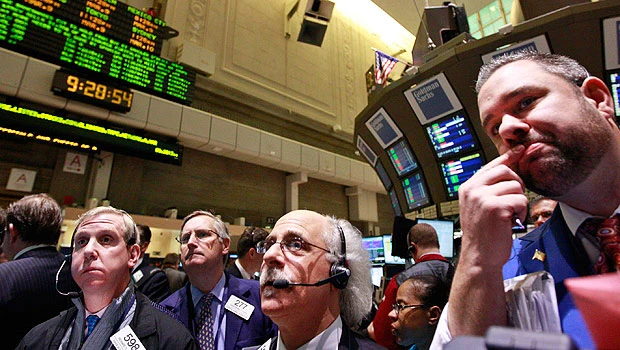
On Wall Street, stocks were little changed. The Dow Jones Industrial Average gained 40.42 points, or 0.31 percent, to 12,962.44. The Standard & Poor's 500 Index gained 0.16 points, or 0.01 percent, to 1,371.03. The Nasdaq Composite Index dropped 3.94 points, or 0.13 percent, to 2,984.40.
Investors were also awaiting Tuesdays' data on US retail sales for February, which is expected to show a healthy 1 percent rise.
"We're trading in a holding pattern ahead of US retails sales," said John Doyle, a currency strategist with Tempus Consulting in Washington, D.C. "We're looking for confirmation of the positive trend from the jobs data."
There is a risk the US recovery will not be strong enough to overcome the slowdown in Europe, said Neil Williams, chief economist for Global Government and Inflation-Linked Bonds at
Hermes Fund Managers.
"While the US recovery looks genuine and should be sustained, it's likely to lack the vigor to either turn off the four years of policy 'steroids' that has caused it, nor provide the lifeline needed to solve the other big economies' problems, particularly in Europe," he said.
The benchmark 10-year US Treasury note was unchanged, with the yield at 2.0279 percent.
The mid-point of the official trading range for the Chinese yuan took its second-biggest single-day fall on record as China signaled it was willing to let its currency move within a wider range.
Analysts said the drop did not appear to be linked to monthly trade data. But it comes as the central bank said China has ample room to cut further the reserve requirement ratio for
banks, a form of policy easing.
The MSCI world equity index also reflected the weakness in Asian markets. It was down 0.22 percent at 328.89, though still up about 9.8 percent for the year.
In Europe, renewed demand for bank shares after the Greek debt restructuring prompted some early gains in European stocks, but markets turned lower as debt concerns moved west to Spain and other peripheral countries.
Greece averted the immediate threat of an uncontrolled default on Friday when enough private creditors agreed to a bond swap deal to clear the way for a new bailout.
Yields on safe-haven 10-year German government bonds hit two-month lows, while yields in Spain
and Portugal — which has been bailed out once — rose.
The FTSE Eurofirst 300 index closed down 0.2 percent at 1,077.10 points.
Banks, which have the most direct exposure to sovereign debt, lost 1.2 percent. Royal Bank of Scotland and Barclays fell 3 percent and 2 percent, respectively.
The euro moved off near one-month lows to climb 0.29 percent to $1.3151 against the dollar, with thin trading ahead of the Federal Reserve meeting exacerbating moves.
Euro zone finance ministers will sign off on a second bailout package for Greece on Monday and shift their focus to Spain, which is set to miss its deficit target again this year in what could undermine the EU's new budget rules.
Oil took its lead from the Chinese data and the global growth concerns, with Brent crude near $125 a barrel, ignoring the support offered by a better outlook for the US economy and Middle East supply concerns.
Brent crude oil futures for April fell 0.52 percent to $125.32 a barrel, while US crude was down 0.87
percent at $106.47.