- Georgi Gospodinov’s book 'Death and the Gardener' explores the profound relationship between a father and son amidst themes of grief and mourning
JEDDAH: While browsing a European bookshop on my recent travels, I asked a staff member to recommend something deeply devastating to sink myself into as the rain tap-danced behind the closed door.
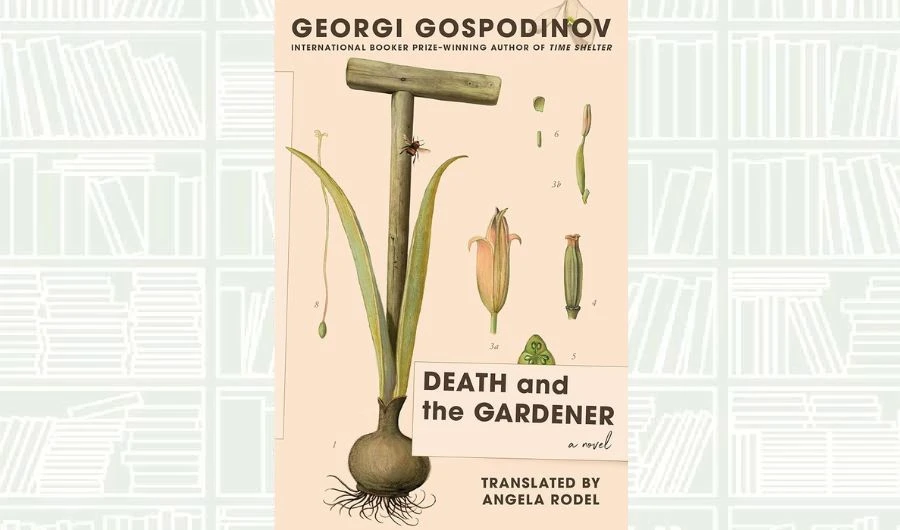
Before she could even respond, my hand gravitated to a book cover that looked like it could play the part perfectly: Georgi Gospodinov’s “Death and the Gardener.”
After reading the very first line, I knew I had made the right decision. It read: “My father was a gardener. Now he’s a garden.”
“That’s a great choice. You’ll definitely cry reading that,” was the response from another staff member as I pulled out my money to pay. And what a cry it was.
The protagonist, like the author of the real novel, is called Georgi and is also an author. The real author wrote the story following his own father’s recent death.
The auto-fiction genre allows Gospodinov the freedom to write a raw narrative that is both true but where some of the details are not. It deliberately blurs fact and feeling.
It is a gorgeously lyrical book about an empathetic middle-aged son mourning the dying and death of his seemingly stoic father — who was never stoic at all — but forced to wear generational armor while living behind the Iron Curtain in communist Bulgaria. Now a father to a daughter, the author finds himself grief-stricken and reflective in a new way.
The book was first published in 2014 in Bulgarian, and translated more than a decade later into English by Angela Rodel; out in hardcover in 2025, then in paperback earlier this year.
The award-winning duo previously worked together on several projects, most notably when they jointly won the 2023 International Booker Prize for “Time Shelter.” The award stipulates that the honor and £50,000 purse be split equally between the author and the translator.
This newer work, which was also translated by Rodel, will definitely move you. Nearly every line is quotable and could be a standalone story on its own.
“I don’t know what to do with my mother, who doesn’t know what to do with my father’s clothes and keeps washing them every week,” he writes in the aftermath of his father’s passing. “I don’t know what to do with Jacko the dog, who is still waiting for him and who will wait for him until the very end.
“I don’t know what to do with my utter ignorance of what to do in the garden, when to lime the trees, when to plant this or that, how deeply, and how often to water,” the author continues. “I don’t know what to do with the stories I never asked him about and which remain untold ... I don’t know what to do with this thing I’m writing, which is supposedly for him, but it’s also for me and for all the fathers whose footsteps we race to catch up to.”
Whether you cry or not is your call.