The year is off to a poor start, both for the global economy and markets.
For the global economy, signs are emerging that manufacturing production stumbled in Q4 in both China and the US.
Trade remains stagnant while inflation is dormant.
Corporate profits seem to have peaked, wage growth is muted, and investment is lackluster.
Consumer sentiment is still holding up in some pockets, although the risk of negative wealth effect from the selloff in asset markets is increasing by the day. Add to this political tension stemming out of the Middle East and North Korea, there is a large combination of risks afflicting the global economy presently.
Global investors are taking a ‘sell first and ask questions later’ approach.
Ever since the end of QE3 in late-2014, leadership across asset markets has shifted sharply away from stocks and bonds, to the US dollar, volatility and cash.
In 2015, cash outperformed both stocks (down 2 percent) and fixed income (down 3 percent), for the first time since 1990. The new leadership is unchanged in the early going in 2016.
Cash, gold and government bonds are the sole assets in positive territory thus far.
The skepticism that now dominates daily market activity will only be overcome with time, calmer global markets, and improving economic data. However, this is not the time to panic!
Despite all this carnage, flows are still calm in the US and the real problem is more a buyers strike instead of panicked and forced selling.
We believe both stocks and credit markets are clearly resetting lower to new trading ranges.
This is not an investable period for investors.
This development should be played in the US equity market via rotation from “aggressive growth” to “defensive growth”, particularly consumer staples.
Meanwhile, in Europe, Japan and China, regions that remain plagued by debt deflation, the high dividend yield theme should remain dominant (see how successful that strategy has worked in a deflating-Japan over the past 20 years in the chart below).
Japan’s best performing deflation strategy
On the FX front, the US dollar is expected to continue to remain on its appreciative path at least until first half of 2016.
A stronger dollar, all else constant, means a slower Fed hiking cycle, but it is worth remembering that the Fed anticipates four rate hikes this year compared to two from the market so the impact of a stronger dollar is to a large extent priced in.
China’s currency is again a major source of volatility. Taking a step back however, the message that is being sent over the last few days is rather straightforward: China will no longer tolerate competitive devaluations from the rest of the world.
The Chinese economy has suffered because the currency has been fixed to the US dollar even as the rest of world has been busily devaluing. 2016 marks the end of this regime.
EM currencies against
the US dollar
Clearly for any price recovery in oil, the US dollar will have to consolidate its appreciative surge.
Possible conditions for a floor in crude oil prices are coming together: spot crude prices are nearing cash costs, a bumper US driving season is approaching, the CNY is finally starting to move toward fair value, shale production is falling, and WTI has now matched Brent.
Its puts legitimacy to some global commentators predicting a bottoming out of global crude oil prices in the first half of 2016 and a recovery into the summer months.
The Global investor panic has also effected markets in the MENA region, however this is unsustainable in our view.
There might be more volatility near term from lower oil prices, but history reminds us that during these periods opportunities are also born.
Valuations are looking very attractive. And value is starting to appear from high quality companies in the Gulf region.
There are still companies that have a limited or no effect from the economic uncertainty and have healthy balance sheets that could generate and pay cash back to investors. 2016 will be a busier year for GCC investors given the opportunities and offers that the markets will provide.
Summary:
Volatility will become the new norm in 2016, so investors will have to learn to navigate investments under this environment.
We would advise investors to be long “defensive growth” in the US, “yield” in Europe and Japan, markets may be tactically oversold but, Positioning, Profits & Policy argue that stocks and credit markets are clearly resetting lower to new trading ranges.
Entry points will appear whether that’s the PMI going above 50 in the US and China (remember PMI is highly correlated to earnings growth) or oil price recovery above $40 per barrel.
If this happens EM asset could also come back into play given their current very deep oversold territory.
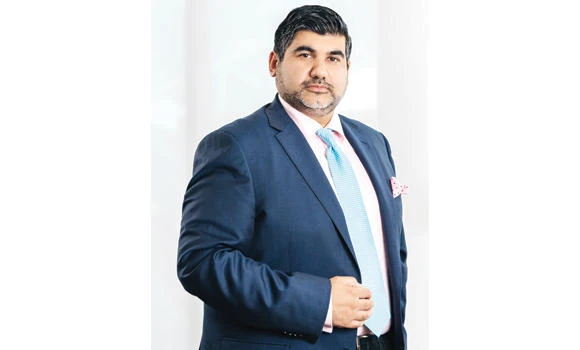
— Kamran Butt is managing director and head of advisory at SEDCO Capital.
2016 will be a busier year for GCC investors