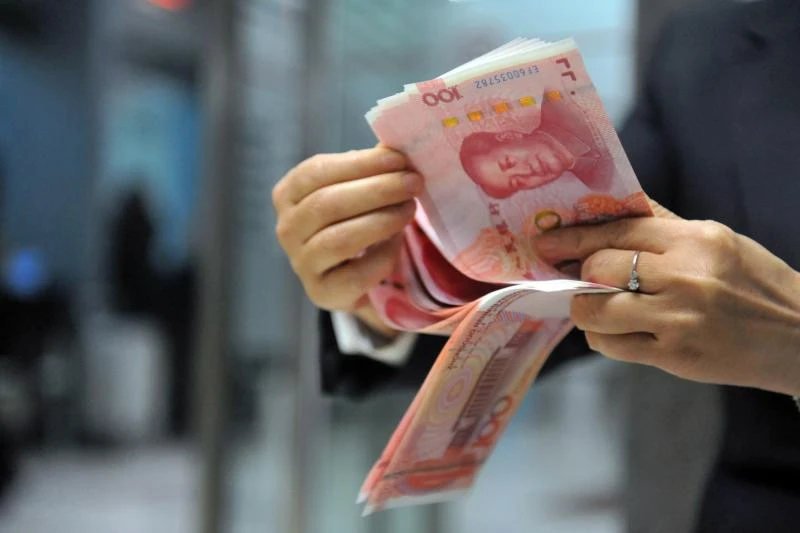
HONG KONG: The International Monetary Fund’s decision to add China’s yuan to its reserves basket is a triumph for Beijing, but the fund’s verdict that the currency met its “freely usable” test will have little financial impact unless Beijing recruits more users.
The desire of Chinese reformers to internationalize the currency has a clear economic rationale; a yuan in wide circulation overseas would reduce China’s dependence on the dollar system and on policy set in Washington.
It would also make it easier for Chinese firms to invoice and borrow offshore in yuan, reducing the risk of exchange rate fluctuations and prompting China’s inefficient state-owned banks to improve their performance or lose business.
Those concerned about a potential global liquidity crisis caused by overdependence on the US might also welcome the yuan as an alternative to the dollar, as would countries locked out of dollar capital markets by sanctions.
But to serve these purposes, there needs to be a much bigger pool of yuan outside China, which requires offshore institutions, and not just in Hong Kong, to buy and hold yuan.
For that, Beijing needs to liberalize the way money flows in and out of China and to grant the big foreign money managers easier access to an onshore bond market that is already attractive in terms of yield, size and credit rating.
“We have been evaluating China for years and the backdrop is relatively attractive from a fundamental standpoint, but we can’t obtain the access,” said Chris Wightman, a senior portfolio manager at giant US financial group Wells Fargo.
“Currently the only access we can gain to that market is through the Hong Kong listings and they are very expensive from a relative value assessment. We just need to see the opening up of the local currency bonds in a meaningful way.”
Some economists predict the IMF inclusion will boost demand for the yuan by more than $600 billion.
Chinese media predicted entry would draw over 1 trillion yuan ($156 billion) of foreign money into China bonds, although both predictions rest on the assumption that more capital account opening is on the way.
China needs more users for ‘freely usable’ yuan