Saudi Arabia’s economy has stood the test of times by successfully passing through the global financial crisis and proven itself as a country that enjoys solid and robust economy in the world.
Sound macroeconomic management and an inflection point in world energy markets have made the Kingdom’s economy stable, despite the global financial crisis.
While much of the world economy has recently been affected by a global liquidity squeeze, Saudi Arabia’s twin surpluses in the government budget and current account have made the country an attractive, high-liquidity environment for local and foreign ventures.
The performance of both Saudi Arabia and MENA’s economies has exceeded world growth. The Kingdom’s nonoil sector has meanwhile delivered accelerating growth rates as the economy diversifies.
Saudi Arabia is ranked 5th in the world for fiscal freedom and it has the third most rewarding tax system in the world.
Besides being one of the world’s 20 largest economies (19th) and the largest economy in the MENA region, Saudi Arabia is also one of the world’s fastest growing countries, which has recorded an economic growth of 6.8 percent in 2012.
The Kingdom’s other plus points: It has the world’s fastest reforming business climate and the largest free market in the MENA representing 25 percent of total Arab GDP.
It also enjoys 25 percent of world’s oil reserves and 22nd out of 185 countries for the overall ease of doing business globally.
It is first for ease of registering property and the largest recipient of foreign direct investment (FDI) in the Arab world.
The variety of domestic and export-oriented investment opportunities in Saudi Arabia has steadily attracted FDI, which continues to increase, as the economy has been progressively opened. In other words, Saudi Arabia’s rapid improvements have made the country an increasingly attractive destination for investment. The World Investment Report 2011 measured Saudi Arabia’s FDI inflows to be the 12th largest in the world and the highest amount in the MENA region.
As the region’s largest economy and the world’s 19th largest, the sheer size of the markets that Saudi-based projects serve, the Kingdom has access to local and other MENA markets.
It also has access to the advanced and emerging economies of nearby Europe and Asia. Market exposure for Saudi-based projects is not only vast but also highly diversified.
Saudi Arabia’s 2014 budget for the ensuing fiscal year projected a balanced budget of $ 228 billion.
This is the sixth budget since the global financial crisis.
It continues the expansionary path the Kingdom has taken since then, with substantial additional outlays for education, health and infrastructure, despite the decline in oil revenue.
Together with the 2014 budget, the government issued the most detailed statement to date about actual performance of both government finances and the economy as a whole during 2013.
Government expenditure rose in 2013 to $ 247 billion, an increase of 15 percent over 2012. Spending went over budgeted outlays by about 13 percent. Remarkably, however, despite lavish government expenditure, the economy did not heat up. Inflation was kept at around three percent (3.35 percent), only slightly over the 2012 level of 2.9 percent.
Actual revenue in 2013 exceeded budgeted revenue by a massive 34 percent.
The government statement, however, reveals a substantial drop in actual oil revenue from the previous year. While oil revenue hit the record level of $ 1,140 billion in 2012, it declined to $1,017 billion in 2013 — a drop of about 11 percent.
While government finances remain solid, we see the first signs in years of a slowdown in oil revenue that led directly to a drop in government revenue of 9 percent during 2013. However, since Saudi Arabia has accumulated a healthy public reserve fund of about $ 700 billion, deficits would not represent a problem for a while.
The sharp drop (11 percent) in oil revenue was accompanied by a healthy increase (14 percent) from nonoil sources, which now represent about 10 percent of government income.
Those sources have to be developed further to guard against future deficits due to fluctuations in oil prices.
An NCB report says: “Last year marked the slowest economic growth rate since 2009, and we do believe that the Kingdom will face a moderate business cycle during 2014 and 2015, growing around 4 percent. In 2013, growth in aggregate output, real GDP, decelerated to 4 percent, mainly against the backdrop of the negative contribution from the oil sector, stemming from a lower production level. Saudi oil output fell by around 1.6 percent in 2013, averaging 9.64 MMBD, which weighed negatively on the oil sector GDP that declined by 1 percent, the largest contraction since 2009. Nevertheless, the contraction in the oil sector was more than offset by nonoil GDP growth that grew by around 5.4 percent. Importantly, the nonoil private sector increased by 5.97 percent Y/Y, driven by construction, trade, and manufacturing.”
The report pointed out that the economic growth outlook for 2014 will continue to be driven by nonoil growth, with oil maintaining its negative contribution.
“We project real GDP growth of 4.3 percent for 2014 due mainly to the nonoil sector maintaining last year’s pace of 5.4 percent, driven by the private sector, mainly manufacturing and construction.”
The report added: “Our assumption centers on a tight market balance in oil markets that limit the upside potential for crude prices and results in a marginal decline in Saudi oil production during the forecast period.”
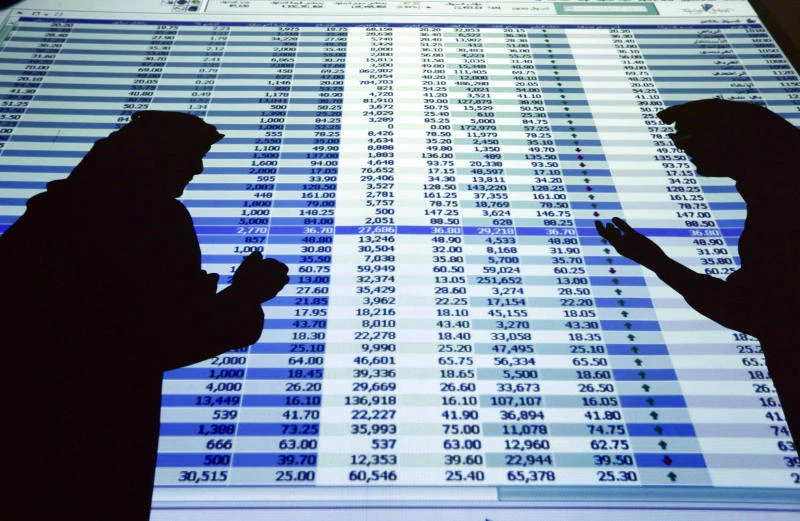
Reuters said in a recent report that the opening of Saudi Arabia’s stock market to FDI early next year is set to coincide with a pick-up in earnings growth in the Kingdom.
The combined net profits of Saudi Arabia’s leading companies are expected to rise 17 percent in 2014 and a further 11 percent in 2015, largely on the back of petrochemical producers and banks, although a number of companies in other sectors also promise strong growth.
Those figures were based on average forecasts from analysts surveyed by Reuters for 81 companies, which accounted for 99 percent of the total profits of constituent companies in Saudi Arabia’s main equities index last year.
The outlook puts Saudi Arabia roughly on a par with Qatar, where profit growth is set to average 13 percent in 2014 and 2015, and Abu Dhabi, which is expected to average 17 percent.
The report noted that the Saudi stock market is attractive to foreign fund managers, partly because it is more diverse than other Gulf markets, and includes companies ranging from real estate developers to retailers and food producers. Some firms in these sectors are booming.
Economy remains buoyant despite global financial crisis