Fitch Ratings recently underscored Saudi Arabia’s resilience as an investment destination despite lower oil prices and continued spending.
Fitch Ratings has affirmed Saudi Arabia’s Long-term foreign and local currency Issuer Default Ratings (IDR) at ‘AA’. The Outlooks are Stable.
The Country Ceiling has been affirmed at ‘AA+’ and the Short-term foreign currency IDR at ‘F1+’.
The rating agency added:
KEY RATING DRIVERS
The affirmation reflects the following factors: Saudi Arabia’s substantial external and fiscal buffers are a key support for the ratings in an environment of lower oil prices. Sovereign net foreign assets have declined since reaching an all-time high of around 114 percent of GDP at end-August and are expected to be drawn down over 2015 and 2016.
Nonetheless, Fitch expects sovereign net foreign assets to be above 100 percent of GDP at end-2016.
Government deposits are also forecast to decline and debt is expected to rise, but at a forecast 37.7 percent of GDP at end-2016, the net creditor position is still projected to be the fourth-largest of all Fitch-rated sovereigns. Lower oil prices combined with a spending package announced by the new King (costing 4.3 percent of forecast 2015 GDP and led by a two-month salary bonus for government employees) will push the general government deficit into double digits in 2015.
This follows a deficit of 1.9 percent of GDP in 2014, when overspending, particularly on key projects and foreign assistance, lifted the fiscal breakeven oil price to an estimated USD102/b (USD63/b excluding capital spending).
Fitch assumes curtailed overspending, lower capital spending and the absence of one-off payments and higher oil prices will lower the deficit to a forecast 3.7 percent of GDP in 2016.
Transparency on fiscal policy and outturns is a weakness relative to rating peers.
The authorities are considering debt issuance in addition to drawing down sovereign net foreign assets to finance the deficit.
Fitch forecasts consolidated general government debt at 6.4 percent of GDP at end-2016, up from 1.5 percent of GDP at end-2014.
General government deposits are primarily assets of the pension funds and are unlikely to be used for direct deficit financing, though they are being drawn down to finance some multi-year projects. Lower oil prices are forecast to pull the current account surplus down to just 0.3 percent of GDP in 2015, the lowest since 1999.
Fitch does not foresee any change to the exchange rate peg to the dollar, which provides a key policy anchor, even though it constrains policy flexibility.
Custodian of the Two Holy Mosques Salman smoothly took power after the death of King Abdullah in January 2015.
Government councils and committees have been streamlined and many of the ministers appointed at a subsequent reshuffle have private sector experience and are relatively young.
Instability in some neighboring countries has worsened and Fitch considers exposure to geopolitical risk to be higher than peers given the Kingdom’s prominent role in a volatile region.
Real GDP growth is in excess of peers, reaching 3.6 percent in 2014, driven by non-oil private sector growth of 5.7 percent.
Nonoil private sector growth has averaged 7.2 percent in the past five years and outpaced oil sector growth for 10 of the past 11 years.
Growth is forecast to slow to around 2 percent in 2015 and 2016 in line with slightly lower oil production, lower government capital spending and uncertainty caused by lower oil prices.
This will be moderated by the bonus to public sector workers, which will lift consumer spending, and projects financed through government pension funds and drawing down deposits.
Potential cutbacks in spending beyond those currently forecast will test the strength of the private sector.
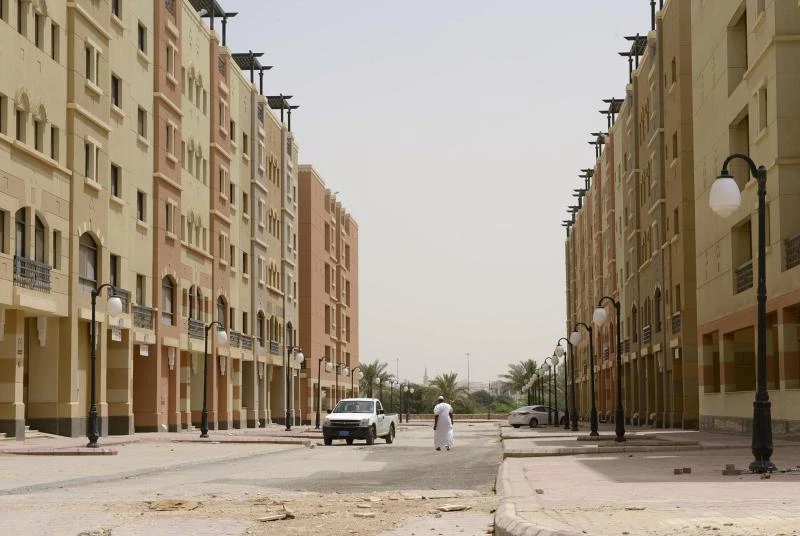
Progress continues on addressing unemployment and a shortage of affordable housing, both of which Fitch considers potential economic sources of social discontent.
Saudi employment in the private sector has risen, with nationals accounting for 15.3 percent of private sector positions at end-2014, the highest for at least a decade.
Measures have been introduced to enhance access to residential real estate and financing, but it is taking time for new housing stock to enter the market.
The economy is heavily dependent on oil, which accounts for 90 percent of fiscal revenues, 80 percent of current account revenues and 40 percent of GDP.
Spending of oil revenues is a key driver of the non-oil economy.
Oil reserves are large, production costs are low and the Kingdom maintains substantial spare capacity.
The banking sector is a strength relative to peers, with Saudi Arabia ranked ‘a’ on Fitch’s banking system risk indicator.
This is the strongest of all GCC members, in line with a number of mature advanced economies, and below only ‘AAA’ rated Australia, Canada and Singapore Non-performing loans were 1.3 percent at end-2014 and coverage was 163 percent.
Capital adequacy is high, at 18 percent, and the system is well regulated. Structural indicators are generally weaker than peers, despite recent significant improvements in some areas.
GDP per capita and World Bank governance indicators are well below peer medians.
Saudi Arabia recorded the largest gain of all rated sovereigns in the 2013 UN Human Development Index and GNI per capita at PPP more than doubled after a revision to the IMF’s PPP weights (which are used by Fitch).
According to the World Bank measure, voice and accountability is the lowest of all rated sovereigns.
RATING SENSITIVITIES: The main factors that, individually or collectively, could lead to negative rating action are:
— The absence of an effective fiscal policy response to the lower oil price environment.
- An erosion of fiscal or external buffers, potentially stemming from a prolonged period of oil prices around the lows reached in 2015.
- Spillover from regional conflicts or a domestic political shock that threatens stability or affects key economic activities.
The main factors that, individually or collectively, could lead to positive rating action are:
- Progress in tackling weaknesses in structural indicators and the economic policy framework, relative to peers, and enhancing the business environment in ways conducive to further diversification of theeconomy and the revenue base.
KEY ASSUMPTIONS
The ratings and Outlooks are sensitive to a number of assumptions. Fitch forecasts Brent crude to average USD70/b in 2015 and USD80/b in 2016.
Fitch assumes that Saudi Arabia will not be materially affected by any of the conflicts in the region and that the domestic political scene will remain stable.
Fitch assumes the government will remain committed to reforms in the labor and housing markets and that the reforms will not cause significant disruption to the economy.
The authorities will remain attentive to other potential sources of social unrest.
Fitch gives Saudi Arabia AA rating