NEW DELHI: India’s reliance on foreign oil will jump from 80 percent to 90 percent by 2040 and it would lead global energy demand growth, the International Energy Agency said in a report on the world’s third largest energy consumer released in New Delhi.
“India is set to contribute more than any other country to the rise in global energy demand over the next 25 years, underlining its ever-greater influence in Asia and on the world stage,” the report said.
As a consequence India’s economy will remain vulnerable to oil price volatility and political turbulence in oil and gas producing countries.
IEA Executive Director Fatih Birol said the think-tank expects global oil prices to hit levels of around $80 per barrel by 2020.
Brent crude weakened to $45.17 per barrel on Friday.
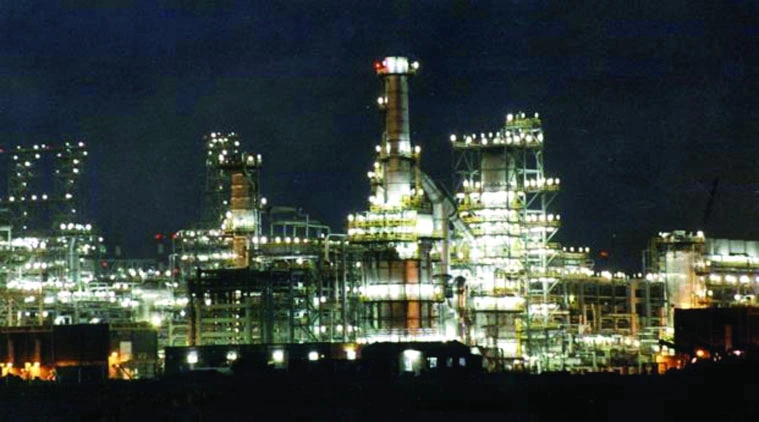
The Indian government is trying to make it easier for companies like Reliance Industries, ONGC and Vedanta Ltd. to tap small and difficult fields to boost domestic and meet a target to halve imports in 15 years.
But the IEA said India’s production will tail off due to limited resources and relatively high costs for new projects, leading to more imports as economic growth picks up speed.
India’s oil minister Dharmendra Pradhan has visited energy-rich countries including Saudi Arabia, Mexico, Canada and Colombia in his first 18 months in office.
India’s energy demand per capita will still be 40 percent lower than the global average, according to the report.
The ‘India Energy Outlook 2015’ document said the country’s energy demand has almost doubled since 2000, yet around 240 million people still lack access to electricity.
IEA estimates India will require more than $140 billion investment each year to meet its rising energy needs and improve energy efficiencies.
It will also become by far the largest source of growth in worldwide coal and oil demand, which has major implications for world climate issues and India’s solar energy sector, as Bridge to India founder Tobias Engelmeier has previously discussed on PV Tech.
Critically, IEA said that behind China, India would become the second largest market for solar PV, forecasting that more than half of new generation capacity up to 2040 will come from alternative energy sources, with around 340GW of wind and solar capacity additions.
These estimates are reinforced by India’s recently submitted INDC ahead of the COP21 Climate Conference in Paris.
India’s National Institute of Solar Energy estimates that India’s total solar potential is around 750GW, if using 3 percent of wasteland in each state.
India’s Ministry of New and Renewable Energy (MNRE) confirmed recently that total grid-connected PV installations have surpassed 4.57GW as of Oct. 31 meaning that 827MW were added in the first seven months of this financial year, with the year’s target at 1.4GW.
IEA said India’s targets of 100GW solar and 60GW wind by 2022 are “a powerful statement of intent”, but it expects the country will fall short in the proposed timeframe due to issues with land acquisition, remuneration, network expansion and financing means.
The report stated: “Even where states have expressed strong interest in the initiative to createsolar parks, in practice it is proving difficult in many cases to identify and acquire suitable land.”
IEA sees India’s oil imports rising despite plans to up domestic output