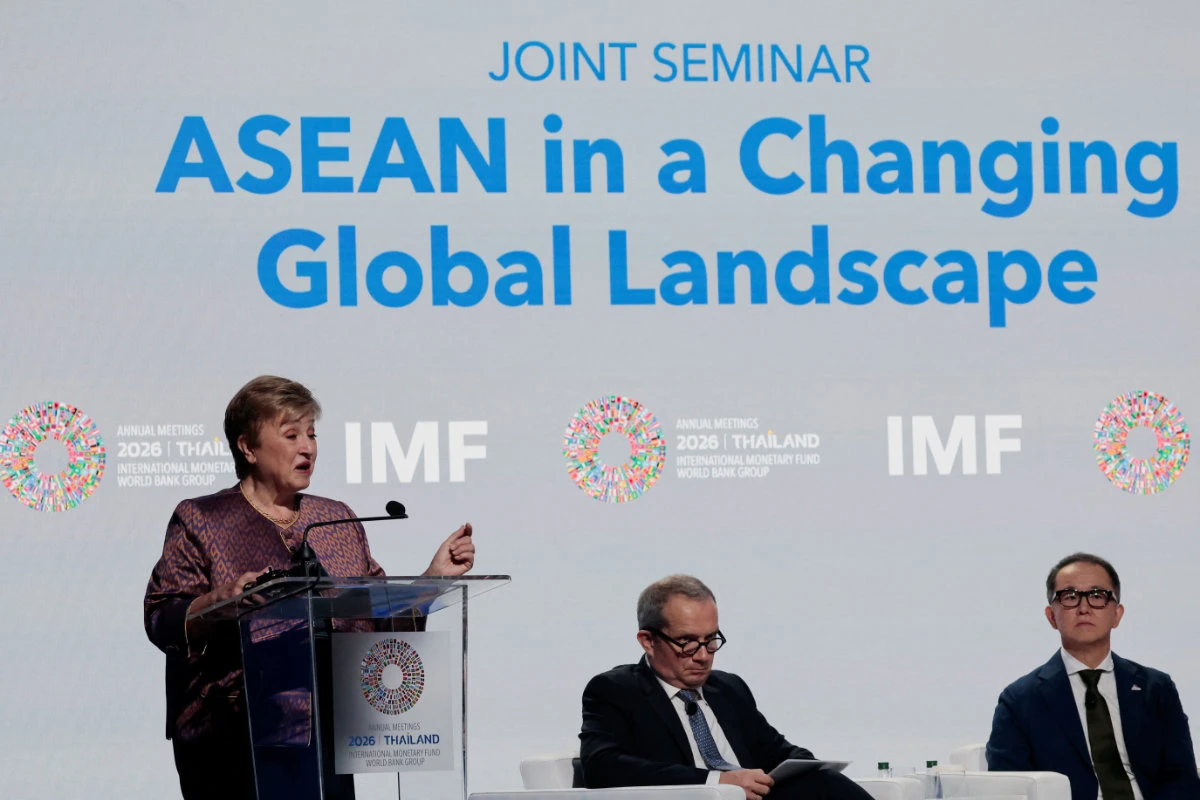
DAVOS: It was supposed to be a serious debate about the merits of monetary stimulus, but instead a panel in Davos on Thursday featuring IMF chief Christine Lagarde, quickly degenerated into a skirmish over the European economy.
"There is a general expectation to compare the US economy and the euro area and I don't think that's a reality," Lagarde said after an onslaught from her largely American co-panelists, including the CEO of megabank Goldman Sachs.
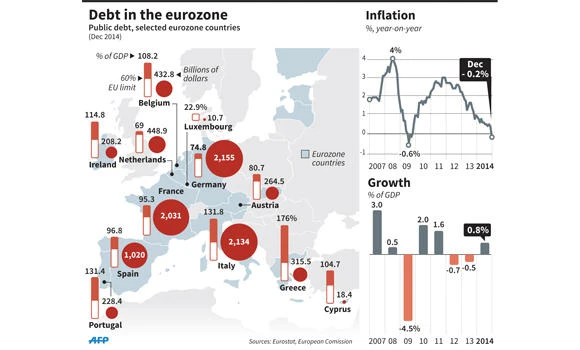
Hand-wringing over the fate of a wobbly Europe has become a Davos tradition, ever since debt-wracked Greece threatened to destroy the euro zone in 2010.
This year was no different, especially with Greek elections set for Sunday and the European Central Bank's decision to unleash a massive bond-buying scheme worth 60 billion euros ($69 billion) despite resistance from the bloc's most powerful member, Germany.
Rather than Greece, or other usual targets France and Italy, it was Germany that stirred debate, blamed for a blind push for austerity and imposing its singular economic vision on others.
"It is the failure to recognize that a one-off model that worked to produce export-led growth for Germany in the early part of the decade will lead to an outcome that is worse for everyone now," said former US treasury secretary Lawrence Summers.
"It is the error of assuming that the strategy that worked for one once, when applied universally will work," he said.
Lagarde however doubted that there was that much space for Germany to do anything to help out its neighbors and that little room existed for more public spending.
Options were limited "given that we're in a high-unemployment, high-debt environment, and given that structural reforms are fine but effectively what we need the most is demand, and not many in the euro zone have fiscal space to do that," she said.
Summers decried a "lack of imagination" by the Europeans to solve their problems, bringing a sharp rebuke from Ana Patricio Botin, the new CEO of Spain's Banco Santander, Europe's biggest bank by assets.
Defending Germany's stance, Chancellor Angela Merkel said the country's aging population is a massive challenge and that Berlin could simply not afford to overspend.
"If we don't keep our debts down then we will leave a very heavy burden to the next generation... This would be irresponsible," she said.
Speaking moments later at a panel on Europe, German Vice Chancellor Sigmar Gabriel said the reforms Germany passed almost a decade ago "took a long time to implement".
Meanwhile, the European Central Bank took the ultimate policy leap on Thursday, launching a government bond-buying programme which will pump hundreds of billions in new money into a sagging euro zone economy.
The ECB said it would purchase sovereign debt from this March until the end of September 2016, despite opposition from Germany's Bundesbank and concerns in Berlin that it could allow spendthrift countries to slacken economic reforms.
Together with existing schemes to buy private debt and funnel hundreds of billions of euros in cheap loans to banks, the new quantitative easing programme will release 60 billion euros ($68 billion) a month into the economy, ECB President Mario Draghi said in Frankfurt.
By September next year, more than 1 trillion euros will have been created under quantitative easing, the ECB's last remaining major policy option for reviving economic growth and warding off deflation. The flood of money impressed markets: the euro fell more than two US cents to $1.14108 on the announcement, and European shares hit seven-year highs.
The ECB and the central banks of euro zone countries will buy up bonds in proportion to its "capital key", meaning more debt will be scooped up from the biggest economies such as Germany than from small member states such as Ireland.
The prospect of dramatic ECB action had already prompted the Swiss central bank to abandon its cap on the franc against the euro. Denmark cut its main policy interest rate on Thursday for the second time this week after the ECB announcement, aiming to defend the Danish crown's peg to the euro.
Draghi has had to balance the need for action to lift the euro zone economy out of its torpor against German concerns about risk-sharing and that it might be left to foot the bill.
The ECB is trying to push euro zone annual inflation back up to its target of just below two percent; consumer prices fell last month, raising fears of a Japanese-style deflationary spiral. But there are doubts, and not only in Germany, over whether printing fresh money will work.
IMF chief defends Europe in heated Davos debate