The GCC and European Union are attractive for foreign investment, according to a survey conducted by the EU-GCC Invest project among investors from the two regions.
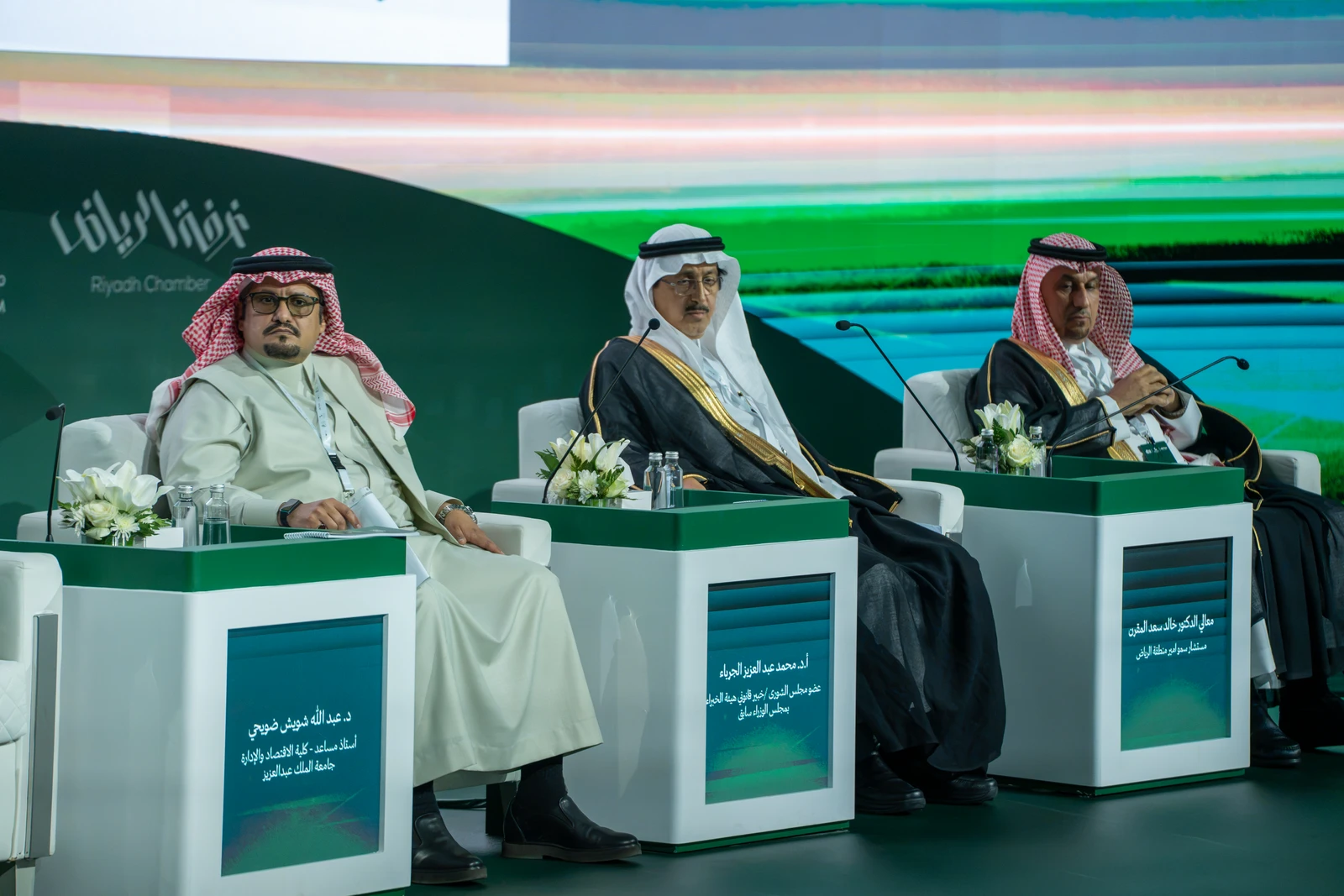
This was announced during an investment symposium at a local hotel to promote mutual investment opportunities between the EU and GCC.
Prince Saud bin Khaled, deputy governor of the Saudi Arabian General Investment Authority (SAGIA), and Saleh Al-Rasheed, an engineer and director general of the Saudi Arabian Industrial Property Authority (MODON), were were also present at the event.
Al-Rasheed talked about the role of FDI (foreign direct investment) in the context of the Saudi economic vision and creating an environment for foreign investment.
Azzam Shalabi, president of National Industrial Cluster Development Program, and Mutlaq Hamad Al-Morished, CEO of SABIC, discussed the role of direct investments in the GCC and EU and opportunities for greater cooperation with representatives of the private sector and European commercial counsellors.
A panel of dicussion, moderated by Andreas Hergenroether, delegate of Germany Industry and Commerce in Saudi Arabia, was also held.
Christian Engels, head of the legal department of AHK Saudi Arabia, presented the executive findings on interregional FDI climate.
The survey, which is part of the EU-GCC Invest project, was conducted through interviews and statistical research to increase the understanding of the investment climate between the two regions and suggest recommendations for further cooperation.
The survey found that most of the factors influencing investment in the GCC received a positive feedback and no factor received an average below 4 points out of ten.
The geographic location, available infrastructure and tax laws in the GCC received high positive average feedback.
The GCC economic situation had the highest average positive ranking of all factors.
The final section of the survey, in which participants were asked to outline the single most positive and negative factor influencing investment, further supported the findings.
Besides the economic situation in the GCC, the survey revealed that high governmental spending was one of the factors that had a positive influence on the decision to invest in the region.
Although participants valued the stable political situation in the GCC, the unstable situation in bordering countries seemed to bother companies most and could be seen as a reason for not investing in the GCC.
Moreover, restrictions on ownership specially the requirement for a local partner were viewed as having a negative impact on investment.
The need for domestic participation keeps European countries from investing in the GCC.
The cost and length of judicial as well as the costs of attorneys were also factors that have a negative influence on the investment decision-making process.
Some work visa regulations also had a negative impact.
While the political situation in neighboring countries is a factor that can barely be influenced from outside, the ownership and visa regulations could be altered in a way that could positively influence the companies’ decision to invest in the GCC.
While a majority of the respondents replied that their investments would not necessarily be bigger or small if a certain concern of theirs was addressed, one third of the companies said that the investment process could be made more accessible and faster by addressing some of the issues mentioned and thus their investments would be significantly higher.
On the other hand, the findings among GCC investors painted a generally favorable picture regarding investment in the EU.
The majority of GCC businesses, which have invested or about to invest in the EU, represented medium to large companies.
The majority of respondents had a turnover of more than 40 million euros per annum in the EU.
Experiences and perceptions between the different companies surveyed were similar despite a spread of participants across all six GCC countries.
The majority of factors including investments in the EU received a positive feedback in the survey.
Categories such as trading across border as well as protecting investors all received a positive average feedback. Most significantly, political stability had the highest average positive ranking with 8.45.
Moreover, the economic situation and right to own property both received some of the highest ratings in terms of average scores.
The final section of the survey, in which participants were asked to outline the single mospositive and negative factor influencing investment decision, further supported the findings.
Political stability, available infrastructure and access to a large market economy were “here too recurring answers, which therefore support the three most positive factors.”
In terms of having a negative impact on the decision to invest in the EU, the survey highlighted three categorioes, which can be seen as adverse to a positive investment atmosphere.
Despite a generally positive view regarding the legal right to own property and investor protection, scores were generally negative for the category of legal issues and enforcing contracts.
Here, the length of judicial proceedings was particularly noted as having a negative influence (average rating of 3.75 percent ) on the investment decision-making process alongside corporation tax (average rating of 3.5 percent) and the price of real estate (average rating of 4.25 percent).
The most negative rating though was given to visa regulations, which scored only an average rating of 3.33 percent. All of these factors besides corporate taxes were also highlighted by separate companies as having the most negative impact on their decision to invest in the EU.
There was no indication that a single factor was directy responsible for either attracting or discouraging foreign direct investment.
Majority of the respondents replied that their investments would not necessarily be bigger or smaller of a certain concern olf them was addressed, yet the investment process could be made more accessible and faster by addressing some of the issues mentioned.
On average, the majority of categories received a positive feedback and no single individual factor was rated lower than 3 in the survey.
Arab News