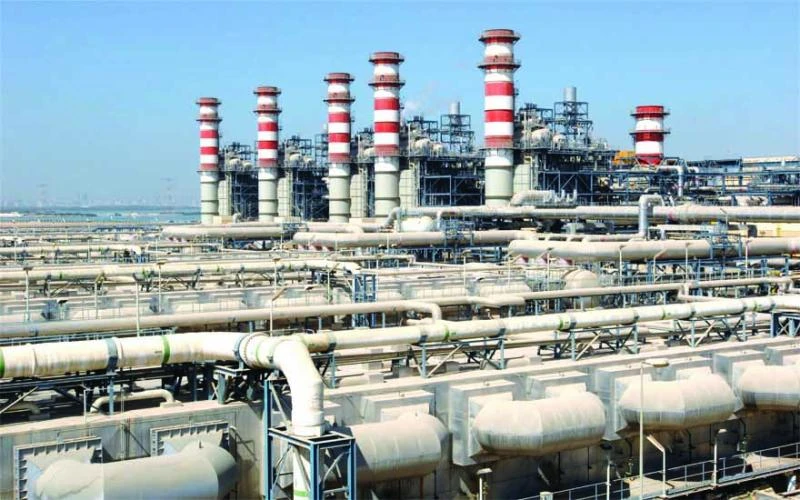
Saudi Arabia’s government has set aside around $7 billion to spend on water sector related projects this year and this is expected to go up as more projects are in the pipeline.
They include desalination and wastewater treatment projects.
Kuwait Financial Center (Markaz) recently published the executive summary of its report on KSA Water.
In this report, Markaz examines and analyzes the current status of KSA water sector.
The report highlights the demand, supply and investment trends in the sector. The report also presents the growth drivers and key learning points.
The report said Saudi Ministry of Water and Electricity has already pointed out that around $133 billion will be invested in the water and electricity sector in the coming decade.
Yanbu phase 3 desalination project, which is currently in construction, is estimated to be worth $2 billion, another major desalination project is Ras Al-Khair desalination plant, which is worth $ 1.5 billion.
Similarly billions of worth of wastewater treatment plants are in construction and in planning stage.
The Saudi government also plans to use nuclear and renewable energy to produce almost 50 percent of country’s desalinated water.
Huge investments in this area are expected to happen in coming years.
Saudi Arabia prefers the private sector in operations and maintenance.
In July 2002, the Supreme Economic Council passed a resolution, setting out a framework for private sector involvement in developing Independent Water and Power Projects (IWPPs).
Electricity and Co-generation regulatory authority encourages private sector investment in water sector.
Water and Electricity company was created to work as an off-taker for desalinated water produced by privately operated desalination plants.
According to Markaz’s report, the average annual water consumption per capita is around 950 cubic meters liters in Saudi Arabia, compared with the global average consumption of about 500 cubic meters.
Yet, Saudi Arabia has very less water when compared with the US, but the Saudis are using nearly one-half as much water as the average American.
GCC countries, including Saudi Arabia, have been identified as the world’s most water-stressed countries, with very low amount of available water per capita. Groundwater level is continuously receding and the water extraction is exceeding the availability of natural renewable water resources.
Desalination is the main source of water in Saudi Arabia.
Even though this requires high amounts of energy to convert sea water into drinking water, it is still the most viable solution for the country.
Saudi Arabia operates 27 desalination plants and produces close to 3 million cubic meters of water per day.
The Kingdom is the largest desalinated water producer in the world.
Saudi Arabia is blessed with huge amounts of oil and gas reserves which make desalination projects relatively less costly when compared with the rest of the world.
However, alternatives are being sought to better manage this scarce resource.
Some projects for wastewater treatment and recycling are planned.
Because of very old network of water pipes, huge amount of water in Saudi Arabia is lost due to leakages.
Electricity prices were raised in 2010, and the government announced that water prices are also set to rise sharply, from $0.03 per cubic meters to around $1.30 per cubic meters for the lowest slab of consumption, though the announcement has never materialized.
Kingdom’s spending on water projects to reach $7bn in 2013