KUWAIT CITY: Kuwait had accumulated reserves of $548 billion as of June 30 after continued growth in the first six months of 2014, a local daily reported.
The reserves are invested in two state funds, the State Reserve Fund with $149 billion and the Reserve Fund for Future Generations with $399 billion, Al-Qabas newspaper said, citing a report by the Audit Bureau, Kuwait’s state accounting watchdog.
Both funds are run by the Kuwait Investment Authority, the country’s sovereign wealth fund.
The report said the reserves had increased by $15.7 billion in the first six months of the year.
Kuwaiti authorities have not officially disclosed the amount of their reserves, but estimates had put them at around $500 billion at the end of March this year.
Kuwait, which says it sits on around 10 percent of global crude reserves and pumps around three million barrels per day, has posted a budget surplus in each of the past 15 fiscal years.
Oil income makes up 94 percent of public revenues.
After first deducting 10 percent of revenues for its sovereign wealth fund, that percentage was increased to 25 percent in the last two fiscal years.
Kuwait has a native population of 1.25 million and is also home to about 2.8 million foreigners.
Kuwait’s finance minister earlier called for economic reforms by energy-dependent Gulf states to cope with a drop in oil prices that has hurt their public finances.
Anas Al-Saleh urged steps to tackle rising public spending, mainly on wages and subsidies, as well as efforts to boost the role of the private sector.
“Comprehensive economic reforms, including reforming distortions in the public finances, should be enforced,” he said at a meeting of regional finance ministers and central bank chiefs.
Al-Saleh said the Gulf states must diversify their economies and “reduce dependence on oil.”
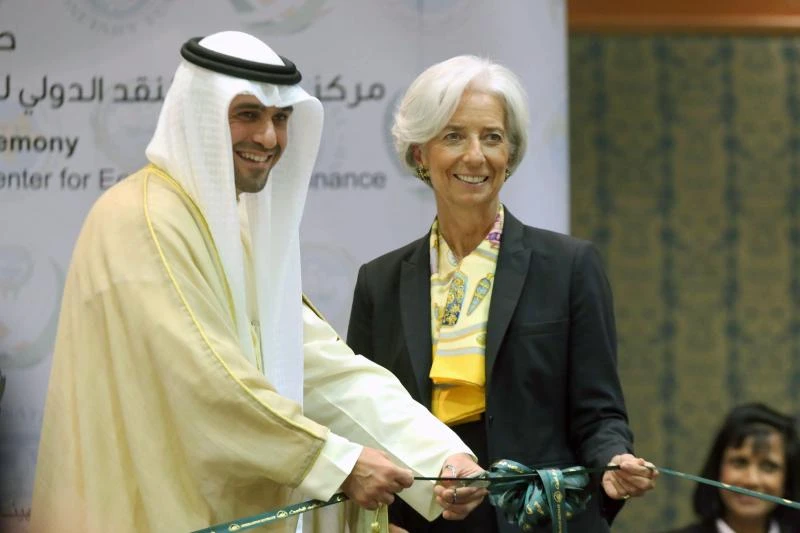
“Implementing these policies has become inevitable,” Al-Saleh told the meeting, which International Monetary IMF Managing Director Christine Lagarde was also attending.
Forecasts indicate a healthy economic growth for the the Gulf Cooperation Council (GCC) states averaging 4.5 percent in 2014-2015, Saleh said.
“But these forecasts should be treated with caution in light of fast-paced regional and international developments, particularly the drop in oil prices which has started to impact the public finances of GCC states,” the Kuwaiti minister added.
The GCC groups Bahrain, Kuwait, Oman, Qatar, Saudi Arabia and the UAE, which together pump 17 million barrels of crude oil per day and depend on oil for about 90 percent of public revenues.
Oil prices have slumped by about 25 percent since June because of a production glut, weaker demand and a gloomy world economic outlook.
Benefiting from high oil prices for more than a decade, the GCC states have built fiscal reserves estimated at $2.45 trillion by the International Institute of Finance.
Kuwait fiscal reserves reach $548 billion