- Touf Hassoun’s work aims at allowing people to see how life was in ancient structures
- His company creates digital twins of structures, he hopes information could lead to repairs
LAS VEGAS: A Lebanese entrepreneur and executive is using the latest technology to capture historic sites by documenting structures via reality capture so they can be accurately preserved.
Born in Lebanon, Touf Hassoun moved to the US when he was 16 for his college education.
He founded Case Technologies at age 29. Under his leadership, the firm specializes in cutting-edge 3D laser scanning, building information modeling and photogrammetry.
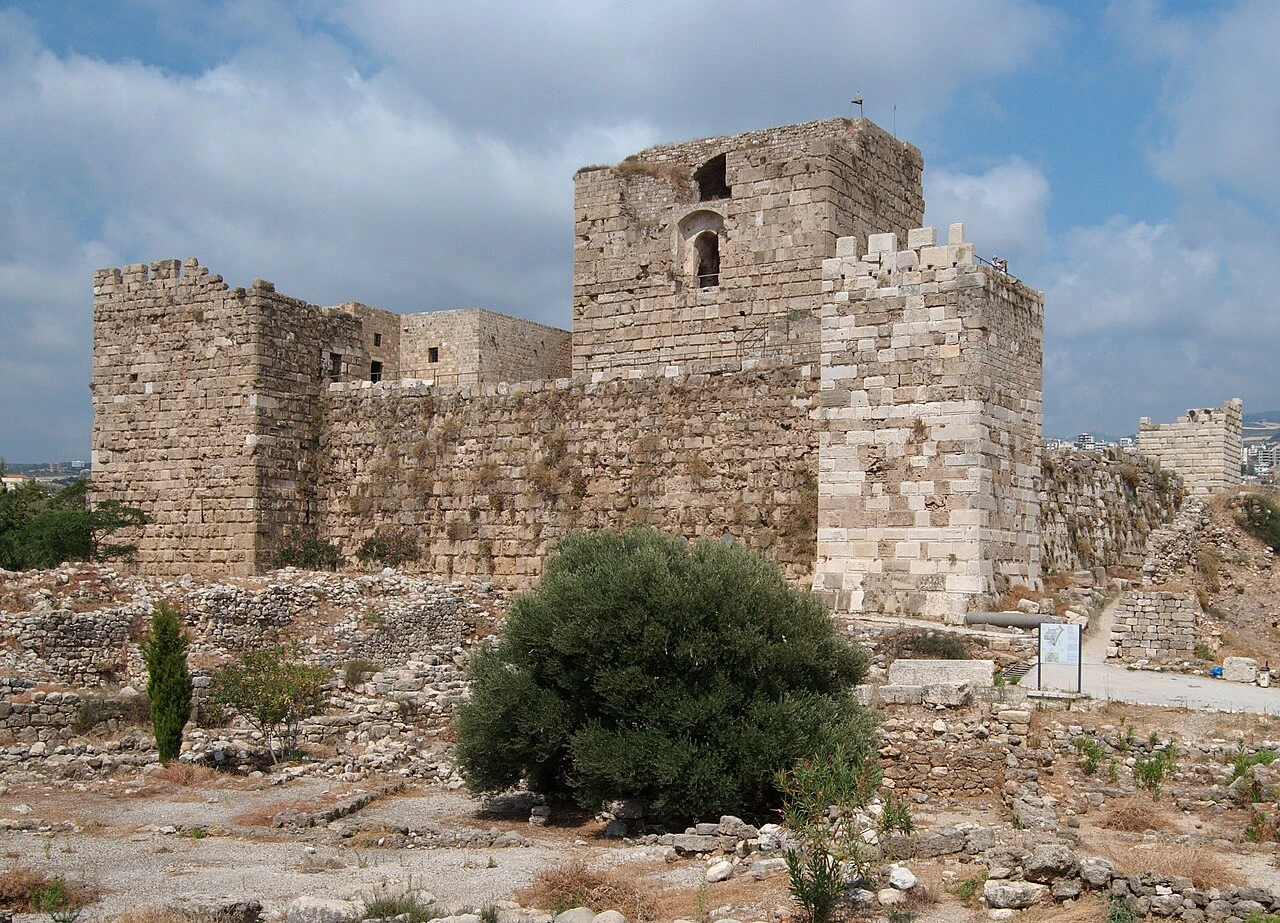
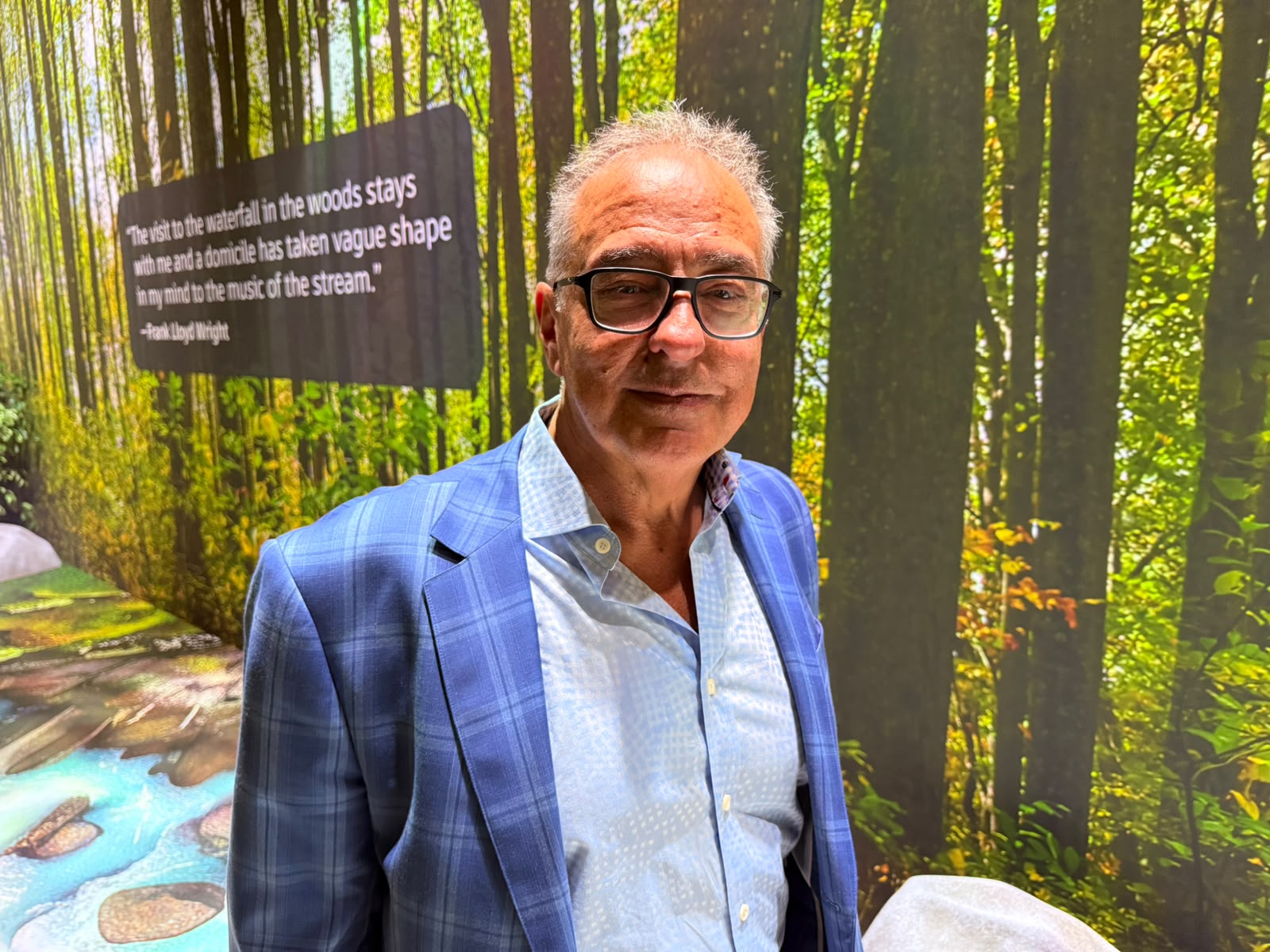
Speaking on the sidelines of the Autodesk University 2026 event in Las Vegas, Hassoun told Arab News he was hoping to document Byblos Castle — also known as the Byblos Citadel or Gibelet Citadel.
As part of his ongoing efforts in historic preservation and cultural heritage documentation, the president and CEO of Case Technologies, based in Pittsburgh, aims to create a precise “digital twin” of the 12th-century Crusader fortress in Byblos, Lebanon.
He said that given the fortress was built using a patchwork of ancient limestone and repurposed Roman columns, a 3D laser-scanned digital twin would provide researchers and preservationists with an invaluable structural map to help preserve its deeply layered history.
And he does not want to stop there. Hassoun said he wants to scan the Egyptian pyramids and, if safe, Syria’s Palmyra.
He said: “My aspiration is to capture many UNESCO World Heritage Sites, because I feel history is so important to preserve, not just because it’s so special and so precious, but also for future generations to appreciate, understand, and learn from.”
Hassoun’s work centers on creating what he calls “hyper-accurate” digital records that function like a comprehensive virtual encyclopedia.
Rather than physically rebuilding decaying structures, Case Technologies utilizes sophisticated tools to capture physical environments with millimeter-level precision.
By gathering billions of data points, the team generates detailed “point clouds” that serve as the foundation for exact 3D models.
These digital twins allow people such as researchers, students, and preservationists to interact with historic monuments virtually — whether through desktop computers, joysticks, or immersive virtual-reality goggles — to explore structures as they appeared centuries ago.
Working alongside local governments and museums, the team combines captured data with archival records to reconstruct original shapes of damaged or degraded structures into accurate 3D models.
The models can then be experienced through virtual reality, allowing users to fly through the model and see what it looked like 2,000 or 3,000 years ago.
For 15 years Case Technologies has worked on various degraded and broken-down historic structures, including Roman theaters in Italy. Highlighting past projects, Hassoun described work in Volterra, Italy.
He said: “We’ve been to Volterra, Italy, where we captured a Roman theater that looks like maybe 10 percent of it. It’s still erect and up.”
His work has also included the digital capture of Frank Lloyd Wright’s Fallingwater, located in southwestern Pennsylvania.
Collaborating with organizations like the Western Pennsylvania Conservancy and Autodesk, Case Technologies deployed drones and advanced laser scanners to document Fallingwater and its surrounding landscape, creating an exact digital twin of the iconic building and its contents.
Hassoun said the extensive digital archive would ensure structural conditions could be monitored and restoration work precisely planned, while the architectural heritage remained protected against future disasters.
He added: “They don’t build things these days the way they used to build them. I feel that that’s so important in life, to basically capture history and bring it, move it forward as far as you can, so that it’s always there with us, digitally at least.”
Now Hassoun’s Case Technologies has turned to a new project in Lebanon.
The upcoming venture stems from a personal connection within the region.
The company was recently approached by a distant relative who observed the work done over the past 15 years, and the relative expressed interest in having the company document the castle in Byblos, Lebanon.
Through advanced digital methodologies, Case Technologies can bridge the gap between ancient history and modern virtual education, ensuring that architectural wonders from antiquity are permanently preserved for tomorrow’s learners, researchers, and global citizens to explore, understand, and appreciate in rich digital formats.