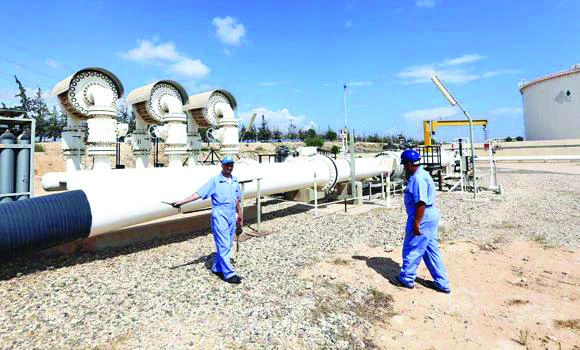
Al-Baida, Libya: The battle for Libya's oil wealth has taken on new dimensions as rival governments lay claim to the National Oil Company, further deepening divisions in the volatile North African nation.
The latest row erupted this week as UN envoy Bernardino Leon, who is mediating between Libya's warring factions, warned the country was heading toward destruction unless a political deal is found.
The once lucrative oil industry has fallen victim to the unrest that has gripped the country since Moamer Qaddafi was toppled and killed in the 2011 NATO-backed uprising.
Militants have stepped up attacks on the industry which had a pre-revolution output of about 1.6 million barrels per day (bpd), accounting for more than 95 percent of exports and 75 percent of revenues.
The economy has been reeling since December, when production fell to around 350,000 bpd as the Fajr Libya militia alliance attacked oil terminals in the east.
Fajr Libya seized Tripoli in the summer and installed a government and parliament opposed to the internationally recognized government and legislature elected in June.
On Monday, the recognized government, which sits in the remote east between the cities of Tobruk and Baida, severed ties the Tripoli-based National Oil Corporation.
"The legitimate Libyan government... is the only legitimate channel that has the right to deal and to contract companies to authorize gas and oil sales," it said in a statement.
To be valid, such sales must be made via the new NOC headquarters in the eastern city of Benghazi and approved by company Chairman Al-Mabrook Abu Seif, it said.
The statement, published on its Facebook page, did not elaborate on how new contract payments should be made, but anyone who violates its decisions will be prosecuted.
On Thursday, the NOC board in Tripoli hit back.
"The NOC's position is neutral and receives no directives from either the Tripoli- or Baida-based governments and operates in complete independence from both sets of authorities," it said in a statement in English.
Libya’s lucrative oil industry falls victim to unrest