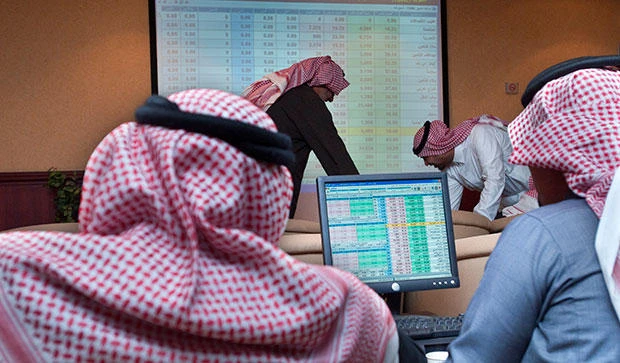
JEDDAH: The Saudi stock market dropped below technical support on Sunday as weak oil prices depressed investor sentiment.
The Tadawul All-Share Index (TASI) plunged 2.53 percent to 8,464.06 points, its lowest close since late January, falling through technical support around 8,500 points, where it had bottomed out in March and April.
A second straight close below that level would trigger a double top formed by the March and April peaks, indicating that December's low of 7,226 points could be repeated in the coming months, Reuters said.
John Sfakianakis, Middle East director at Ashmore Group, told Arab News: “Investors have been net sellers in a volume thin market as most are still away for their long summer break.”
He said: “Oil is still below $50 a barrel. The entire region is on the downside and most await a rebound.”
Last week was eventful with China's currency stabilizing and oil rising from its lowest in six years. Figures from the EU also show slower economic growth across the region in the second quarter, Sfakianakis said.
Nearly all stocks were in the red, including blue chips such as petrochemicals giant Saudi Basic Industries Corporation (SABIC), which fell 2.1 percent despite nearing the Aug. 23 registration date for a dividend payout.
Oil shipper Bahri was one of the biggest losers, tumbling 8.3 percent after benchmark tanker freight rates from the Gulf to Japan dropped 3 percent on Friday to their lowest in more than 10 months, according to Reuters.
Commenting on Tadwaul’s fall on Sunday, London-based James Reeve, deputy chief economist and assistant general manager at Samba Financial Group, said: “I think this was long-overdue. The market was looking expensive with a price earnings ratio of 18. This was not supported by the corporate earnings outlook, which is now quite weak given the outlook for government spending (which is likely to grow much more slowly than in recent years given the oil price slide).”
However, he said: “The reason why the market fell so suddenly probably relates to China's devaluation. This devaluation will reduce China's demand for commodities such as oil (all else being equal).”
A regional analyst, based in Bahrain, said: This is part of a typical market reaction to oil price weakness at a time. For the time being, the oil price is looking for a new direction as markets are likely to experience bouts of volatility, potentially amplified by seasonal low liquidity.”
Much of the latest fall in oil prices, which have plunged 30 percent from their May peak, occurred when many Gulf investors were away on summer holidays, and some investors may be reacting only now.
But Reuters quoted Abdullah Alawi, assistant general manager and head of research at Aljazira Capital in Riyadh, as saying: “The depth of Sunday's market decline was surprising and, though the sell-off presented bargain-hunting opportunities, it might continue for technical reasons.”
He said: "Everyone is bracing themselves for a further downward movement.”
The value of traded shares reached SR4.25 billion on Sunday.
Equity markets across the Middle East fell on Sunday.
Low oil prices weaken investor sentiment