Jeddah Economic Forum 2016 was launched Tuesday.
The agenda of JEF focuses on economic diversification of the Saudi economy through higher PPP and private sector participation.
The aim is to maintain or grow spending on infrastructure, which has multiplier effect on all sectors of the economy including manufacturing and services, in spite of declining oil prices constraining government budgets.
Today Saudi government funds over 80 percent of all infrastructure projects in the economy and only 4 percent of the projects are via PPP.
Now the Saudi government plans to implement wide-ranging institutional changes to provide unprecedented impetus to PPP in the country.
It intends to open multiple sectors including airports, energy, ports, water, education and health for private sector participation but with proper supervision by government to ensure desired outcomes are met.
This provides a huge opportunity for the private sector including infrastructure developers and the financial community, both domestic as well as foreign, to collaborate with the government to help create world class infrastructure.
The challenge which the government faces is to execute the new policy in weak global macro economic environment. However, as KPMG’s global trends in infrastructure report (2016) showed, a wall of global institutional funds is available, the challenge is the availability of a pipeline of “investable” (commercially viable) infrastructure projects.
The Saudi Government can learn from India which in period of 5 years between 2008-12 stepped up the private sector share of total infrastructure investments to nearly 44 percent from only 34 percent while increasing total infrastructure spending from $40 billion p.a. to $100 billion p.a.
Through this period India became the large PPP market in the world. This is inspite the fact that India has made many mistakes in its PPP program which it is now correcting.
To be successful, Saudi Arabia needs to address the 5 pillars of PPP programs viz. enabling legal and regulatory framework, capacity of government institutions to incubate PPP projects, operational capability to execute and supervise projects, attractive investment climate and financial facilities.
If Saudi Arabia gets these enablers right it can not just fill the gap in its infrastructure spending but potentially raise its spending as percentage of GDP.
—
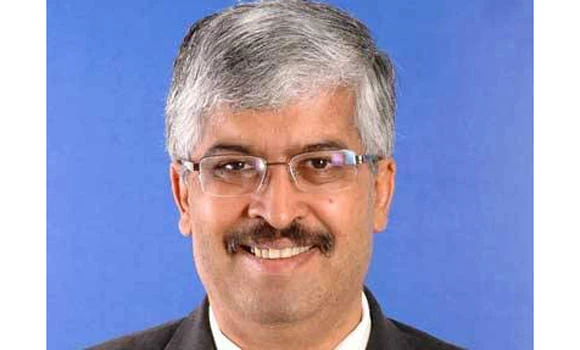
Arvind Mahajan is partner and head of infrastructure, government and health care services, KPMG in India, senior director on KPMG India board.
Saudi Arabia has potential to transform its infrastructure program through PPP