JEDDAH: While weaker oil prices present a serious challenge to the growth outlook for the Kingdom of Saudi Arabia, fiscal consolidation efforts by the government should see the country avoid recession, according to a new ICAEW report.
The report Economic Insight: Middle East Q1 2016, produced by Oxford Economics, ICAEW’s partner and economic forecaster, indicates depressed oil prices will compound economic concerns in a region already facing issues over fiscal sustainability, structural economic weaknesses and deepening military conflict in Iraq, Libya, Syria and Yemen.
Oil prices are set to remain lower until at least 2017, because of the continuation of current Organization of Petrol Exporting Countries (OPEC) policy of keeping the production high, and increasing concerns over growth in China and other emerging markets.
OPECs aim to maintain their dominant position and squeeze higher-cost producers out of the market, coupled with existing high stock levels and modest demand growth will see Brent crude average $32 per barrel this year and remain below $70 for the rest of this decade. Economic data from China suggests increasing problems with overcapacity, which will further undermine expectations for resource demand growth.
However, the Saudi government’s 2016 budget shows it is giving serious consideration to fiscal consolidation.
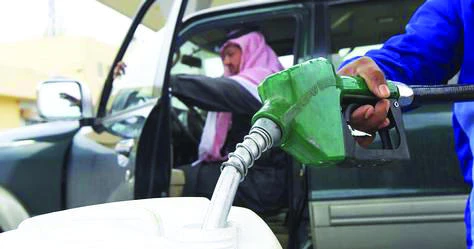
The government announced a year-on-year decline in public spending for the first time in 14 years, as well as plans to reduce energy subsidies starting this year.
Other reforms include capping the public wage bill, the introduction of taxes on goods including tobacco and soft drinks, more privatization and the establishment of a new finance unit to oversee a medium-term expenditure framework.
“The Saudi government’s revenue has been seriously affected by the weaker oil price, but it is responding to this challenge in a timely and gradual manner,” said Tom Rogers, ICAEW economic adviser and economist at Oxford Economics.
“While the Kingdom is fiscally strong enough to withstand several years of sustained lower oil revenues, efforts toward diversification must be accelerated to ensure sustainable economic growth in the future,” said Rogers.
All GCC governments have also committed to establishing a region-wide Value Added Tax (VAT) over the medium term to lift non-oil revenues and most have already started on cutting energy subsidies.
Overall, government spending in the GCC region is expected to decline by 8 percent this year and rise more slowly in future years.
This will leave the aggregate budget deficit at 17 percent in Saudi Arabia.
Another threat to stability and growth in the GCC has emerged from pressure on long-standing currency pegs against the US dollar.
For example, markets expect an unprecedented 10 percent depreciation of the Saudi riyal over the next year.
This in turn forced the Saudi Arabian Monetary Agency to impose a ban on domestic banks dealing in forward contracts.
While de-pegging would generate greater government revenues by lifting the dollar oil revenues in local currency terms, it would also impose heavy costs, including rising inflation, a loss of policy credibility and additional volatility in oil revenues.
“The near-term objective for Saudi Arabia will be to maintain financial stability and avoid a deeper crisis,” said Michael Armstrong, FCA and ICAEW regional director for the Middle East, Africa and South Asia (MEASA).
“Weak growth will make the case for economic reforms in areas such as privatization and competition policy, housing, the labor market, education and public sector bureaucracy even more complex. A period of skilful policymaking will be required to balance the need for both growth and stability,” he said.
The report also shows:
* GDP growth in Saudi Arabia over 2016 is expected to reach 1.2 percent. Fiscal consolidation measures are already underway including a prolonged period of subsidy cuts, public wage constraint and the introduction of non-oil taxes. Alongside multi-year lows in private bank lending and money growth, non-oil sector expansion will slow.
* The UAE was one of the more fiscally aggressive states toward the end of 2015, removing fuel subsidies and increasing electricity tariffs. Its reputation as a trade hub makes it one of the most diversified economies in the Gulf and continued infrastructure investment for World Expo 2020 should lead to growth of 2.7 percent in 2016.
* The Bahrain economy is expected to expand by 1.9 percent this year. With the wage bill and subsidies comprising two-thirds of government spending in Bahrain, authorities are looking at cuts despite political sensitivity. Petrol prices increased in January for the first time in 33 years, following gas price hikes and meat subsidy removal.
* Oman also increased petrol prices in January and further spending cuts are expected to be included in the ninth five-year plan 2016-20. However, authorities are loath to cut capital spending given the long-term strategy to diversify into transport and logistics, manufacturing and mining.
In 2016 Qatar’s economy is expected to grow by 4.3 percent, driven by substantial infrastructure investment, including a new railway, airport and seaport.
Qatar’s greater diversification of revenues, large policy buffers and immovable infrastructure requirements associated with the 2022 World Cup will mean modest government spending cutbacks compared to other GCC countries.
Capital spending in Kuwait will also remain fairly robust supporting expected GDP growth of 2.3 percent in 2016.
Economic diversification will be driven by government commitment to key infrastructure projects such as in transport and power generation, in spite of pledges to cut overall spending and raise non-oil revenues.
Saudi Arabia on right path to overcome weak oil prices