OSN is one of the fastest growing paid TV networks in the MENA region. Many tune in to watch the newest episodes of their favorite shows or watch the latest releases of movies on their HD channels.
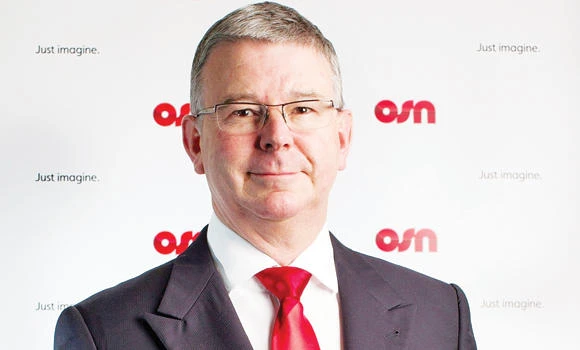
David Butorac, CEO of OSN, visited Jeddah last week to meet with the shareholders of OSN and visit its offices with a view to reinforcing the Saudi staff.
Saudi Arabia is the fastest growing market for OSN and soon will be the single biggest market, according to Butorac. He said as a private company they don’t release numbers of subscribers but Saudi Arabia is the second largest market after the UAE, and within the next few months it will be the largest market.
Rima Al-Mukhtar of Arab News met with Butorac and discussed the up and coming events, Ramadan specials and the problems that OSN faces.
Following is the text of the interview:
OSN has three premium Arabic language channels. What is the reason behind launching Arabic only channels?
We used to have Alshasha, which was a dubbed channel, but we realized that the consumer did want to see English language dubbed and they would rather see subtitles but the strategy behind engaging premium Arabic content is simply because this is where our market is. You know 93 percent of our new customers are Arabic speakers and about 84 percent of our entire base are Arabic speakers so we thought of catering to them too. That Arabic market is very proficient. And that’s why we made sure we have the same premium channels for both.
Last Ramadan, OSN launched shows and TV series for women only. Why did you decide to offer special programs for women only?
The concept of multichannel television is that we can provide channels for all types of viewers regardless of gender and age, and what we are trying to do is to make content relevant in all its aspects and for all. The concept behind OSN Yahala and Yahala Shabab is to provide something for everyone, I believe men like to watch the Turkish dubbed series Hareem Al-Sultan as much as women do and we are not saying that these channels are for women only; we just want to open up entertainment that appeals to different sectors in the society.
How does OSN market its products throughout the MENA region?
We have increasingly made sure that people are aware of OSN and make sure they are aware of our brands and products through a mixture of above-the-line and below-the-line marketing such as advertisements in well-known magazines and newspapers, including Arab News. We have a big brand presence here in Saudi Arabia, in shops and malls. Getting access to the consumer is an important aspect of marketing. We have an overwhelming staff at our various showrooms here. This is to ensure we have a good presence in Saudi Arabia. The product we have is very appealing for the Saudi market and that is why we are putting an emphasis on it.
What makes Ramadan special for paid television networks?
It is an amazing phenomenon because TV viewership increases in the holy month of Ramadan and that's why networks tend to advertise their special programs in advance. As a subscription driven service, we recognize the power of that platform and so strive for providing good content on OSN and other networks. One of the great strengths of this platform is that we facilitate consumers to record hundreds of hours of their favorite shows and watch them when they want. So no longer is the consumer driven by what the television channel tells them, that they have to watch the program.
How do you know the feedback from your consumers?
It is very important to stay close to our consumers. We have staff who can deal with our customers on a daily basis. We are getting feedback from our customers throughout our call centers and we always look at what their preferences are. We also engage heavily in research and track the viewing trends on monthly and quarterly basis. We do surveys with our customers and non-customers to understand what the viewer wants to see. Our symbol is successful if we can ensure that our programming remains relevant to all sectors of the society and in order to do that we have to be able to talk to all sectors in one way or the other. We formed a focus group here in Saudi Arabia for the Saudi-Indian series called Hindustani to understand the response to the concept of the program.
Many people started drifting away from watching television and started watching their favorite shows on their laptops and tablets. Is that why OSN launched OSN Play?
This is a popular misconception; actually the amount of viewing of television is increasing. People who said the digital media would kill broadcasts are wrong because there has never been a time when more money is invested in TV content like now. For the first time in history, big Hollywood producers and directors are appearing on television and the reason is there has never been more money and more content going into television as is being done now, so the amount of content going into television and the amount of time spent watching television is more than ever before. Like our content we have to be responsive to the demand of our consumers in this increasingly digital wireless connected world. The consumers expect unrestricted television watching at home. The whole concept of OSN Play is to ensure our customers get the value of their TV program subscriptions because I don’t want a customer to simply sit at home and watch television to get the value of OSN subscription. So OSN Play allows us to make our customers access the OSN experience anywhere in the region through their laptops and tablets, anywhere and anytime.
Piracy creates a huge obstacle for paid television and networks. Can you tell us more about this?
Piracy is the number one economic factor for paid TV platforms around the world and unfortunately many consumers and many governments are of the opinion that intellectual property of piracy is a victimless crime where nobody gets hurt. If the business was able to exonerate because there was no piracy, we would be able to reinvest in creating a much stronger production market than has been out in the past. Piracy takes many fronts; there are people who download content of the Internet because they think its great and it’s free and there are pirate operations that create channels that feature content that was never purchased and then that impact our business. There is also technical piracy that people use to interrupt the technical flow of our service, so we as an industry need the assistance of governments and indeed we get strong assistance from the Saudi government to create a way we can crack down piracy. We are going to continue to work with governments and technologists to educate people that piracy is a crime.