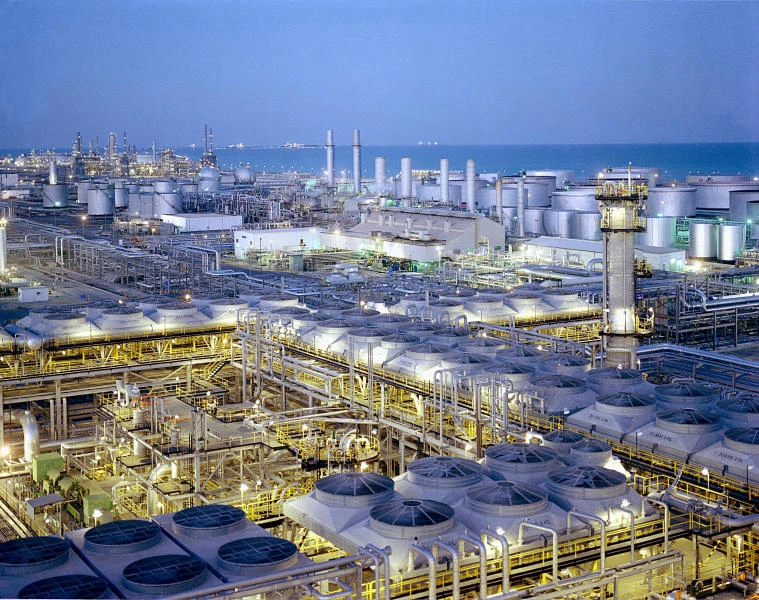
RIYADH Saudi Arabia’s crude oil exports in May fell to 6.935 million barrels a day from 7.737 million barrels a day in April, official data showed.
Domestic refiners processed 2.423 million bpd up from 2.224 million bpd in April, figures supplied by Riyadh to the Joint Organization Data Initiative (JODI) showed.
Saudi Arabia has traditionally been the world’s biggest exporter of crude and the Kingdom’s rapid transition into one of the largest oil refiners adds an extra dimension to global oil markets.
Crude oil directly burnt by Saudi Arabia to generate power was up to 677,000 bpd in May from 358,000 bpd in April, the data published on JODI’s website showed.
JODI compiles data supplied by oil-producing members of global organizations including the International Energy Agency (IEA) and the Organization of the Petroleum Exporting Countries (OPEC).
Saudi Arabia’s crude production for May stood at 10.333 million bpd, slightly up from the April figure of 10.308 million bpd.
A Jadwa Investment report released earlier this month stated that Saudi crude consumption will reach 3 million bpd in Q3 2015, as domestic demand peaks due to the summer months.
In the last three years, quarter-on-quarter growth in the third quarter has averaged 250,000 barrels per day (bpd), and analysts expect to see a similar quarterly rise in total crude consumption this year as well.
Jadwa’s Quarterly Oil Market Update added: “Preliminary data shows that Saudi Arabian crude production was up 6 percent in Q2 2015, year-on-year, at 10.3 million bpd. This elevated level of production is due to increasing domestic demand and a desire to hold market share.”
It added: “Maintaining market share is even more of a priority now for Saudi Arabia than when prices began to fall in the second half 2014. Global oil markets are more competitive and the Kingdom faces competition from both within OPEC and outside it.”
The report pointed out that lower oil prices have put intense fiscal pressure on a number of OPEC and non-OPEC producers, although the risks for Saudi Arabia are lower, due to ample foreign reserves and low debt levels.
“As a result we see limited year-on-year change in Saudi crude exports, which will remain around 7 million bpd in 2015,” said the Jadwa researchers.
“This combined with rising domestic consumption will see full Saudi production at 9.8 million bpd in 2015, although we do see an upside risk to our forecast, as a result of more intensive competition for market share,” they said.
Saudi crude oil exports fell to 6.935m bpd in May