The investment management industry in Saudi Arabia is still in the early stages of development but is growing rapidly, says a major investment management firm’s top executive.
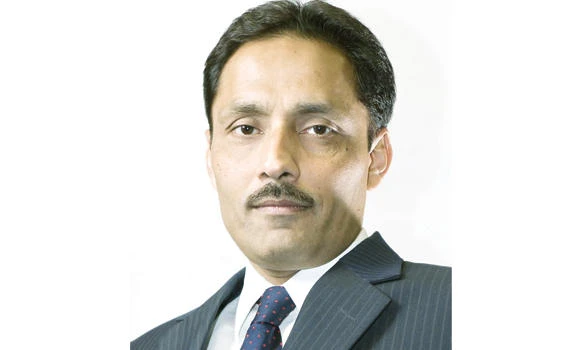
“In the future, an increasing level of local equity assets will be managed by professional money managers, whereas at present less than two percent of the total Saudi market cap is invested via mutual funds,” Najmul Hasnain, head of investment management for Morgan Stanley Saudi Arabia, told Arab News in an interview.
“We believe product innovation and greater transparency are all measures that, if successfully undertaken, will drive increasing investor confidence. The participation of international investors in the Saudi market will be one of the key drivers of this shift,” he added.
These are highlights of the interview:
Q: Saudi Arabia is said to be on track to open its stock market to foreign investors by the end of June. What are the challenges and opportunities?
A: The main opportunity for international investors is the exposure to the largest and most liquid stock market in the entire Middle East region.
Saudi Arabia’s population is more than 30 million, making up 60 percent of the GCC total, more than half of these being Saudis aged 30 or under.
These demographics suggest that consumer spending in the country will continue to grow, especially with the government drive to increase employment among Saudi nationals.
Government expenditure is unlikely to be curtailed due to large foreign reserves and the lack of any significant national debt.
The challenges are the same as they have been for many years now — regional instability and geopolitical conflict, coupled with a dependence on oil that has been highlighted by the dramatic fall in prices over the past nine months.
In addition, high government subsidies and unemployment will need to be addressed in the longer term.
Q: Saudi and Gulf stock markets have surged on big Saudi payouts/bonus salaries announced recently. The move also could boost Saudi Arabia’s GDP by 0.75 percent, say economists. The retail sector in the stock market has been making sharp gains. What are your comments?
A: The salary bonus will indeed be a positive catalyst for Saudi retail- and consumer-focused companies.
We are positive on companies in these sectors, but given the current valuation levels, it is important to be selective and pay attention to a number of factors, such as sector and company specific fundamentals, key value drivers, price and earnings dynamics and management transparency.
Q: Saudi Arabia’s Capital Market Authority has expressed its keenness to attract large, sophisticated, experienced institutional investors. What are the additional benefits from such measures?
A: Opening up the local market to international institutional players would help diversify the investor base in Saudi Arabia, which will in turn increase the depth and liquidity of the market and attract more long-term investors as others are expected to want to catch up.
In addition, sophisticated investors are likely to encourage broader research coverage, an improvement in the brokerage and custody model.
These developments will be positive for the long-term expansion of the Saudi market and we may also see these international investors themselves becoming a significant source of investment and funding for Saudi companies.
Q: The Kingdom’s budget and development projects are largely linked to revenues derived from global oil prices. Will lower oil prices have a significant impact on public spending?
A: Not in the short term. This is because Saudi Arabia has accumulated very large reserves over the years — currently more than $ 700 billion — and has almost no government debt.
The Saudi government has ample financial resources to continue its public spending programs.
In the longer term, the government has to take measures to diversify the economy away from oil and this is something the country is looking at, as evidenced by the plans to open up the capital markets to foreign participation.
Q: Saudi Arabia’s ability to attract FDI is described as a success story. What additional steps the Kingdom could take to stay ahead of competition?
A: An increased transparency, improved corporate governance and aligning the securities business regulations with international best practice will make Saudi Arabia an even more attractive opportunity for international investors.
The Saudi Arabian General Investment Authority (SAGIA), which is responsible for managing FDI to the Kingdom, continues to take the right steps in our view, by streamlining the investment process, increasing the profile of Saudi Arabia and highlighting investment opportunities in the country.
Also, the additional steps taken by to the stock market in recent years have allowed Saudi Arabia to improve the investment climate.
We expect these steps to continue in the future, which will further enhance international investor interest.
Q: The new mortgage law in Saudi Arabia is reportedly prompting a shift from owning to renting properties in Jeddah during Q4 2014. How does it impact the construction/real estate sector?
A: The move to introduce a mortgage law will provide a framework for banks to become listed as providers of mortgage finance, which in turn is likely to result in a significant boost for the banking sector.
While the 30 percent minimum down payment requirement is likely to affect the loan growth in the short term, it will also reduce the risk of sharp loan losses.
Construction and real estate sectors are likely to bear the brunt of a potential slowdown in the short term; however, the new mortgage law will potentially make these sectors more stable in the long term.
Q: What scope do you see for real estate investment funds?
A: At this stage we are focused on Saudi equities.
There are only eight listed companies in the real estate sector in Saudi Arabia, making up about 6.6 percent of the total market capitalization.
We are hoping that the listing of additional companies in this sector will allow investors a broader range of investment opportunities and choice.
Q: Small and medium-sized enterprises (SMEs) are an important segment of many economies globally in terms of their contribution to GDP (gross domestic product) and employment.
What role do you see for SMEs in the Kingdom’s economic development?
A: According to a report published by the Organization for Economic Co-operation and Development (OECD),SMEs account for 95 percent of enterprises and offer up to 70 percent of employment in OECD countries.
It is clearly an important segment of the economy, which could help drive growth, economic diversification and increase employment.
The 33 percent contribution of SMEs to GDP remains relatively low in Saudi Arabia and has room to develop and grow.
Difficulties in the financial infrastructure and regulatory framework are the key factors currently preventing this growth.
The government has been taking measures to support SMEs through subsidized loans, such as the Kafala program, technical support and improved access to information.
We believe these measures will help support the growth and development of SMEs and contribute positively to the economy.
Q: What are the prospects for family businesses in Saudi Arabia? What are the options/impediments for them to access capital via the stock market?
A: Family-owned businesses constitute a large portion of the economic growth in Saudi Arabia.
The CMA, Tadawul, the Ministry of Commerce and Industry, and other government bodies continue to encourage successful family business to list their shares on the Saudi stock market, to ensure the continuity of these businesses once the founders are no longer at the helm.
Indeed, over the last few years, the number of listed family companies has increased and this trend is expected to continue across all sectors, but particularly so in construction, retail FMCG and health care.
The steps that need to be taken in order to undergo an IPO have been known to sometimes discourage family businesses from embarking on this path.
However, for family businesses looking to raise funds for further growth and to sustain operations in the long term, listing on the stock exchange is an important way of achieving these objectives.
Q: The Saudi stock market did not perform well in the latter part of 2014. TASI, however, increased 6.54 percent in January 2014, over the close of the previous month. Can we say the index is on the upward trend for 2015? Are there any drawbacks?
A: In the medium term, the market fundamentals look stable on the back of strong macroeconomic trends, favorable demographics and the expected opening up of the market to international investors.
It is difficult to predict movement in the short term; however, for long-term investors we see opportunities in the market.
While it is difficult to predict the movement of the market in the short term, the key factors that will affect the market over this time period include the price of oil, the results of listed companies in 2015 and the impact of opening the market directly to international investors.
The continuation of government spending programs, which we believe is likely, will also positively influence the market.
Q: How do you view the impact of oil prices on Tadawul this year, with petrochemical industries index gaining strength in recent days?
A: The decline in oil prices in the second half of 2014 resulted in TASI erasing its gains for 2014 and closing the year 2.4 percent down. Overall, the outlook for the petrochemical index will depend on where oil stabilizes.
We believe oil will be volatile in the short term but will start trending higher toward the end of the year.
Q: How do you evaluate the performance of the Saudi equity funds?
A: Although the TASI was down 2.4 percent over 2014, the best performing Saudi equity funds reported positive returns for 2014. The Morgan Stanley Saudi Equity Fund generated returns of 27.4 percent in 2014 and was ranked first in its category by Argaam Business Info.
Q: What are Morgan Stanley’s (investment management department) plans and strategy targets for 2015?
A: Morgan Stanley Investment Management, Saudi Arabia, is well placed to benefit from growth in the country. Our investment approach will remain based on fundamental analysis of companies as we seek to generate investment returns for our clients over the long term.
The investment management industry in Saudi Arabia is still in the early stages of development and we see this industry growing rapidly.
In the future, we believe an increasing level of local equity assets will be managed by professional money managers, whereas at present less than 2 percent of the total Saudi market cap is invested via mutual funds.
We believe product innovation and greater transparency are all measures that, if successfully undertaken, will drive increasing investor confidence.
The participation of international investors in the Saudi market will be one of the key drivers of this shift.