Turkey thrives in its region and beyond with its democracy, strong economy, dynamic demographics and rich cultural heritage.
Heading toward the 100th anniversary of the foundation of the Republic of Turkey in 2023, we have defined a certain set of goals, which we call ‘Vision 2023’, to elevate our standards to an even higher level.
To meet these goals, it is vital to further improve the capacity and dynamism in the fields of industry, transportation, infrastructure, education, science and technology, legislative and institutional structure, while fostering the existing international partnerships and developing newer ones.
Hence, Turkey will continue its structural reform agenda by heading toward a more forward-looking perspective.
Turkey has witnessed a significant economic transformation process in the new millennium thanks to a comprehensive economic reform program that has been launched and implemented successfully in order to make the economy stronger and more resilient.
The economic program has been supported by other reform areas, in line with our negotiations for accession to the European Union, one of the strategic goals for our Vision 2023.
In this vein, we continued to strengthen the democratic system, governmental and non-governmental institutions and the rule of law.
Thanks to prudent macroeconomic policies and comprehensive structural reforms during this period, the economic momentum has accelerated and gross domestic product per capita has tripled, employment has increased significantly, poverty and income inequality have declined, and trade volume has increased sharply.
As a result, Turkey has managed to attract historically high levels of foreign direct investment.
Increasing high sustainable growth levels is crucial but not sufficient.
Achieving high per-capita income can only be meaningful when this income is fairly distributed and when every single individual of the society benefits from the total welfare properly.
This is why Turkey attributes great importance to inclusive growth by reforming health care, education, social security, and the fight against poverty and inequality.
Also, it is important that development goes hand in hand with environmentally friendly policies.
From a sustainable development approach, the next generations should be left with a clean environment.
Detailed action plans
In order to achieve our objectives, we have recently announced privileged Priority Transformation Programs, the so-called second-generation reform programs.
These are designed for critical reform areas, which address the main structural problems of Turkey.
They will significantly support our goal to achieve stronger, sustainable and balanced growth in the medium to long term.
Among them, increasing domestic savings; better utilizing local and renewable resources in energy production; improving energy efficiency; further advancing the reform efforts on business and investment climate; reducing the informal economy; making the labor market more flexible and efficient; and enhancing basic and occupational skills could be highlighted.
Detailed action plans have been prepared for these transformation programs, which consist of around 1,300 measures.
Human resource is the most important and permanent asset that a country can possess.
Accordingly, Turkey has been focusing on human-oriented development strategies.
The pace of change in information technology is fast.
Adapting to such a world and being competitive internationally requires developed skills and a well-equipped workforce.
Therefore, education is at the center of our human development program to enhance our competitive advantage through a life-long learning process.
Research and development and high-tech investments will be strongly supported.
Together with a sound corporate governance approach, these are the necessary elements to move from being a technology consumer to a producer country.
By 2023, we aim for higher export volumes, and lower dependence on imports with a perspective of internalyzing innovation.
Inclusiveness is the key word with a view to garnering all segments of society to move forward and place Turkey among today’s advanced economies.
Toward this end, gender equality is an indispensable element of our inclusiveness perspective.
In order for women to actively participate more in economic and social life and thus to mobilize the full potential of the Turkish economy, significant steps have been taken. As a result, the female labor participation rate has increased considerably in recent years, yet it is still below the existing figures of advanced economies. However, our projections indicate much higher levels in the near future.
Connecting with the world
Turkey’s exclusive geographical location in between energy-producing and energy-importing countries, and its pivotal position on main air and land transport routes within Afro-Eurasia, offers huge economic potential for the future, in spite of the recent conflicts in this geography.
Once completed, the Istanbul International Finance Center project will have a great supplementary role to make best use of this potential.
Turkey is responding to arising opportunities by investing further in its infrastructure.
The third airport in Istanbul will add capacity for another 150 million passengers per year once completed.
The recently completed Marmaray project represents the first underwater rail link between Europe and Asia.
Ongoing high-speed railway construction, increased connectivity and flight destinations thanks to Turkish Airlines, and an additional 14,000km of highway construction all contribute to Turkey’s potential.
Economic achievements flourish in stable and predictable political environments.
Without any doubt, democracy and freedom are prerequisites to sustain the stability in the long term.
A well-functioning democratic system, respect for human rights, freedom of speech and the rule of law are at the core of our political agenda in Turkey, since a well-functioning democratic system improves not only the political stability, but also economic stability by increasing predictability, transparency and accountability.
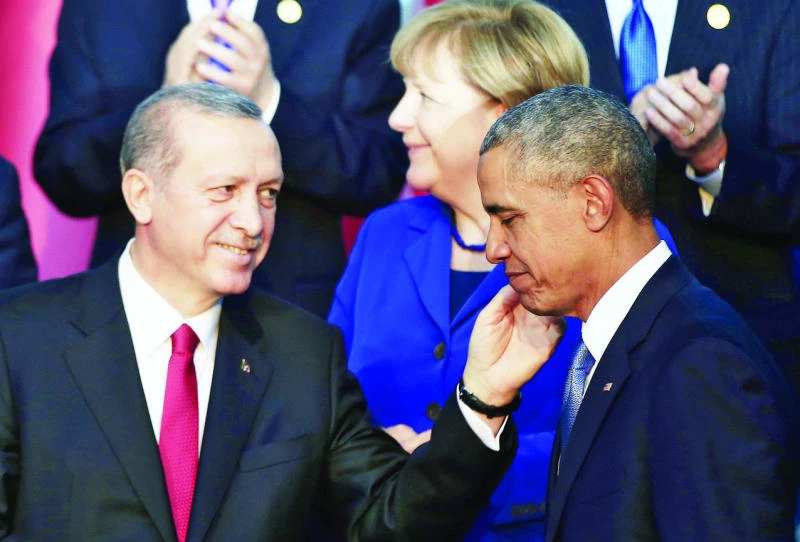
Our journey toward our Vision 2023 coincides with both a historic opportunity and an important responsibility for Turkey this year: chairing the G-20, the world’s premier forum for economic policy coordination.
In order to meet the global community’s expectations for the G-20 presidency, we prepared an ambitious set of priorities, a comprehensive agenda and an intense work plan. With this, we aimed to pave the way toward achieving the overarching aim of the G-20 — strong, sustainable and balanced growth through collective action.
Keeping the forum focused, relevant and able to achieve substantial outcomes for the health of the global economy has been our main objective during our tenure at the helm of the G-20.
Under the motto of ‘Collective Action for Inclusive and Robust Growth’, the Turkish presidency embraced the past G-20 agendas and sought to add impetus with its three ‘I’s of themes of implementation, investment and inclusiveness.
Under the first ‘I’, implementation, the presidency made a bold move and claimed that “words have played their part”.
Reflecting the urgent need for the effectiveness of the required reforms, the Turkish presidency encouraged G-20 members to fulfill their commitments under various agenda items and put in place the necessary measures to meet G-20 objectives.
G20 growth strategies; the financial regulatory reform agenda; the Base Erosion and Profit Shifting (BEPS) Project of the G-20 and the Organization for Economic Co-operation and Development; the 2010 quota and governance reform of the International Monetary Fund; and national employment strategies were on the G20 laundry list for effective implementation.
An enabling environment for investment
In the context of the second ‘I’, investment, we sought to address the investment gap, especially in infrastructure, still observed all over the world almost eight years after the global financial crisis.
To improve the investment environment and to boost quantity, quality and efficiency of the infrastructure investments, G-20 members prepared their country-specific investment strategies.
The establishment of the World SME Forum for small and medium-sized enterprises (SMEs) and the full operationalization of the Global Infrastructure Hub are also important developments to note on this front.
Recognizing the large untapped potential associated with Islamic finance, the Turkish presidency also tried to increase the awareness among G-20 members on this issue and encourage them to increase the role of non-traditional lending models.
It goes without saying that the G-20 addresses issues of a global nature that matter to all countries, not just those in the G-20.
The G-20 holds a very high representation power and outcomes of the negotiations under the G-20 roof have a strong reflection and are closely followed by the global community.
Against such a background, the Turkish G20 presidency aimed to enhance global economic cooperation by reaching out to a wider range of stakeholders and reflect their views to the G-20 agenda through its third ‘I’, inclusiveness.
The inclusiveness strategy aims to ensure the benefits of growth and prosperity are shared by people within and beyond G-20 members.
Recognizing its domestic and global facets, we examined the scope to emphasize issues pertaining to SMEs and low-income developing countries (LIDCs) as a cross-cutting subject across all work streams.
Lifting female and youth employment; removing obstacles SMEs face in access to finance and global value chains; tackling inequalities and placing a special emphasis on reaching out to LIDCs, and developing policy responses to the specific challenges they face have been instrumental parts of this strategy.
Objectives identified in the context of Vision 2023 and lessons distilled from Turkey’s remarkable performance since 2002 have been very influential in shaping Turkey’s priorities for chairmanship of the G-20.
Turkey crafted its priorities based on a strategy to share its experiences over the past decade and demonstrate its ability to contribute to world economic governance.
Turkey’s improved business and investment environment; the wide-scale infrastructure projects undertaken; policies implemented to reduce inequalities and strengthening social inclusion; and measures taken to support SMEs and enhance their access to finance have been key among the drivers of Turkey’s performance over the past decade, and are inspiring features behind our main narrative for this year.
Vision 2023 itself will also be positively affected by Turkey’s G-20 stewardship in 2015. Being part of this crucial platform since its inception, Turkey reflected its views to the global agenda as a leading emerging market power and contributed to global policy coordination.
The G-20’s efforts to reinforce global economic cooperation and strengthen multilateralism against renewed setbacks provide undeniable benefits to all countries around the globe.
The G-20’s central role in paving the path for the global economy’s sustained and long-term development, addressing downside risks, safeguarding financial stability and reducing adverse external spillovers has an invaluable role in setting a conducive external environment required for Turkey to realize its goals by the centennial anniversary of the Republic.
During this year, the Turkish presidency has remained very keen to strengthen the G-20’s efforts and sharpen its focus on these fronts.
In addition to maintaining macroeconomic policy cooperation and dialogue, Turkey is also a keen supporter of monitoring the implementation of comprehensive growth strategies agreed by the G-20 leaders in Brisbane last year.
These measures, if fully implemented, are expected to boost global growth by an additional 2 percent by 2018, and have positive repercussions on the Turkish economy in addition to the boosting effect of the ambitious and comprehensive commitments of our own.
In order to ensure these benefits, Turkey, as the G-20 president, has undertaken an important task to develop a robust monitoring mechanism to keep implementation of the commitments on track.
Moreover, Turkey has initiated country investment strategies to address investment gaps in G-20 members to further boost the global and Turkish economy.
Addressing issues at source
Turkey took this historic opportunity to reflect not only its views, but also to voice concerns of emerging market economies and its neighborhood on the G-20 agenda.
Moreover, this stance will be clearly demonstrated at the Antalya Summit, with a discussion on the recent huge humanitarian emergency the world witnessed.
Turkey believes that the world should not turn a blind eye to the biggest flow of migrants in decades, a multilateral problem that warrants multilateral action as well as a fairer burden-sharing.
This requires preventive measures to address the problems at source countries, rather than a symptomatic reaction.
We are taking this issue seriously at the summit.
As the chair of the G-20, Turkey has placed a special emphasis on outreach and engagement throughout the year.
In this regard, in line with the established G-20 principles, a representative set of countries — Spain, Azerbaijan, Singapore, Malaysia as the chair of the Association of Southeast Asian Nations, Zimbabwe as the chair of the African Union and Senegal representing the New Partnership for Africa’s Development — were invited to the G-20 meetings to enhance the legitimacy of the G-20 and added value of discussions.
In addition, the presidency, throughout the year, organized numerous outreach events all around the world in different themes covered in the G-20 agenda to create an opportunity for a frank dialogue and exchange of views among the G-20 and its stakeholders.
Upon Turkey’s initiative, the Women 20 (W20) outreach group was also established as a new G-20 engagement group to promote gender-inclusive economic growth.
Turkey is determined to reach tangible results on the most pressing issues at the Antalya Summit and bring a meaningful difference to global prospects.
This determination is adamant in Turkey, shared by a wide spectrum of politicians and officials profoundly.
Toward the end of this year-long marathon, I gladly observe that Turkey is having a successful term with its goals internalized by the membership. Unsurprisingly, the G-20 has made headway across each of the three priorities, the three ‘I’s, and there are numerous issues under the G-20 agenda that yielded notable progress this year.
I am confident that vigorous efforts exerted so far, via the G-20 members’ commitment and resolve, will culminate in Antalya.
Turkey’s G-20 presidency will come to an end right after the Antalya Summit; yet, eight years remain for Turkey to continue working tirelessly to realize its Vision 2023.
Seeking inclusive and robust growth through collective action