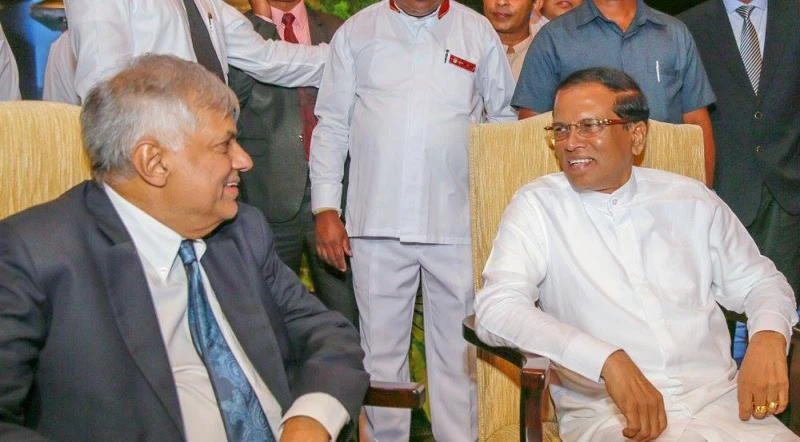
COLOMBO: Sri Lanka’s new government Friday used its first full budget to lift taxes on foreign investors and vowed to reverse “isolationist” policies of the former regime.
Finance Minister Ravi Karunanayake said the previous administration of strongman Mahinda Rajapaksa had left Sri Lanka “on the brink” of receiving Western sanctions by refusing to address rights issues.
“The foreign policy of Sri Lanka was blemished and we were on the brink of receiving stringent economic sanctions and almost left to fend for ourselves,” Karunanayake, said while presenting the 2016 budget in parliament.
The finance minister laid out several foreigner-friendly proposals including the lifting of a 100 percent tax rate imposed on non-nationals leasing property in the island, one of the previous government’s policies.
He also announced the reintroduction of a resident visa scheme for foreign nationals who wish to make Sri Lanka their second home.
Karunanayake also used his speech to attack Rajapaksa on numerous fronts including “adopting an isolationist foreign policy” and being guilty of large-scale corruption and cronyism.
Rajapaksa, along with his family, faces several investigations, including allegations of murder.
“Law and order of the country was turning medieval and the country was gradually converting to a feudal entity,” the minister said.
Karunanayake criticized the former president for not ensuring accountability for atrocities committed by both sides in Sri Lanka’s 37-year civil war, although he gave him credit for ending the conflict with the crushing of Tamil Tiger rebels.
Karunanayake also used Friday’s budget to raise the threshold for paying personal tax three-fold, reduced corporate income tax and announced an exemption for small businesses such as corner shops.
He reduced levies on hotels and the travel industry, as Colombo looks to revive the key growth sectors following the end of the conflict that claimed 100,000 lives between 1972 and 2009.
But he sharply increased taxes on gambling and casinos as well as motor vehicles and liquor, favorite targets of successive governments to raise revenues.
Sri Lanka still needs huge foreign and local loans to bridge the budget deficit for the calendar year 2016, estimated at 5.9 percent of the country’s GDP, down from 6.0 percent in 2015.
“At present, the public debt to GDP ratio stands at around 72 percent, which is high, by accepted international standards,” the minister said. “Our focus and strategy would be to comply at all times.”
Sri Lanka unveils foreigner-friendly budget