JEDDAH: Gulf stock markets rose sharply for a second straight trading day on Sunday after oil prices surged at the end of last week, though the Egyptian bourse closed far from its highs on persisting concern over the risk of currency depreciation.
Oil prices rebounded to almost $36 a barrel last week, from a 12-year low close to $27, on hopes that OPEC and non-OPEC producers might eventually agree on a deal restraining oil production to boost prices.
Such a deal is by no means guaranteed, however, and even if an agreement can be reached Gulf economies are still likely to face a difficult year as governments' austerity measures are felt by companies and consumers.
Yet some Gulf investors were willing to return to stock markets on Sunday to buy beaten-down shares offering cheap valuations and high dividend yields.
Many funds are now very underweight in stocks so allocations may only have room to move higher. A Reuters survey of 14 leading Middle East fund managers, published on Sunday, found that 43 percent of respondents expect to raise their regional equity allocations in the next three months, while 7 percent expect to cut them.
The Tadawul All-Share Index finished 2 percent higher at 5,997 points, though it came off a high of 6,099 points. Its 3.2 percent rise on Thursday had triggered a minor double bottom formed by the lows since mid-January and pointing up to around 6,300 points.
Petrochemical stocks led the rally, with Saudi Basic Industries Corp. up 2.6 percent and Saudi Kayan gaining 4.1 percent. Bank AlJazira also rose by 4.1 percent.
But in a sign of the pressures on some businesses from lower government spending, Jabal Omar Development Co. dropped 1.6 percent.
Dubai's stock index jumped by 4.9 percent to 2,998 points, nearing a band of resistance between the psychologically important level of 3,000 points and the December peak of 3,189 points. Trading volume was the heaviest since August.
Banks were bought as Dubai Islamic Bank gained 5.6 percent. Construction companies underperformed, however, with their prospects dimmed by state budget cuts around the Gulf. Arabtec edged up by 0.8 percent.
Du rose 3.9 percent after Dubai's Arqaam Capital said in a strategy note that it expects the business to be the next regional telecoms company to raise limits on foreign ownership, which could allow the company to qualify for MSCI's emerging markets index after 12 months.
Abu Dhabi's index climbed 3.7 percent as First Gulf Bank soared by 12.4 percent. But telecoms company Etisalat dropped 1.5 percent.
The Qatari index climbed 2.3 percent, with real estate developer Ezdan Holding the most heavily traded stock as it surged by 8.4 percent.
In Oman, Al-Anwar Holding jumped 8.5 percent after it said its board had approved a proposal to sell a stake in its affiliate Falcon Insurance for 1.2 times book value. Muscat's index added 3.3 percent.
Egypt's stock index rose by as much as 2.1 percent in early trade in response to the firm tone of global equity markets, but closed with only a 0.1 percent gain.
Cable maker Elsewedy Electric gained 3.7 climbed by but all of the 10 most heavily traded stocks, including Orascom Telecom and Amer Group, fell.
Foreign investors have been pulling money out of the Egyptian market for several weeks, partly because many analysts believe that a currency devaluation is inevitable at some point, given Egypt's current account deficit and persistently low foreign reserves.
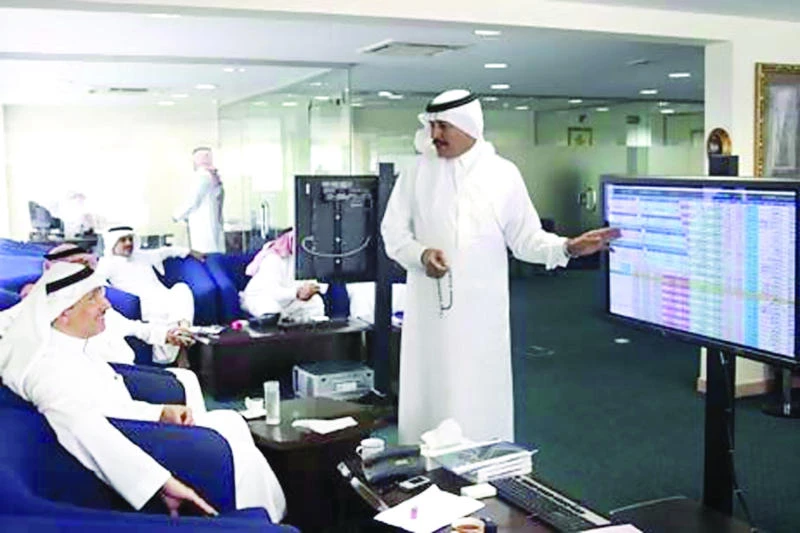
Tadawul rises 2%; SABIC gains 2.6%