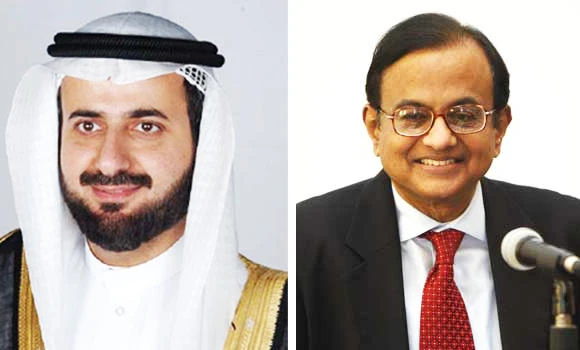
Saudi Arabia and India have put trade and economic issues at the top of their agenda as Indian Finance Minister P. Chidambaram meets Minister of Commerce and Industry Tawfiq Al-Rabiah, here Tuesday. “The two ministers will meet within the framework of the joint economic commission,” said Sibi George, deputy chief of the Indian mission, Monday.
Chidambaram, who arrived here with an 11-member entourage of top Indian officials, will focus on “shared interests in the realms of trade, investment and economy.” The two ministers will hold strategic level discussions of the major issues on the bilateral agenda, including economy, trade and investment with special reference to the areas identified for joint cooperation.
Chidambaram, who is accompanied by Arvind Mayaram, secretary in the Department of Economic Affairs, will co-chair the meeting with Al-Rabiah. The meeting is expected to discuss various issues of economic and commercial interest to both sides, including an increase in exchange of business delegations, trade facilitation, cooperation between educational institutes and sharing expertise in science and technology.
A statement released by the Indian Embassy says the Indian finance minister will co-chair the 10th session of the Saudi-India Joint Commission Meeting (JCM) scheduled for Tuesday morning at the Council of Saudi Chambers here. The statement said that the visit of Chidambaram would give a major boost to the progressively growing commercial ties between the two nations. Today, Saudi Arabia is the 4th largest trade partner of India and the bilateral trade exceeded $43.78 billion in 2012-2013.
The import of crude oil by India forms a major component of bilateral trade with Saudi Arabia being India’s largest supplier of crude oil, accounting for almost one-fifth of its domestic needs. Saudi Arabia has emerged as a major market in the world for Indian exports and is destination of more than 4.18 percent of India’s global exports. On investment front, Riyadh and New Delhi have invested millions of dollars in joint projects.
According to Saudi Arabian General Investment Authority (SAGIA), the state-owned investment regulatory authority, Saudi Arabia has issued 426 licenses to Indian companies for joint ventures.
Moreover, several Indian companies have established collaborations with Saudi companies and are working in the Kingdom in designing, consultancy, financial services and software development.
The Kingdom, which has expressed keen interest to invest in India, is currently the 48th biggest investor in India.
On the other hand, about 2.8 million strong Indian community in Saudi Arabia is the largest expatriate group. The Indian expatriates are the ‘most preferred community’ due to their expertise, sense of discipline, law abiding and peace-loving nature.
Saudi Labor Minister Adel Fakeih visited India on Jan. 1 and signed an agreement on labor cooperation for domestic service workers recruitment, paving the way for more recruitment of domestic workers from India.
Trade expansion tops agenda as Al-Rabiah meets Chidambaram