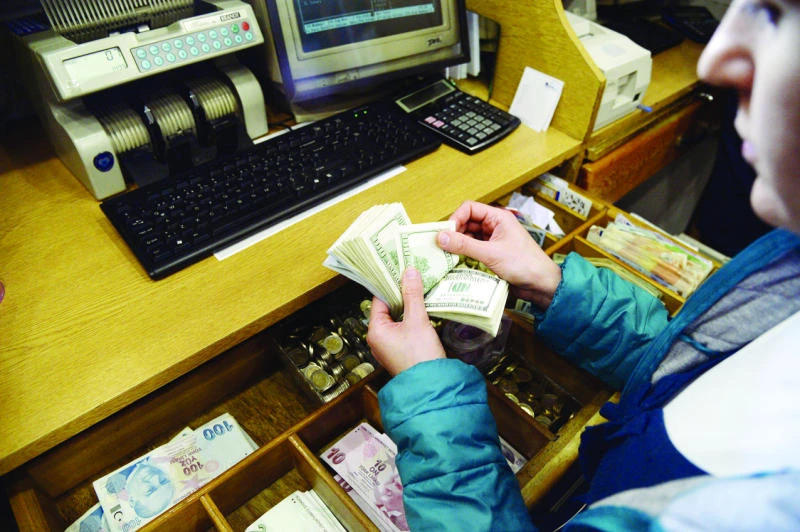
ANKARA: The beleaguered Turkish lira recovered from all-time lows after the central bank intervened directly in foreign exchange markets for the first time in two years.
The lira tumbled to around 3.11 to the euro and 2.29 to the dollar in morning trade but recovered to 3.0922 and 2.2674 in the early afternoon after the “aggressive” central bank action.
It has lost about 10 percent since mid-December — hitting new lows almost daily this year — battered by an escalating corruption scandal rocking the government and concerns about Turkey’s gaping currency account deficit.
The bank said in a statement it was intervening with direct foreign-exchange sales because of “unhealthy price developments.”
Bankers estimated it had spent between $1.5 billion and $2 billion to prop up the currency as it neared the key threshhold of 2.3 to the dollar.
Ali Cakiroglu, senior investment strategist at HSBC Bank, said it was an “aggressive intervention” by the bank.
“However, it is only a temporary measure,” he warned.
“Because the market needs motivation. This could be done either by increasing additional tightening days, or explicitly raising interbank rates to nine percent.”
The central bank has so far refrained from hiking interest rates to defend the lira with the government reluctant to jeopardize its growth and inflation targets.
At its highly-anticipated monthly policy meeting on Tuesday, it said it was holding its key overnight rate at 7.75 percent.
However, it gave itself room for maneuver, saying it would raise interbank rates to nine percent on “additional monetary tightening days” — nevertheless confusing the markets about its intentions.
At the World Economic Forum in Davos, Turkey’s Deputy Prime Minister Ali Babacan told Bloomberg HT television the government did not have any exchange rate targets but said the negative economic impact of the currency volatility was limited.
“It is the first time since January 2012 that the central bank has resorted to direct intervention in the market by directly calling banks to sell currency,” Deniz Cicek, an economist at Turkey’s Finansbank, said.
Turkey central bank intervenes after lira hits new low