MASHIKO, Japan: Crows circle around the tract of cleared land that was once Hoya Corp.'s Pentax camera plant here. All that's left is a sign directing employees to a dormitory and gymnasium, both pulled down years ago when a strong yen was driving manufacturers abroad.
This was once part of Japan's industrial heartland, a place that shows little sign of benefiting from Prime Minister Shinzo Abe's success in weakening the currency and battling deflation. While a 36 percent tumble in the yen has stoked record profits at big exporters like Toyota, the jobs lost here have yet to return.
Mashiko is in Tochigi, one of the prefectures around Tokyo that churned out the world's gadgets and technology before Japan's bubble burst in the 1990s and China gradually took over the mantle of production. The region is littered with abandoned or downsized plants, some from companies that are still global brands, like consumer electronics giants Panasonic and Sony. Most of the blight stems from the hundreds of smaller suppliers that make up the lion's share of Japan's manufacturing.
"We haven't heard of any major cases of manufacturers coming back here because of a weaker yen," said Ryutaro Magome, a researcher at the Ashigin Research Institute Ltd., a unit of the Ashikaga Bank in Tochigi. "When you think about the cost of recreating what's gone and the yen's current level, it makes sense for them to keep production abroad."
Less than an hour north of Tokyo by bullet train, Tochigi shows the scale of the task facing Abe as he tries to get companies to boost wages and employment and bring back the days of consumer-driven inflation. The number of factory jobs in the prefecture remains more than 10 percent below the level in 2008, when the collapse of Lehman Brothers Holdings Inc. sparked a global recession.
"A weaker yen is sending benefits to major exporters, but Tochigi doesn't have many big companies and the impact hasn't reached the smaller guys," said Takao Watanabe, who works in the planning department of the Tochigi Bank. "The labor market has yet to recover in Tochigi, which is why wages are not increasing and consumer spending isn't improving much."
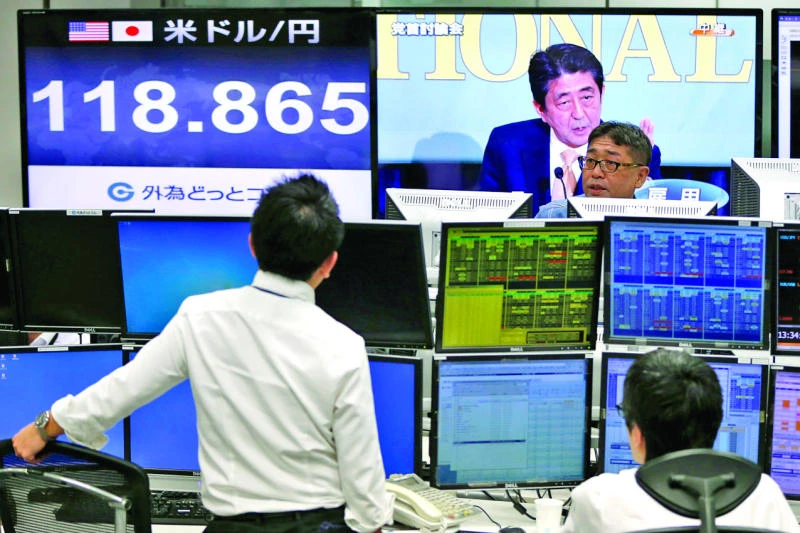
Prolonged bouts of yen strength became a feature of the two decades of Japan's economic stagnation before Abe took office for a second time in 2012. The prime minister championed a reflation program and installed monetary expansionists at the central bank who sent the yen tumbling. The currency has fallen 36 percent against the dollar since Sept. 26, 2012, when Abe became the leader of the Liberal Democratic Party.
The policy succeeded in ending trenchant deflation, revived demand for credit and sent the stock market surging, lifting household assets to a record. While still less than the pace of inflation, wages have risen for an 11th consecutive month in January.
Some big manufacturers are reacting. Panasonic, air-conditioner maker Daikin Industries and Sharp, which cut TV output in Tochigi, said they may bring some work back to Japan, while Canon and Nissan said they plan to boost domestic output. Fanuc Corp., a maker of factory automation systems, plans to open a new factory in Tochigi next year, the company said in a statement.
Yet many companies are reluctant to boost investment in a home market where the population is declining and workers are aging. Industrial output remains below a 2007 peak, and the most recent gross domestic product report showed capital spending dropped for a third straight quarter.
Down the road from the razed Hoya camera factory in Mashiko, Yuichi Ojima runs an auto-inspection and repair shop that's been in business for more than 40 years. He recalls the days when houses were built for workers at the plant and their families. For him, a weaker yen means more expensive imported parts.
The mention of Abenomics, the universal label of Abe's economic plan, brings only a hollow laugh from the mechanic.
Weaker yen fails to bring manufacturers back in Japan