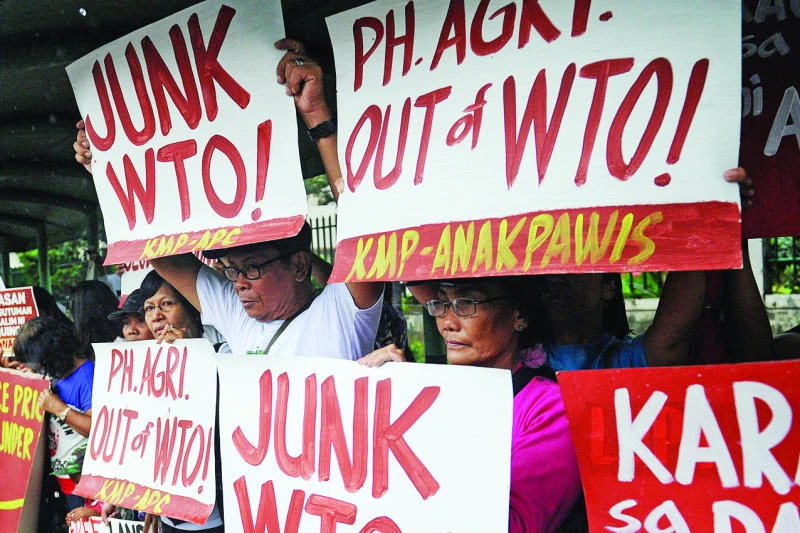
NAIROBI: Afghanistan and Liberia are set to join the World Trade Organization (WTO) as it holds its first ministerial conference in Africa, opening Tuesday in Nairobi.
“This conference will boost trade and investment, create employment and ultimately contribute to poverty eradication,” Kenyan President Uhuru Kenyatta said in a welcome message, calling the meeting “historic and crucial.”
But he also stressed the need for African countries to diversify their economies.
“National, regional and multilateral policy choices that we make will matter,” Kenyatta said.
“The choices and positions we take will have consequences.”
Security is tight for the conference, with some 6,000 delegates in Nairobi.
Kenyan Foreign Minister Amina Mohamed said the WTO had offered members “very little value” so far, voicing frustrations particularly of developing nations who stand to gain most from gaining access to markets in more industrialized nations.
“A decision clearly needs to be made in Nairobi on what to do with this organization,” said Mohamed, speaking at a news conference to open the four-day meeting, the first WTO ministerial meeting to be held in Africa.
She said a failure to reach a major trade deal, which must secure the agreement of every member to pass, would prove that the “negotiating function of the WTO is broken.”
“We will need to either fix it, agree on a new way of negotiating, or agree to remove it so the WTO focuses on dispute settlement, on trade policy review and the other areas that do not have a negotiated element in them,” she said.
The four-day Nairobi meeting comes two years after ministers from WTO member countries reached a landmark deal in Bali on overhauling global customs procedures.
The 2013 pact was the first multilateral agreement concluded by the WTO since its inception in 1995, and also the first concrete progress since the Doha Round of trade liberalization talks began.
“We took 18 years to deliver our first multi-lateral agreement in Bali, that’s way too long, we can’t wait another 18 years to deliver again,” said WTO chief Roberto Azevedo.
But there are few signs that countries will be able build on the momentum gained in Bali to carve out even a limited deal in Nairobi.
“I think if we go out of Nairobi with renewed confidence and with a common vision for the future that will be a fundamental achievement,” Azevedo said.
Insiders say negotiators will focus on trying to nail down a partial deal focused on agriculture export competition and trade development in the world’s poorest nations, but admit the chances of succeeding are shaky at best.
“It will attempt to deliver on the elusive agreements of the Doha Development Agenda, and deal with controversies over agricultural subsidies and market access for developing countries,” the European Center for Development Policy Management (ECDPM) think tank said.
“However, despite previous efforts, scant progress has been made and a breakthrough at Nairobi seems unlikely.”
WTO deputy director David Shark was more upbeat, saying it was hoped that deals would be struck on agriculture, export subsidies and food security, and that there would be a debate on the nature of international trade.
“There is a very broad issue that members are discussing: how do we conduct trade negotiations in the future,” he said.
“Do we continue in the same vein as we have under the umbrella of the Doha round? Or do we look for new and different ways? That is a very contentious issue among our members.”
Ceremonies for the accession of Liberia are expected to be held on Dec. 16, with the accession of Afghanistan a day later, the WTO said.
WTO ‘has offered very little value to members’