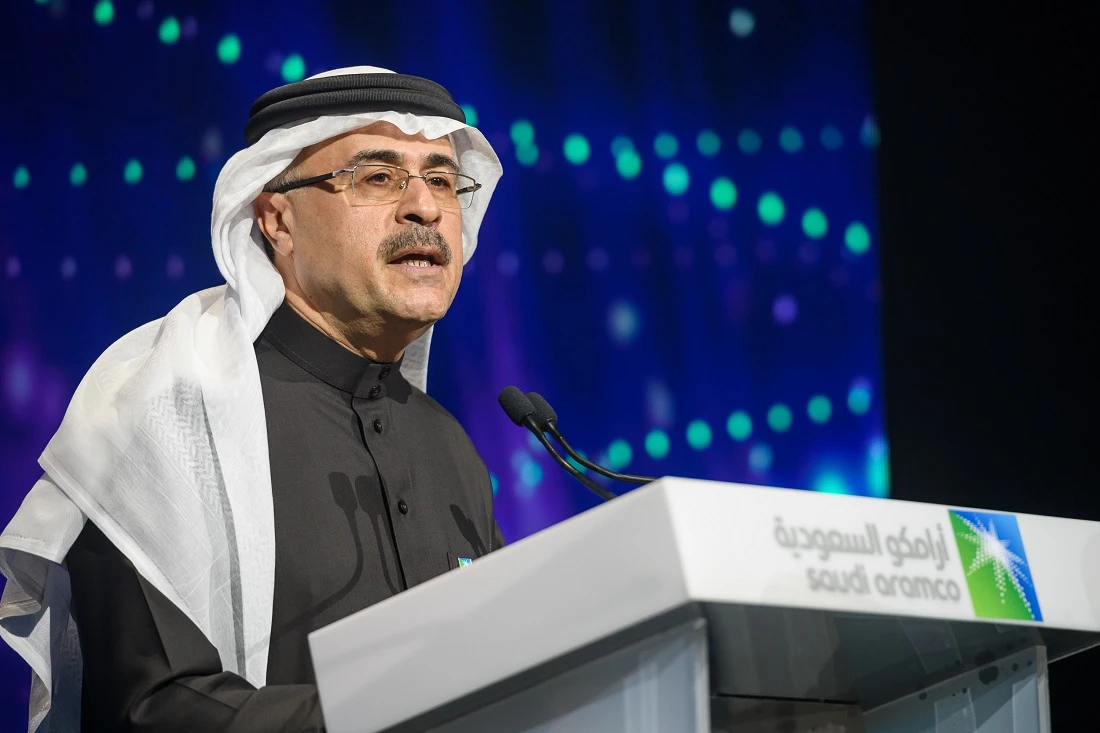
RIYADH: Rebuilding global oil inventories while meeting demand could take up to two years once the Strait of Hormuz fully reopens and market confidence returns, Aramco President and CEO Amin H. Nasser said.
Speaking at the Energy Intelligence Forum in London, the oil giant’s chief called for closer alignment among governments, oil suppliers and customers to withstand geopolitical shocks and strengthen global energy resilience.
The comments come as the war in the Middle East has disrupted oil flows through the Strait of Hormuz, affecting energy infrastructure and shipping and raising concerns about global energy security.
The Strait, one of the world’s most important oil chokepoints, handled an average of 20 million barrels per day in 2024, equivalent to about 20 percent of global petroleum liquids consumption, according to the US Energy Information Administration.
Saudi Arabia’s crude and condensate exports accounted for 38 percent of crude flows through Hormuz, or about 5.5 million barrels per day.
Describing the market implications of regional disruption, Nasser said: “Until Hormuz fully re-opens and confidence returns, the crude reality is that pressure at both ends of the barrel will intensify. Even then, replenishing inventories while meeting demand could take up to two years.”
Oil remains central to energy security
Nasser said oil and gas remain critical to the global economy despite the transition toward alternative energy sources, describing them as “the lifeblood of modern civilization.”
He argued that alternatives are not shielded from supply pressures either, saying: “With shortages of aluminum, sulfur, helium, and petrochemicals, solar, wind, and EVs are not immune either.”
He also pointed to the Middle East’s weight in global supply: “Half the world’s proven oil reserves are in the Middle East, along with most of its spare production capacity … Our region’s strategic importance is set to grow, as the other resource bases mature, and new ones are potentially harder to find and less economically competitive.”
Aramco builds resilience across assets
On how Aramco has coped with the disruption, Nasser said resilience comes from many layers working together rather than one asset.
Those include global strategic storage, spare production capacity, multiple crude grades, domestic gas storage and a tanker fleet operated through Bahri, as well as the company’s balance sheet.
Aramco’s local supply chain has provided more than 90 percent of the materials used in restoring damaged assets, Nasser said.
The company is studying additional crude-export routes and more overseas storage to reduce the impact of “short-term disruptions.” Aramco has also relied on infrastructure including its East-West pipeline and storage capacity to maintain business continuity during the regional crisis.
Nasser called for greater cooperation between producers and consumers on emergency response, supply planning, joint stockpiling, refinery and petrochemical flexibility, supply chains and cybersecurity.
“The international community must stand together to safeguard the free flow of energy and goods,” he said.