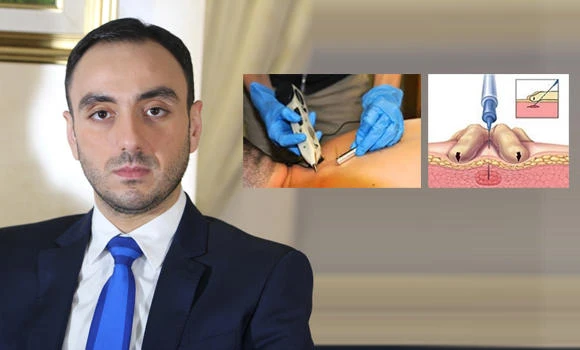
Many people suffer from sensitive spots in muscle, often called trigger points or muscle knots. Trigger points are irritable, hard “knots” within a muscle that may cause pain over a large area, leading to difficulty performing everyday tasks. When a trigger point is touched, it hurts and can also cause pain in nearby areas. When a person has painful muscles and trigger points, it is sometimes called Myofascial pain syndrome. Common locations for these problems are the arm and neck.
Dr. Adel Roujoula, Consultant of Physical Therapy, Head of Rehabilitation Center at the International Medical Center, Jeddah and the first to bring the Dry Needling technology to the kingdom says: “Dry needling is a treatment that involves a very thin needle being pushed through the skin to stimulate a trigger point. It may release the tight muscle bands associated with trigger points and lead to decreased pain and improved function. It is an effective therapy to treat muscular tension and spasm which commonly accompanies conditions such as arthritis, nerve irritation, muscular strain, ligament strains and herniated discs”.
It is called “Dry” Needling because there is no solution injected as with a hypodermic needle during a flu shot. With Dry Needling, the needle itself and the effects it produces within the tissue is the treatment. When an injury occurs from repetitive use or acute trauma, inflammation will be produced from the damaged tissues. The damaged tissues will also go into a protective tension state or contracture to guard against further damage from utilizing the injured tissue.
This contracture and inflammation inhibit microcirculation which limits both the oxygen rich blood reaching the injury and the waste products leaving the injury. The injury site becomes hypoxic (decreased in oxygen) which stimulates the body to produce fibroblasts, a cell that produces fibrosis or scar tissue. This fibrosis and scarring builds up around the muscles and tissues limiting the tissues ability to fully function (lengthen/shorten) and can also cause compression and irritation of nerves (such as carpal tunnel syndrome) – all of which inevitably lead to biomechanical disturbances in gait and function.
This technology uses a small, solid filament needle which is inserted in a contracted painful knotted muscle to create a local twitch reflex which is both diagnostic and therapeutic as it is the first step in breaking the pain cycle as research shows will decrease muscle contraction, reduce chemical irritation, improve flexibility and decrease pain. When a needle is inserted into muscle it will also produce a controlled lesion and will cut between three to fifteen thousand individual muscle fibers. The body considers the needle as a foreign invader and will activate the immune system as a response. The cut muscle fibers also produce an inflammatory reaction that your body will respond to not just locally but all over the body to reduce inflammation systemically.
Dr. Adel A. Al Roujoula, DScPT, MSc
Consultant of Physical Therapy
Head of the Rehabilitation Center
International Medical Center, Jeddah
Treatment lies within the needle itself