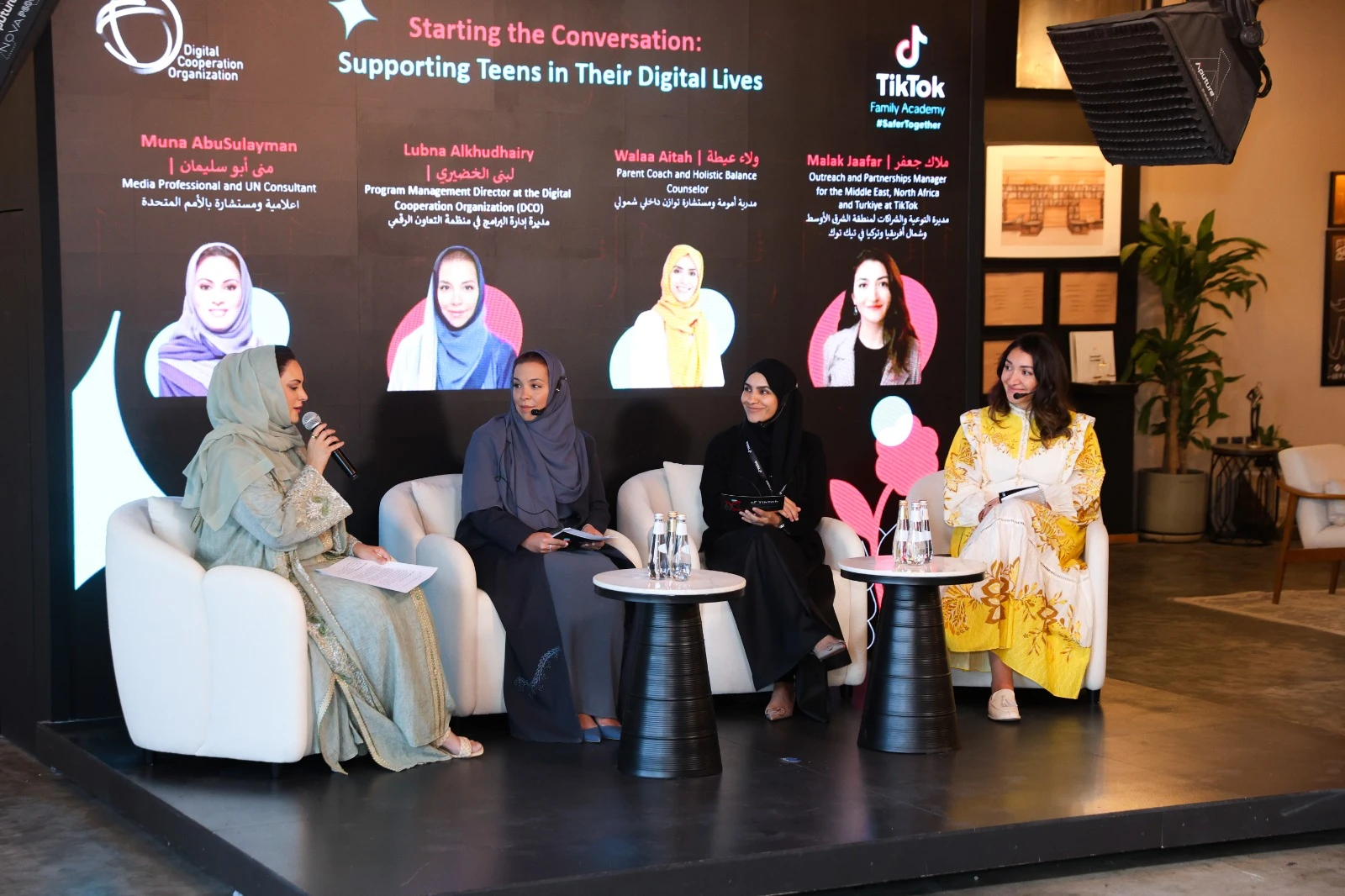
- Riyadh event focused on making digital safety information more accessible and strengthening communication between parents and teenagers
RIYADH: TikTok brought its Family Academy initiative to Saudi Arabia earlier this September, gathering together parents, experts, TikTok representatives, and creators in Riyadh to discuss teenage digital safety and well-being.
Following earlier editions in Egypt, the UAE and Morocco, the Riyadh event focused on making digital safety information more accessible, strengthening communication between parents and teenagers, and providing families with practical tools to manage young people’s online experiences.
The program opened with “Starting the Conversation: Supporting Teens in Their Digital Lives.” Speakers included Lubna Alkhudhairy of the Digital Cooperation Organization, parenting coach Walaa Aitah, and Malak Jaafar, part of TikTok’s Trust and Safety team and its outreach and partnerships manager for the Middle East, North Africa and Turkiye.
Jaafar told Arab News the academy was created because parents frequently feel overwhelmed by the speed of technological change.
“There is a need for information to be made very clear, very simple and accessible. Parents, guardians and teachers are already overwhelmed,” she said.
“We wanted to create a space that meets that need. People need access to information, especially around safety, but we also wanted to create places where people can have these conversations honestly and even be vulnerable.”

She said the same concern has emerged across countries where the academy has operated.
“I have seen it across countries, and a common thread among all of them is parents coming to us and saying, ‘Where do we start?’ There is this frustration because things are moving so quickly, and then they start feeling, ‘Are we behind?’ And most of the time, the answer is: ‘You’re not behind. You need to know where the information is.’”
TikTok teen accounts have more than 50 safety and privacy features and settings, including default private-account protections, interaction restrictions and a default 60-minute daily screen-time limit for users under 18. Family Pairing lets parents or guardians link their account to a teenager’s and manage screen time, privacy, content and interactions.
Jaafar said those controls work best as part of a conversation rather than simply an imposed restriction.
“If you want to tell a teenager what to do, you cannot just tell them what to do. That applies to everyone,” she said. “You need to win them over. You need to bring them on board before you start the train and move forward.”
According to TikTok’s Q1 2026 Community Guidelines Enforcement Report, it removed 2.8 million videos in Saudi Arabia during the first quarter, with 9 percent removed proactively. Globally, it removed 25.7 million accounts suspected of belonging to users under 13.
Jaafar said TikTok also relies on outside expertise to identify risks and adapt safety approaches to local contexts.
“This is where we rely on very localized experts.
“We are not here to impose. We are here to learn,” she added. “Of course, we have in-house experts at TikTok, but external experts are the ones who give us those perspectives and help us have those conversations.”
She said the Digital Cooperation Organization is TikTok’s safety partner in Saudi Arabia, and her Riyadh visit also included meetings with partners on safety, the platform’s growth, and its economic impact in the Kingdom.
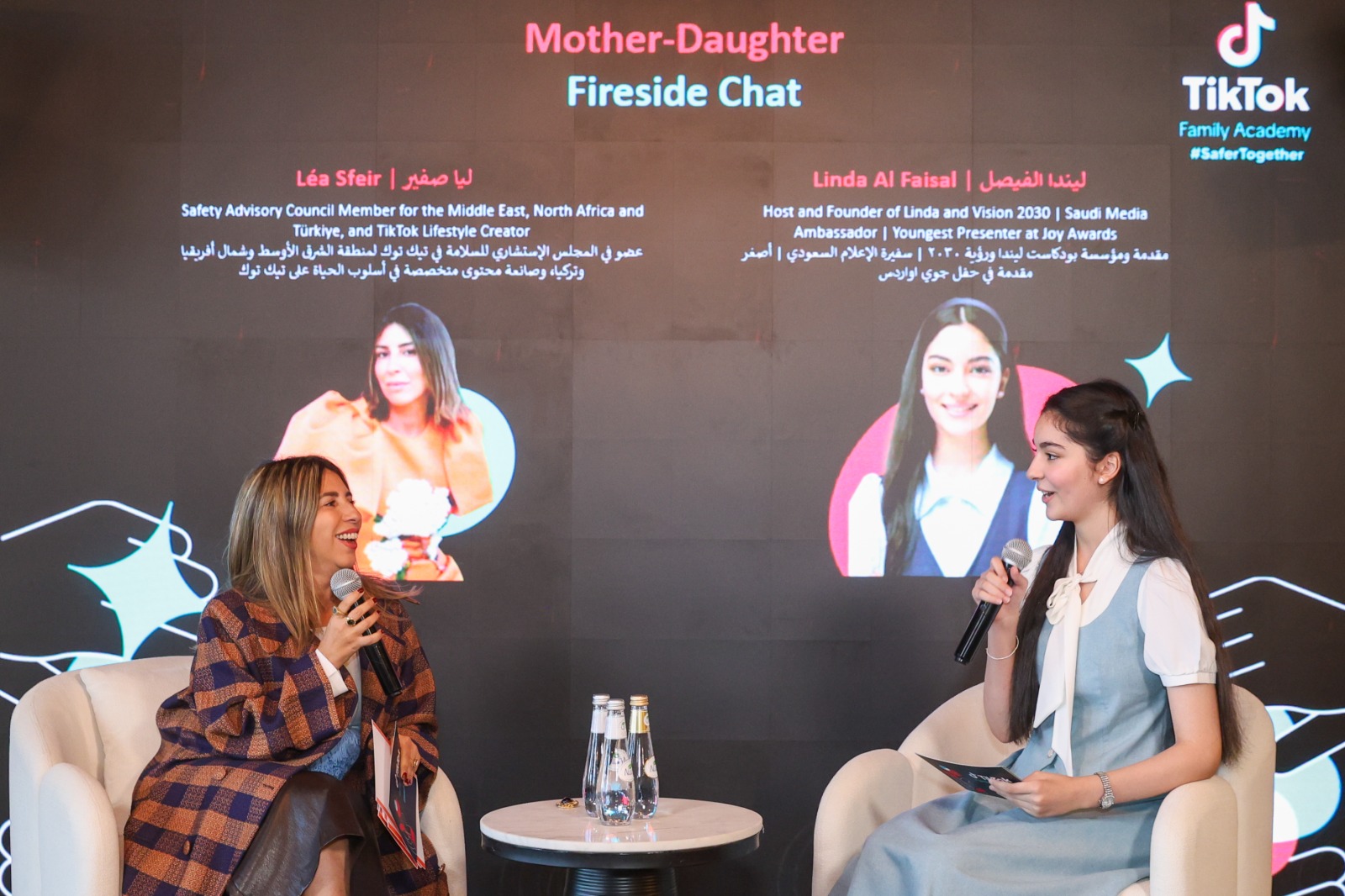
During the panel, speakers encouraged parents to notice changes in teenagers’ sleep, behavior, and social interaction, and to maintain open communication about uncomfortable online experiences. The discussion stressed the roles of parents, schools, platforms, and institutions, aiming to build a holistic ecosystem to protect teens’ digital well-being.
A later fireside conversation featured Lea Sfeir, a content creator and member of TikTok’s regional Safety Advisory Council, alongside young Saudi presenter Linda Al Faisal, founder and host of “Linda and Vision 2030.” Their discussion explored parental involvement, boundaries and how teenagers can balance independence while staying supported online.
Jaafar said the academy is designed to keep outside voices at the center of the process.
“Family Pairing is our flagship program for online safety for teenagers and parents … And it is not a platform where we are the only ones on stage. We really want to bring others onto the stage.
“Safety is a ‘never-ending race.’ It is an ongoing conversation, and we need as many people as possible to be part of it: creators, NGOs, academics and others.”
As teenagers spend more of their social lives online, the challenge is not simply to restrict use, but to create safeguards that are responsive to changing risks while still allowing young people appropriate independence and participation.
TikTok’s initiative forms part of a broader debate over the responsibility of social media companies toward younger users. Giving families the tools and information can support safer use, but platform-led measures are only one part of the equation. Independent experts, civil society groups and regulators remain important in evaluating whether safeguards work in practice.