Iraq’s government has secured legal backing for its decisions on border crossings in the Kurdistan Region and oilfields in disputed territories, vowing to press ahead with its anti-smuggling crackdown while ruling out a military deployment to the region.
An authorized government source said Baghdad had no plans to send troops into Kurdistan to tighten control over border crossings, stressing that smuggling would be tackled through constitutional mechanisms and coordination between federal authorities in Baghdad and regional authorities in Erbil.
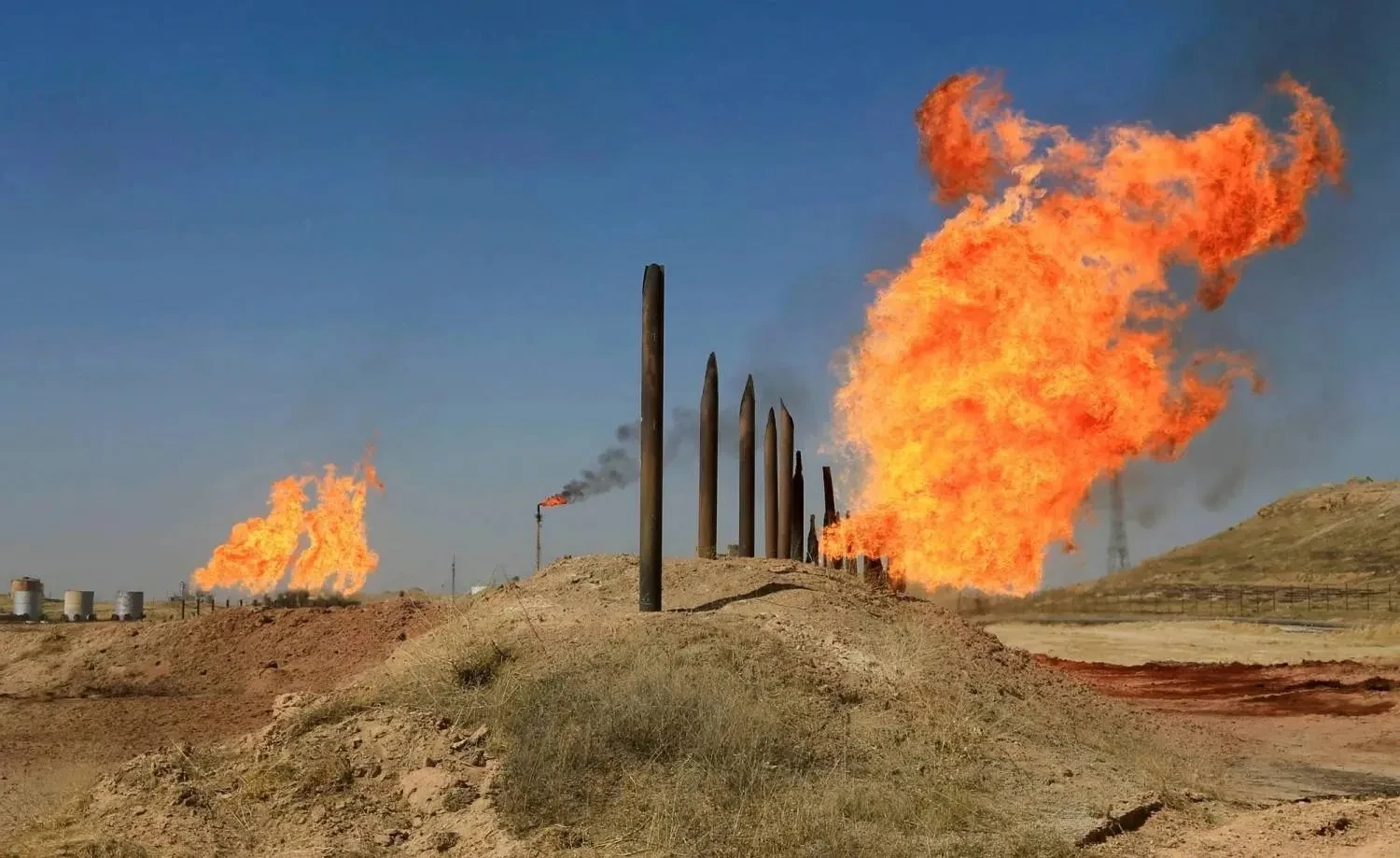
The assurances followed mounting Kurdish fears of a federal military deployment after intelligence reports uncovered routes used to smuggle oil from Kirkuk and Sulaimaniyah in northern Iraq to Iran and onward to Afghanistan.
Kurdish platforms circulated videos purportedly showing Peshmerga units deploying along a road linking cities in the Kurdistan Region with other Iraqi provinces. The footage could not be independently verified.
Will Baghdad send troops to Kurdistan?
The Iraqi source dismissed reports that Prime Minister Ali al-Zaidi was mobilizing troops to seize control of the region’s official and unofficial border crossings.
“There are absolutely no such intentions ... It will not happen because there is no need for such action,” the source told Asharq Al-Awsat.
The source urged parties to the dispute to “avoid escalatory rhetoric and resort to official channels to find solutions consistent with existing laws.”
“The dispute between the region and the federal government is primarily over border crossings used for smuggling. These must be brought under control through cooperation between Baghdad and Erbil, in accordance with the constitution,” the source said.
While suggesting the crisis was headed toward a resolution, the source stressed that Baghdad insisted on having full knowledge of all activity at those crossings, as it does elsewhere in the country, where it has drawn up a comprehensive plan to secure crossings and stamp out all forms of smuggling.
Al-Zaidi on Tuesday ordered federal authorities to take control of border crossings administered by the Kurdistan Region following an oil-smuggling investigation at the state-run North Oil Company.
The move sparked anger in Erbil.
Kurdistan Democratic Party (KDP) leader Masoud Barzani sent a message to Baghdad urging adherence to constitutional principles and wisdom in resolving disputes, rejecting decisions driven by “personal whims.”
“Iraqi Kurdistan has legitimate and inherent rights and will not submit to decisions that violate the constitution,” Barzani said.
Kurdistan Regional Government (KRG) Prime Minister Masrour Barzani described Baghdad’s decisions as “unacceptable in any way,” but stressed that the door remained open for dialogue with the federal government to reach a mutual agreement.
‘Foreign dictates’
The Iraqi government rejected accusations that it was acting under “foreign dictates,” insisting that it exercised its constitutional powers and responsibilities with complete independence.
“Iraq is a fully sovereign, democratic federal state that derives its powers and the legitimacy of its institutions from the constitution and the will of its people,” it said in a statement.
The government said Iraqi decision-making was an exclusively national matter and that its actions within the country’s internationally recognized borders reflected its independent will and were grounded solely in its constitutional powers and legal responsibilities.
They were not a response to encouragement, dictates or instructions from any foreign party, it added.
The government stressed that it neither derived the legitimacy of its decisions from the positions or policies of other countries nor awaited anyone’s encouragement to exercise its constitutional and sovereign responsibilities.
Its actions, it said, were guided by Iraq’s interests, the rights of its people and the requirements of its security and stability.
The Kurdistan Region’s Council of Ministers on Wednesday renewed its criticism of what it called “military language and threats” in a statement issued in the name of the spokesperson for the commander-in-chief of the Iraqi armed forces.
It demanded the full implementation of Iraq’s constitution, particularly Article 140.
In a statement following a meeting chaired by Masrour Barzani, the council said Baghdad’s recent measures had dominated discussions.
It expressed concern and dismay over the spokesperson’s statement, describing it as a constitutional violation, an infringement of the region’s constitutional rights, a sign of disregard for federalism and an attempt to return Iraq to centralized rule.
The KRG called for the establishment of Iraq’s Federation Council and the reconstitution of the Federal Supreme Court in accordance with constitutional provisions to ensure representation of all segments of Iraqi society.
Legal backing
Al-Zaidi’s decisions on Kurdistan gained legal backing on Wednesday when Iraq’s Federal Supreme Court ruled that Baghdad could deploy federal forces to secure the country’s international borders, including those in territories administered by the Kurdistan Region.
The court said federal authorities could also oversee government departments operating at all border crossings, including those in Kurdistan.
State television reported that the court stressed the need for Baghdad to coordinate with regional and provincial governments on customs administration.
The court said establishing a unified national system to automate border crossings and customs operations, linking them electronically to relevant federal ministries and agencies nationwide, including in Kurdistan, and setting technical, financial and customs standards for their operation fell within federal jurisdiction.
These powers, it said, were part of the federal authorities’ mandate to formulate fiscal and customs policies and regulate trade across regional and provincial borders.
The court also affirmed that the federal government, together with the governments of producing regions and provinces, was responsible for managing extracted oil and gas, which belong to all Iraqis.
It upheld the constitutional and legal powers of the federal Oil Ministry and relevant federal oversight bodies to supervise, monitor and audit oil and gas fields, operations and contracts involving production, extraction, marketing and exports.
Iraq’s Supreme Judicial Council, meanwhile, called on the federal government, the KRG and all political forces concerned to abide by the country’s permanent constitution.
Joint committee for dialogue
In Baghdad, a KDP delegation led by Hoshyar Zebari, a member of the party’s Politburo executive committee, met Iraqi Parliament Speaker Haibat al-Halbousi on Tuesday evening.
Delegation member Abdul Mohsen al-Saadoun said on Wednesday that the talks focused on the prime minister’s recent decisions and statements concerning Kurdistan.
The delegation urged Halbousi, as head of the legislative branch, to fulfill his responsibilities and take a clear stand on any demand or violation at odds with the Iraqi constitution, Saadoun said.
“There must be a joint committee between Erbil and Baghdad so that any problem or new development can be addressed through dialogue,” he added.
Al-Zaidi’s decisions continued to fuel political tensions.
KDP member Vian Sabri told Asharq Al-Awsat that Baghdad had resorted to “escalatory rhetoric against the region to settle routine disputes that could be resolved through dialogue and in accordance with the constitution.”
“Viewing matters through the lens of control and centralization, and treating relations between Baghdad and Erbil as a contest in which one side seeks to impose its will on the other, are precisely what fuel Kurdistan’s fears and deepen mistrust,” she said.
Mahmoud Khoshnaw, a senior official in the Patriotic Union of Kurdistan (PUK), said what angered the Kurds about al-Zaidi’s decisions was that he had approached smuggling as though the region itself was involved in or supported the activity, when several issues needed clarification.
“The federal government’s recent decisions were ill-judged, particularly its use of military language in addressing the region, which could affect the extent of Kurdistan’s support for al-Zaidi,” Khoshnaw said.
Iraqi politician Khamis al-Khanjar proposed on Wednesday forming a high-level committee within the State Administration Coalition, which brings together Shiite, Kurdish and Sunni political forces, to resolve disputes between Baghdad and Erbil.
He also called for expediting the passage of an oil and gas law.