JERUSALEM: Until recently it took Abu Amr four minutes to drive his son to school. Now, because of security checkpoints aimed at combating a wave of attacks on Israelis, it takes 40.
Concrete blocks and partitions have been set up around his Palestinian neighborhood of Jabel Mukaber, which came under the spotlight earlier this month when police said the killers of three Israelis were residents of the area.
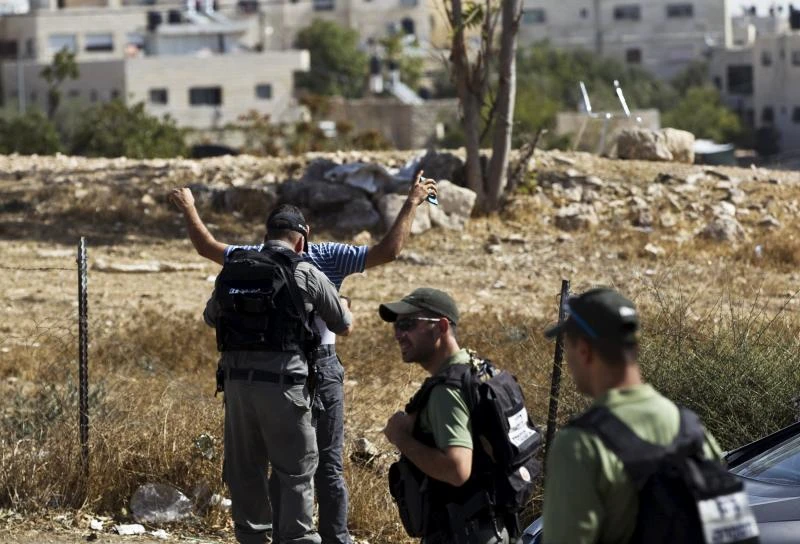
To pass through these new obstacles in occupied east Jerusalem, Abu Amr must abandon his car and go on foot, but only after identity and other checks.
Men must lift their shirts to show they are not carrying a weapon or a bomb. Women must open their bags to be searched by police. Israeli security forces have deployed into Palestinian areas and erected obstacles to control residents’ movements.
The United Nations says that 38 barriers, including 17 checkpoints, have sprung up in nine Palestinian neighborhoods, disrupting the daily lives of at least 138,000 Palestinians.
On a recent day, Abu Amr, 34, needed to pick up the boy from school and take him to a doctor’s appointment.
He was running late and fuming at “the collective punishment which is the manifestation of the racist discrimination” by Israel in east Jerusalem.
Since the beginning of October, Palestinian-Israeli unrest has spiked across the occupied territories but it is in east Jerusalem where Palestinians “pay the highest price,” Abu Amr says.
The Israelis “believe that the solution will be imposed by force, but more force will only bring more violence,” he adds.
Checkpoints stir Palestinian anger in east Jerusalem