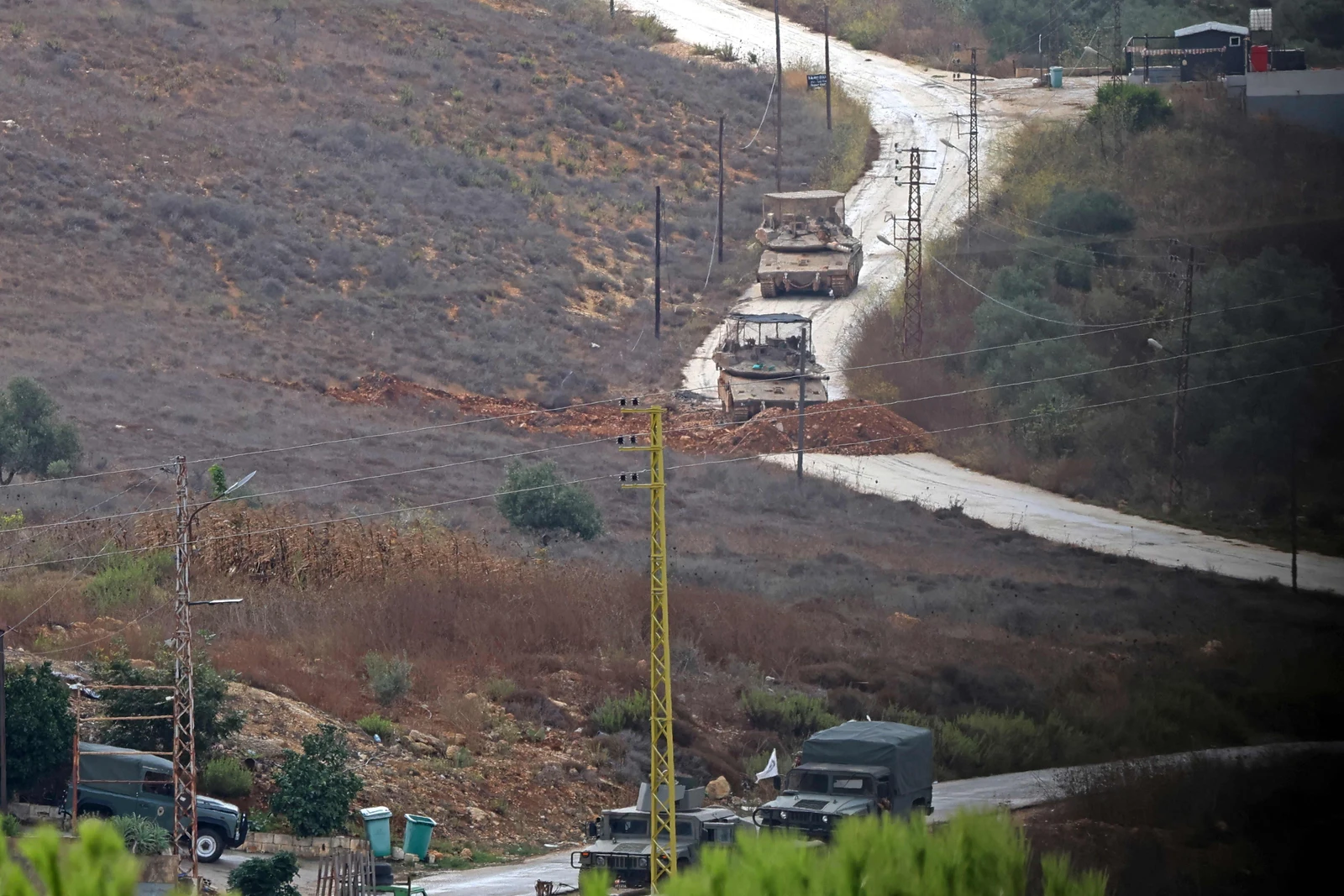
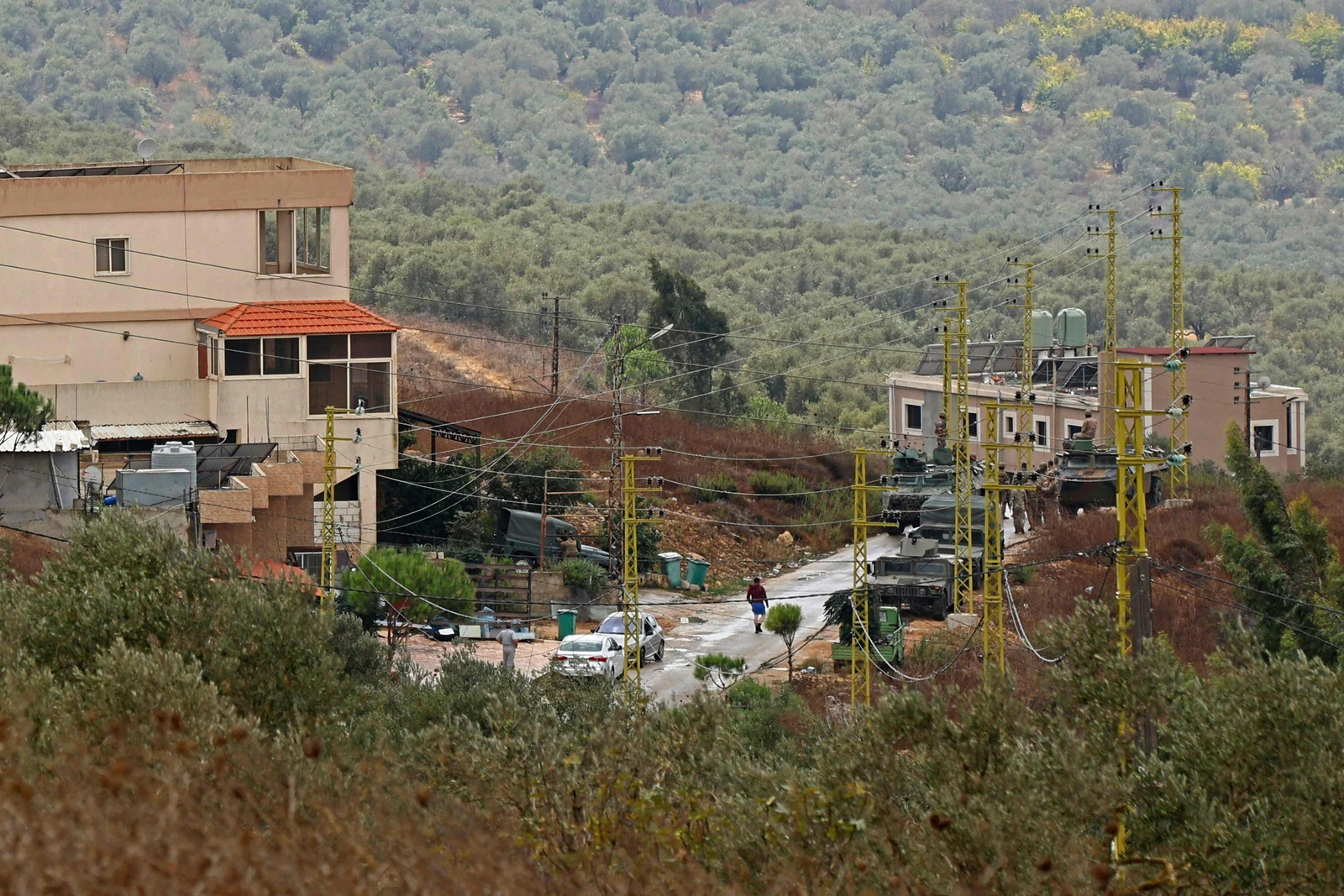
- Lebanese military source says position was established to help residents reach farmland in coordination with the Mechanism Committee
- Former Lebanese representative to UNIFIL says Israeli action is obstructing the army’s deployment
Deïr Mimass, Lebanon: The Lebanese army on Friday evacuated a newly established position on the outskirts of Deir Mimas in the Marjayoun district after Israeli forces threatened to target it.
A military source at the Lebanese Army Command told Arab News that the position had been established to help residents of the area reach their agricultural land, in coordination with the Mechanism Committee.
However, the Israeli military claimed on Friday that the position was inside the so-called “yellow zone” it has designated in areas of southern Lebanon into which its forces have advanced and from which residents have been displaced and prevented from returning.
Israeli troops threw stun grenades toward Lebanese soldiers stationed at the new position in an attempt to force them away, while another Israeli force advanced toward the outskirts of Deir Mimas and reached an intersection close to the Lebanese army post.
The Lebanese soldiers initially remained in place while diplomatic contacts were made.
The Israeli military then threatened to strike the Lebanese troops if they did not leave and demanded their withdrawal.
Following contacts with the Mechanism Committee, the Lebanese army eventually evacuated the position. Israeli forces subsequently moved into the site.
Deir Mimas lies about 92 km from Beirut in the predominantly Christian Marjayoun district. The area has no known Hezbollah presence.
Maj. Gen. Abdul Rahman Chehaitly, a former Lebanese government representative to UNIFIL, told Arab News that the incident indicated Israel was not prepared to accept an expansion of Lebanese army deployments inside the “yellow zone,” including in areas discussed as part of pilot arrangements during US-sponsored Lebanese-Israeli negotiations.
“Through this action, the Israeli side is preventing the Lebanese army from strengthening its deployment in the south,” Chehaitly said. “This means that the Israeli side has still not ended its war in Lebanon.”
He said the Lebanese army’s presence in Deir Mimas was intended to reinforce the authority of the state in an area where Hezbollah has no presence.
“The army’s objective in consolidating its presence there is to reinforce the presence of the state,” he said. “But Israel appears to want to contain the Lebanese population in this area and does not want the Lebanese army to be their reference point.”
The incident comes about two weeks after Israeli forces established operational control over the Ali Al-Taher ridge in the Nabatiyeh governorate, where Israel said Hezbollah had built underground military infrastructure.
There had been expectations that Israel might halt further advances into Lebanese territory after taking Ali Al-Taher, given the strategic importance of the high ground.
However, Chehaitly said recent developments suggested Israel may instead be seeking to deepen what it considers its defensive line inside southern Lebanon.
“We do not know what Israel’s current direction is — whether it wants to take control of Jabal Al-Rihan or Jabal Safi,” he said.
“This is a new and unclear military phase, and it is not known whether a diplomatic solution will come before a third phase of the war.”
Chehaitly said political and military considerations could nevertheless complicate any attempt to launch another major Israeli ground advance in southern Lebanon.
He argued that Prime Minister Benjamin Netanyahu, with Israeli elections approaching, may want to continue military pressure but would face significant constraints in launching and completing a new ground operation within such a short period.
“There is no American approval for such a move, nor is there an Israeli political and military consensus behind it,” he said.
Jabal Safi occupies a strategically important position within an interconnected mountainous area overlooking key routes between southern Lebanon and the country’s interior.
Jabal Al-Rihan, about 87 km from Beirut, sits between the Marjayoun and Jezzine areas. Together with the Sujud heights, it forms part of the mountainous terrain surrounding Iqlim Al-Tuffah and Nabatiyeh.
Israeli military officials have said operations in southern Lebanon are intended to prevent Hezbollah from maintaining routes or positions that could be used to launch attacks on northern Israel.
Separately, the Israeli website Natsiv Net claimed on Friday that the Israeli military had provided US Central Command with intelligence concerning alleged Hezbollah weapons facilities near Lebanon’s presidential palace in Baabda.
The website claimed the facilities contained precision long-range missiles, advanced communications systems and drones, as well as fortified underground command infrastructure similar to sites previously targeted by Israel elsewhere in Lebanon.
It further claimed that the alleged presence of weapons near the presidential palace demonstrated Hezbollah’s penetration of Lebanese state institutions and posed a danger to the presidential complex and nearby residents.