- Record deployment of police at polls reflects fears of unrest as rival blocs appear deadlocked ahead of first election in Israel since the Oct. 7 attacks
- Newcomer Gadi Eisenkot hopes to end Benjamin Netanyahu’s rule, but both leaders oppose Palestinian statehood and reject any possibility of Arab coalition partners
LONDON: It is a measure of how much is at stake in Tuesday’s legislative election in Israel, and how finely balanced the outcome might be, that a record 22,000 police officers have been deployed in anticipation of a breakdown in public order when exit polls are published at 10 p.m. local time.
According to a report in The Jerusalem Post, top of the list of security concerns was an “Operation Capitol” scenario, in which one of Israel’s two competing political blocs “claims the results were forged, refuses to accept them, and acts to undermine public order.”
The scenario takes its name from the attack on the US Capitol in Washington on Jan. 6, 2021, by supporters of President Donald Trump, who had refused to accept his defeat in the 2020 presidential election.
This is Israel’s first parliamentary election since the Hamas-led attacks of Oct. 7, 2023. Despite the fact that many view the election as a referendum on the Netanyahu government’s perceived security failings, opinion polls ahead of the vote have consistently suggested that neither of the two main political blocs was on course for a decisive victory.
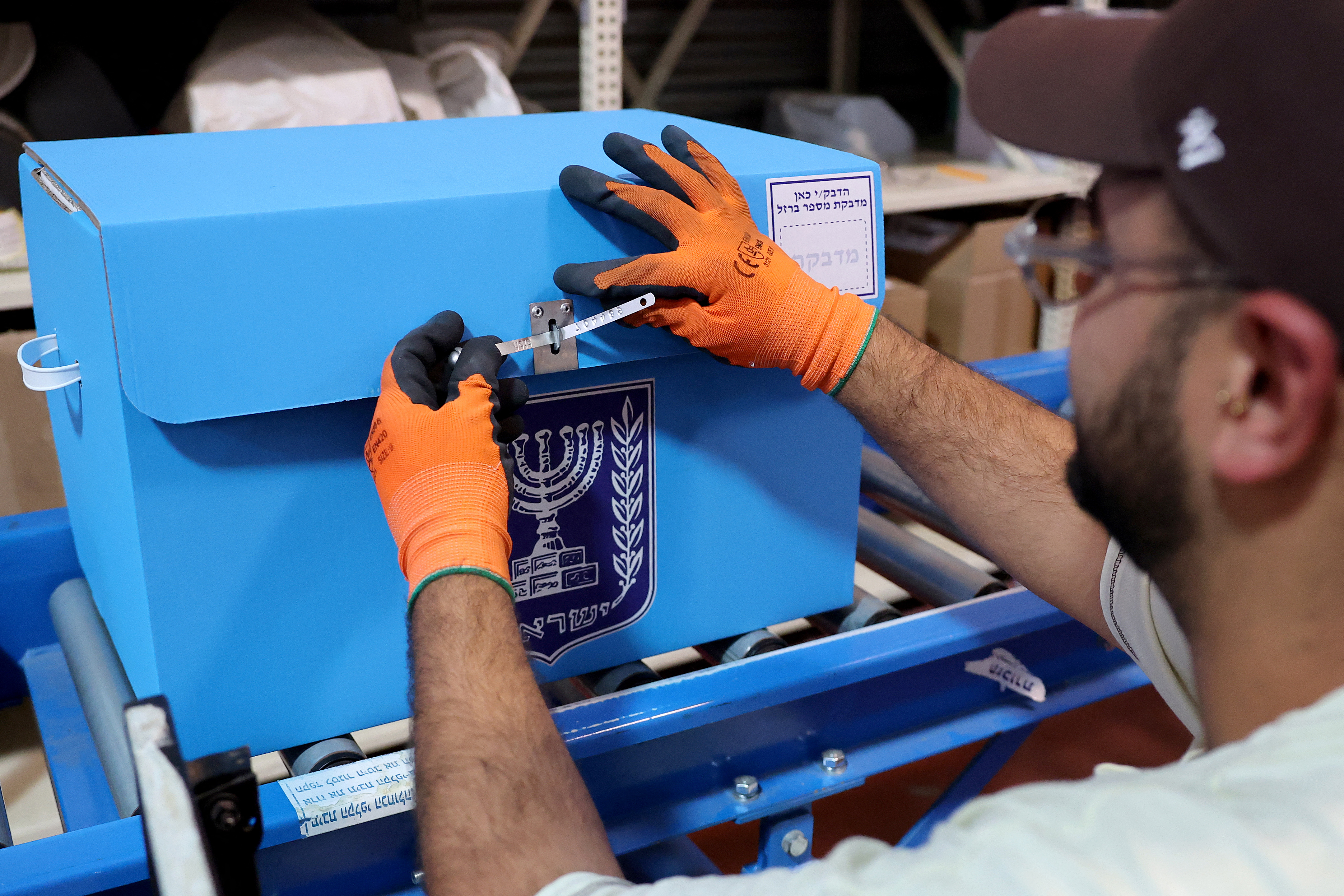
The Israeli election process is based on a system of nationwide proportional representation, in which the electorate votes for lists of candidates submitted by parties, or alliances of parties, rather than for individual candidates.
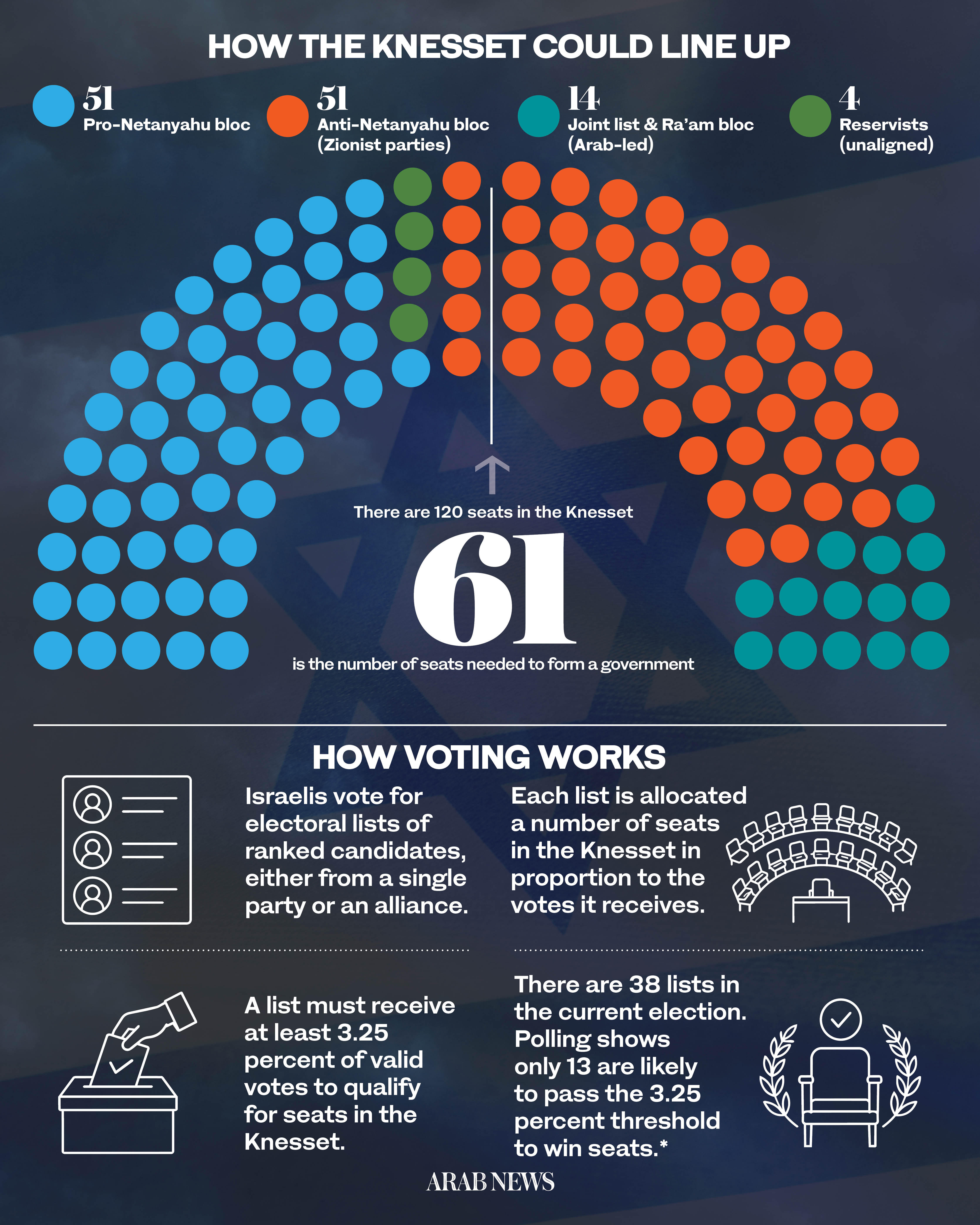
The number of seats a party is awarded in the Knesset is in proportion to the number of votes it receives. To form a government, a would-be prime minister needs a minimum of 61 seats in the 120-seat parliament. No Israeli party has ever won enough seats in an election to govern on its own; as a result, all Israeli governments have been coalitions, the compositions of which were thrashed out during weeks of horse trading after each election.
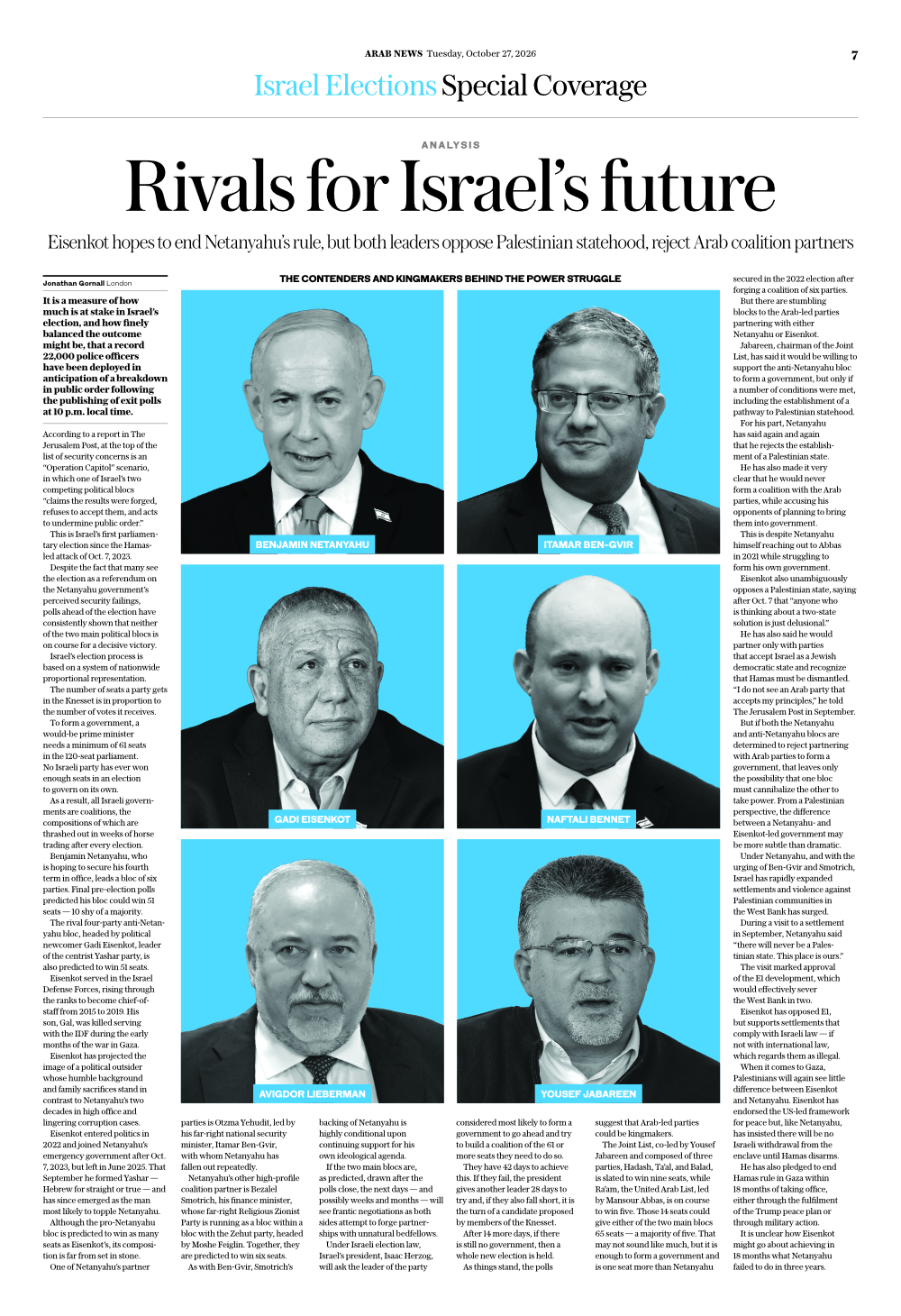
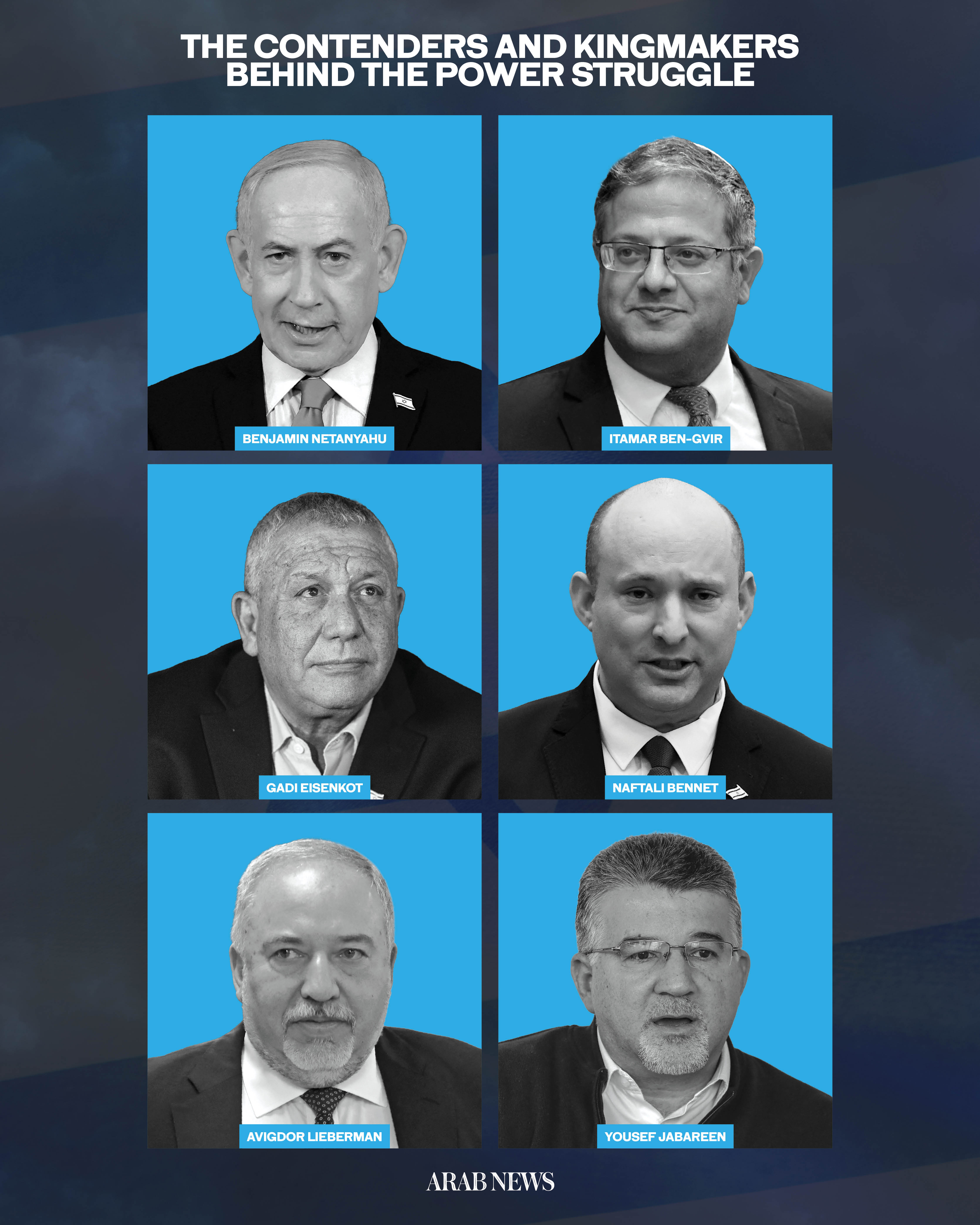
Prime Minister Benjamin Netanyahu, who hopes to secure his fourth term in office, leads a bloc of six parties. Final preelection polls predicted his bloc could win 51 seats — 10 shy of a majority — of which Netanyahu’s own Likud would have 21, the most among the six parties that make up the bloc.
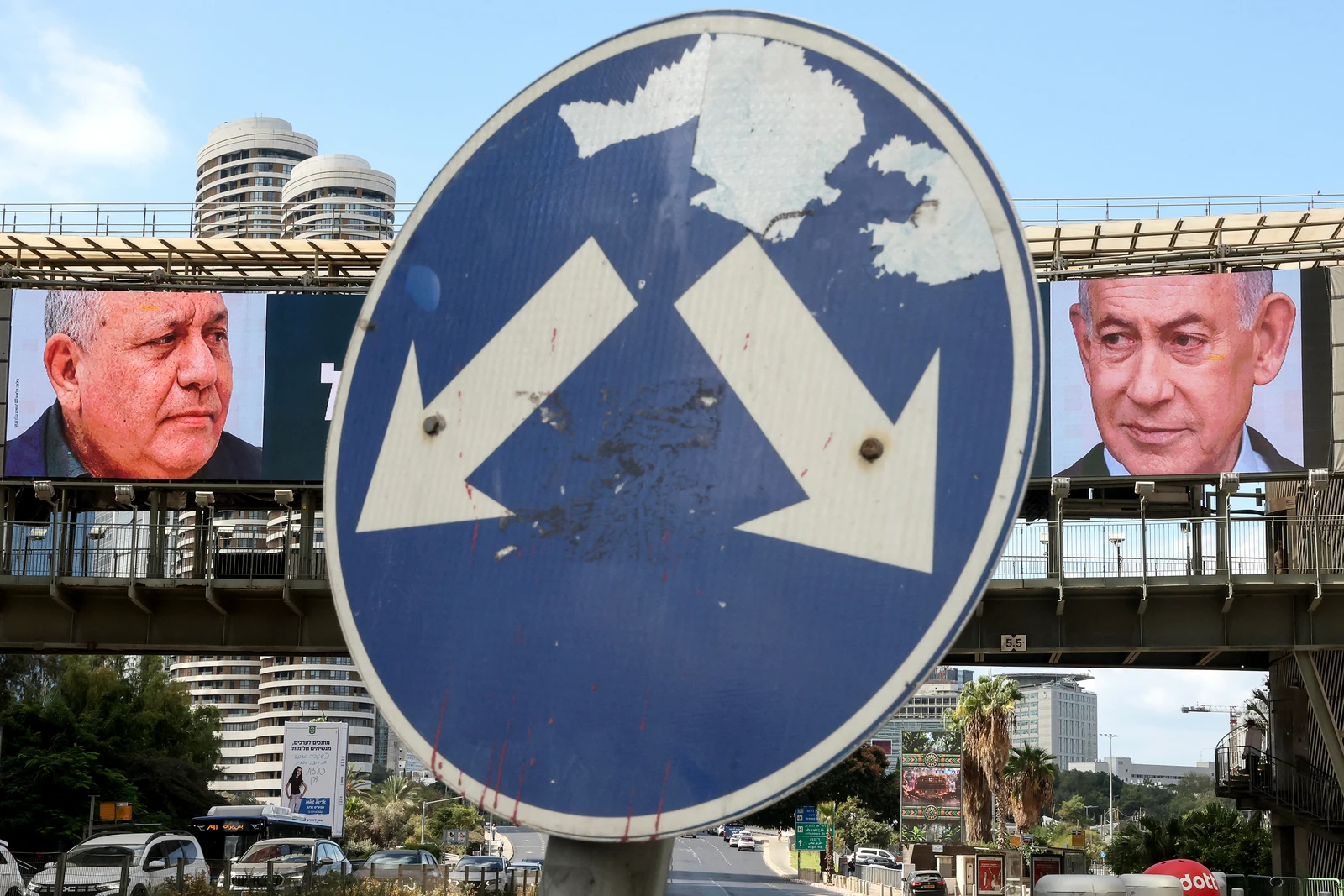
The rival, four-party, anti-Netanyahu bloc, which is headed by political newcomer Gadi Eisenkot, leader of the centrist Yashar party, is also predicted to win 51 seats.
Eisenkot served in the Israel Defense Forces, rising through the ranks to become chief of staff from 2015 until 2019. His son, Gal, was killed serving with the IDF during the early months of the war in Gaza.
He has projected the image of a political outsider whose humble background and family sacrifices stand in contrast to Netanyahu’s two decades in high office and lingering corruption cases.
Eisenkot entered politics in 2022 and joined Netanyahu’s emergency government after the Oct. 7 attacks, but left it in June 2025. In September that year he formed Yashar — the Hebrew word for “straight” or “true” — and subsequently emerged as the man most likely to topple Netanyahu.
Although the pro-Netanyahu bloc was predicted to win as many seats as Eisenkot’s, its composition is far from set in stone. One of Netanyahu’s partner parties is Otzma Yehudit, led by his far-right national security minister, Itamar Ben-Gvir, who has fallen out with Netanyahu repeatedly and his continued support is far from guaranteed. It is also not clear whether Netanyahu wants their political relationship to continue.
Netanyahu’s other high-profile coalition partner is Bezalel Smotrich, his finance minister, whose far-right Religious Zionist Party is running as a bloc-within-a-bloc with the Zehut party, headed by Moshe Feiglin. Together, they are predicted to win six seats.
In government, Smotrich has worked to expand settlements in the occupied territories and block any possibility of a Palestinian state. Zehut has campaigned for the annexation of both Gaza and the West Bank.
As is the case with Ben-Gvir, Smotrich’s backing of Netanyahu is highly conditional upon continuing support for his own ideological agenda.
If, as predicted, the two main blocs are tied when the polls close, the following days — and possibly weeks or months — will see frantic negotiations by both sides as they attempt to forge partnerships with unnatural bedfellows.
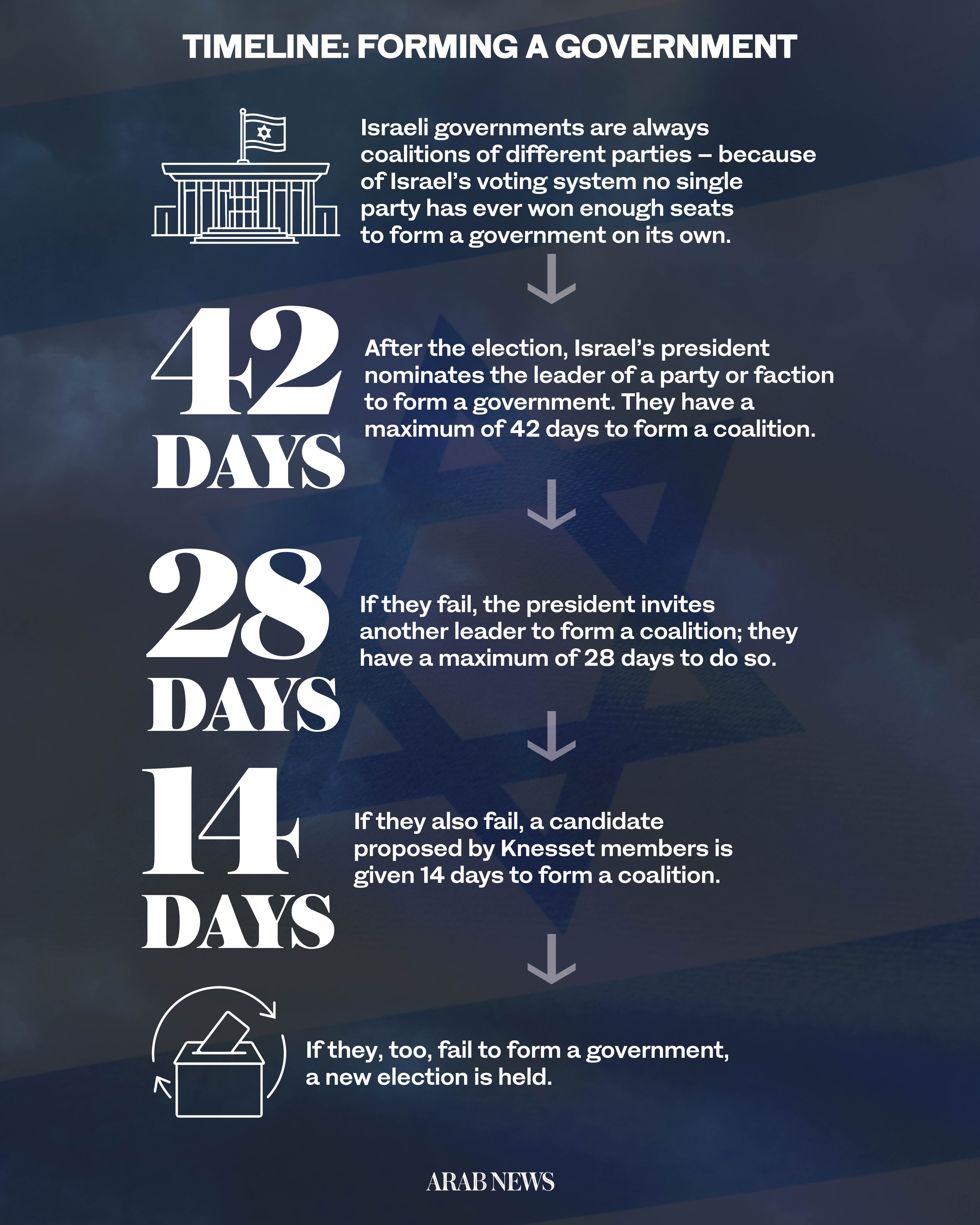
Under Israeli election law, the president, Isaac Herzog, will ask the leader of the party considered most likely to form a government to go ahead and try to build a coalition that includes the 61 or more seats they need to do so.
They have 42 days to achieve this. If they fail, the president will give another leader 28 days to do so; if they also fall short, it would be the turn of a candidate proposed by members of the Knesset. After a further 14 days, if there was still no government in place, a new election would be held.
As things stand, the polls suggest Arab-led parties could be the kingmakers. The Joint List, co-led by Yousef Jabareen and composed of three parties — Hadash, Ta’al and Balad — is predicted to win nine seats, while Ra’am, the United Arab List led by Mansour Abbas, is predicted to win five.
Those 14 seats could give either of the two main blocs 65 seats — a majority of five. That might not sound like much, but it is enough to form a government and is one seat more than Netanyahu secured in the 2022 election after forging a coalition of six parties.
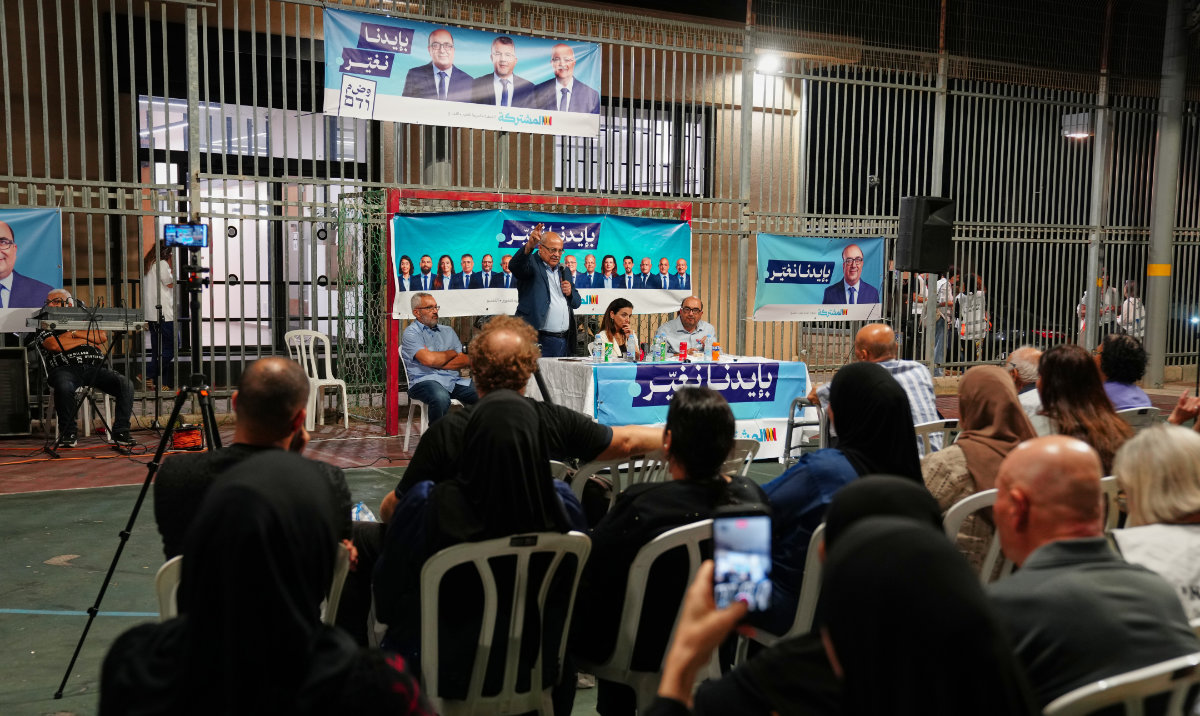
But there are stumbling blocks to the Arab-led parties partnering with either Netanyahu or Eisenkot. Jabareen, the chair of the Joint List, has said it would be willing to support the anti-Netanyahu bloc to form a government, but only if a number of conditions were met, including the establishment of a pathway to Palestinian statehood.
“After the election,” Jabareen said in a recent statement, “we’ll impose our conditions on any political constellation in Israel. We have full freedom of action, with no limits, to replace the Netanyahu government, and we will use all the tools at our disposal.”
Netanyahu has stated again and again that he rejects the establishment of a Palestinian state. He has also made it very clear that he would never form a coalition with the Arab parties, while accusing his opponents of planning to bring them into government.
In one AI-generated Netanyahu attack ad released in the run-up to the election, Eisenkot was depicted rushing past a young man wearing an “Israeli Unity” shirt to embrace the United Arab List leader, Abbas.
The message, posted by the prime minister’s account on social media platform X, was that “Eisenkot has no government without the Arab parties.” This was despite Netanyahu himself reaching out to Abbas in 2021 while struggling to form his own government.
Eisenkot also unambiguously opposes a Palestinian state. In one of his most recent statements on the matter, he said: “Anyone who is thinking about a two-state solution after Oct. 7 is just delusional.”
He has also stated that in forming a government he would partner with “anyone who accepts Israel as a Jewish democratic state,” and “whoever does not accept that Hamas is a terrorist organization, that it needs to be dismantled and destroyed, will not be a partner in the next government.”
Therefore, as he told The Jerusalem Post in September, “I do not see an Arab party that accepts my principles.”
At that time, however, Eisenkot predicted his bloc would win many more seats than the most recent polls suggest, and the historical reality of Israeli elections is that red lines drawn during a campaign can fade once the coalition talks commence.
But if both the Netanyahu and anti-Netanyahu blocs are determined to reject partnerships with Arab parties to form a government, that leaves only the possibility that one bloc must cannibalize the other to take power.
From a Palestinian perspective, whatever the blend of parties that eventually coalesce into a government, the distinction between one led by Netanyahu and one headed by Eisenkot is likely to be more subtle than dramatic.
At the urging of Ben-Gvir and Smotrich, Netanyahu’s government has presided over a rapid expansion of illegal settlements, and an explosion of violence against Palestinian communities, in the West Bank.
During a visit to a settlement in September, Netanyahu said “there will never be a Palestinian state. This place is ours.” He was there to mark the signing of an agreement giving the go-ahead to the highly controversial E1 settlement development, which would effectively split the West Bank in two.
Eisenkot has opposed the approval of the E1 development, but supports settlements that comply with Israeli law — if not with international law, which regards them as illegal.
When it comes to Gaza, Palestinians will similarly see little difference between Eisenkot and Netanyahu. Eisenkot has endorsed the US-led framework for peace but, like Netanyahu, has insisted there would be no Israeli withdrawal from the enclave until Hamas disarms.
He has also pledged to end Hamas rule in Gaza within 18 months of taking office, either through the fulfillment of the Trump peace plan or as a result of military action.
It remains unclear how Eisenkot might go about achieving in 18 months what Netanyahu has failed to do in three years.