- All 5 major wastewater treatment plants in Gaza have ceased operations, and the population served by sewage networks has dropped from over 85% to about 45%, according to the Palestinian Water Authority
LONDON: Displaced Palestinians in Gaza are digging makeshift cesspits beside their tents and damaged homes as the destruction of sewage networks by Israel’s onslaught leaves families exposed to untreated wastewater and the risk of falling into poorly covered pits, the Palestinian news agency WAFA reported on Sunday.
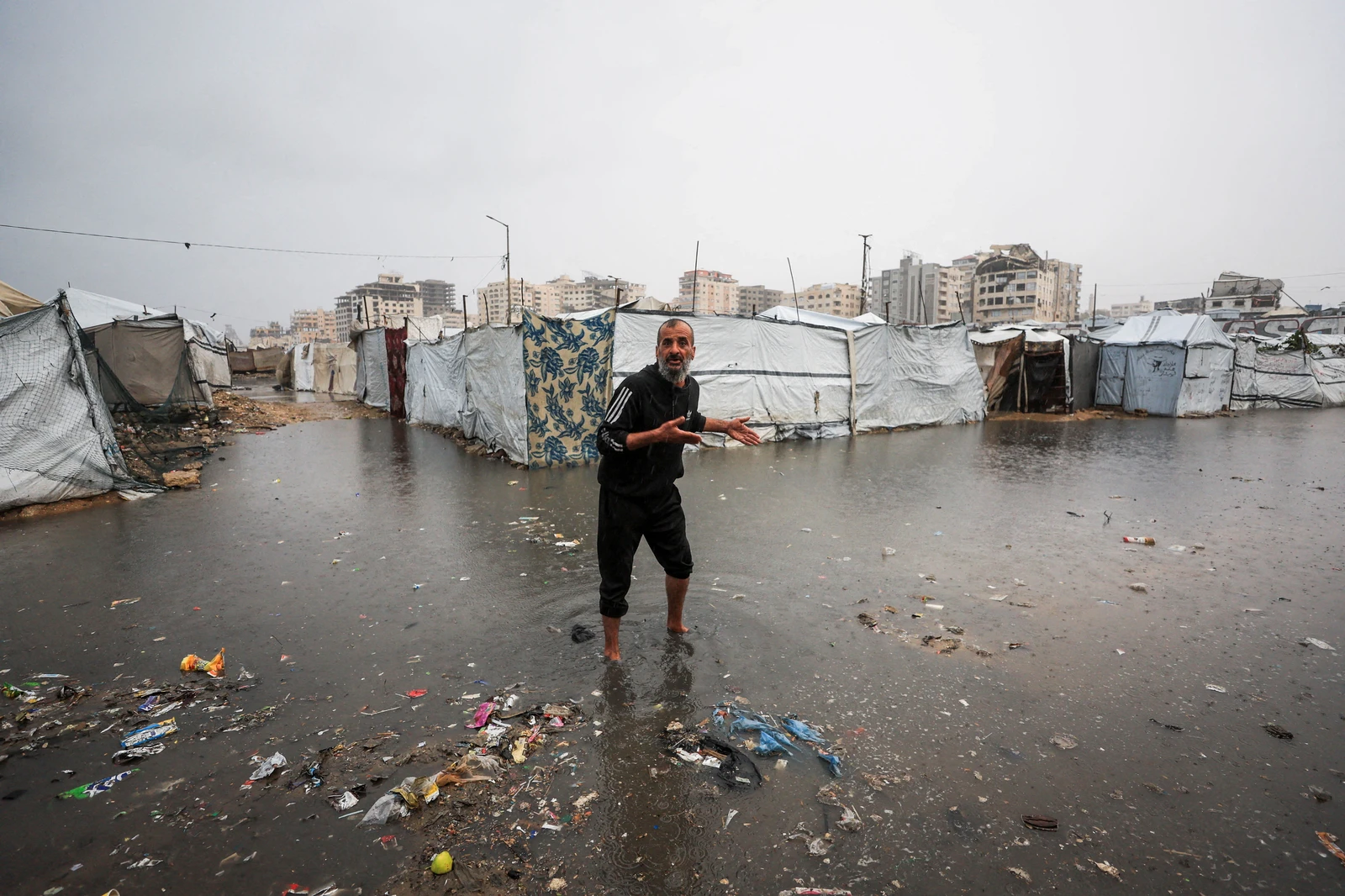
The collapse of sanitation services during Israel’s military campaign, which started in October 2023 following a Hamas-led attack, has left stagnant sewage pooling around crowded displacement sites, raising concerns about illness and contamination of groundwater.
Residents told WAFA that the pits fill quickly, are costly to empty and could overflow during winter storms.
“We were forced to dig a cesspit beside our tent because there is no functioning sewage network,” Mahmoud Abdel Nabi told WAFA. “But it fills up quickly, forcing us to dig another one.
“The problem keeps recurring, and we are effectively living above a swamp of sewage, kitchen wastewater and water from washing and bathing.”
Abdel Nabi said his family could not afford to hire a sewage tanker to empty the pits and instead dug new ones whenever the old ones filled. He said family members had developed skin and respiratory problems, which he attributed to the damp, contaminated conditions.
Across displacement sites, wastewater is accumulating faster than the soil can absorb it, leaving pools that produce foul odors and attract insects and rodents.
All five of Gaza’s main wastewater treatment plants have stopped operating, while only 18 of its 74 sewage pumping stations are partially functioning, according to figures from the Palestinian Water Authority.
The authority said more than 80 percent of water infrastructure and about 700 km of sewage networks had been destroyed. The share of the population served by sewage networks has fallen from more than 85 percent to about 45 percent.
About 55,000 cubic meters of untreated wastewater are discharged daily across Gaza, according to the authority. Of that, about 40,000 cubic meters flow into the sea, while the rest enters the surrounding environment through makeshift pits and damaged networks.
The authority warned that more than 320,000 soakaway pits threaten groundwater, while untreated sewage discharged into the sea endangers public health and fish stocks.
For families living beside the pits, the danger is also immediate.
Maher Barhoum told WAFA that children often play near uncovered or poorly secured cesspits because they have few safe places to go. He said children and young people had fallen into the pits, resulting in deaths and injuries.
“The failure to properly cover these pits makes the danger even greater,” he said.
Families often cover the openings with worn metal sheets, wood or plastic, materials that offer little protection and can deteriorate in wet weather, Barhoum said.
Rain also threatens to spread sewage into shelters and nearby water sources.
Thaer Baraka told WAFA that wastewater was leaking into the ground near wells and pumping facilities. Residents pumping groundwater had noticed changes in its color, increased saltiness and visible impurities, he said, raising fears about its safety.
During a recent storm, rainwater mixed with sewage in Gaza City’s Unknown Soldier area and parts of Al-Mawasi in Khan Younis, as well as locations in central and northern Gaza, Baraka said.
He warned that further flooding could send contaminated water into tents, worsening conditions for families already struggling with inadequate shelter.
Emptying the pits has become increasingly expensive because of shortages of sewage tankers, machinery, spare parts and maintenance supplies, WAFA reported, as Israeli authorities continue to restrict the entry of many of those materials.