LONDON: Palestinian leaders are looking to world powers like the EU and Russia as they seek to replace the Trump administration as the primary mediator in peace negotiations with Israel, a senior diplomat has revealed.
After concluding that the US leadership is unwilling to conduct impartial negotiations, the Palestinian leadership is seeking alternative solutions, Manuel Hassassian, the Palestinian ambassador to the UK, told Arab News.
The move follows US President Donald Trump’s recognition of Jerusalem as the Israeli capital and the decision to slash funding to refugee aid agency UNRWA. Both policies clearly showed the administration’s pro-Israel bias, Hassassian said.
After playing the lead role in negotiating a Palestinian-Israeli peace settlement for half a century, the era of US’ “unilateral brokership,” is finished, he said. “The Americans have discredited themselves,” Hassassian added.
Talks between the EU’s top diplomat, Federica Mogherini, and Palestinian President Mahmoud Abbas at the World Economic Forum in Davos, Switzerland, were part of the new diplomatic tack. The Palestinians hope to see “extended participation” by the EU in negotiations with Israel, said Hassassian, and had received encouragement from Brussels.
While Hassassian acknowledged that the US still has a role in future talks, he said the US “cannot (hold) the monopoly of the political process any more in the Middle East.”
The unilateral decision to recognize Jerusalem as the capital of Israel, which flouts a UN Security Council resolution that the eastern part of the city is Occupied Palestinian land, was a flagrant “challenge to the international legal system,” said Hassassian. “They are on the wrong side of history.”
The Trump administration’s style has annoyed the Palestinian leadership, Hassassian said: “He is dealing with us as if we are a small business enterprise.”
Meanwhile, other parties hitherto less involved in the negotiations had impressed the Palestinians with a more even-handed approach. Russia, he said, “has maintained a balance… they treat us as a state.”
After a trip by his Israeli counterpart, Palestinian leader Mahmoud Abbas will soon travel to Moscow to meet Russian President Vladimir Putin. Following the Trump administration’s announcement in December that it would move the US Embassy in Israel from Tel Aviv to Jerusalem, Putin phoned Abbas to express support for ongoing negotiations about the city.
Meanwhile, the US cuts to UNRWA funding, which provides Palestinian refugees with health care and education in Gaza, the West Bank, Syria, Lebanon and Jordan, risked inflaming an already tense situation, Hassasian said. “The consequences of this will affect the entire Middle East region,” he warned.
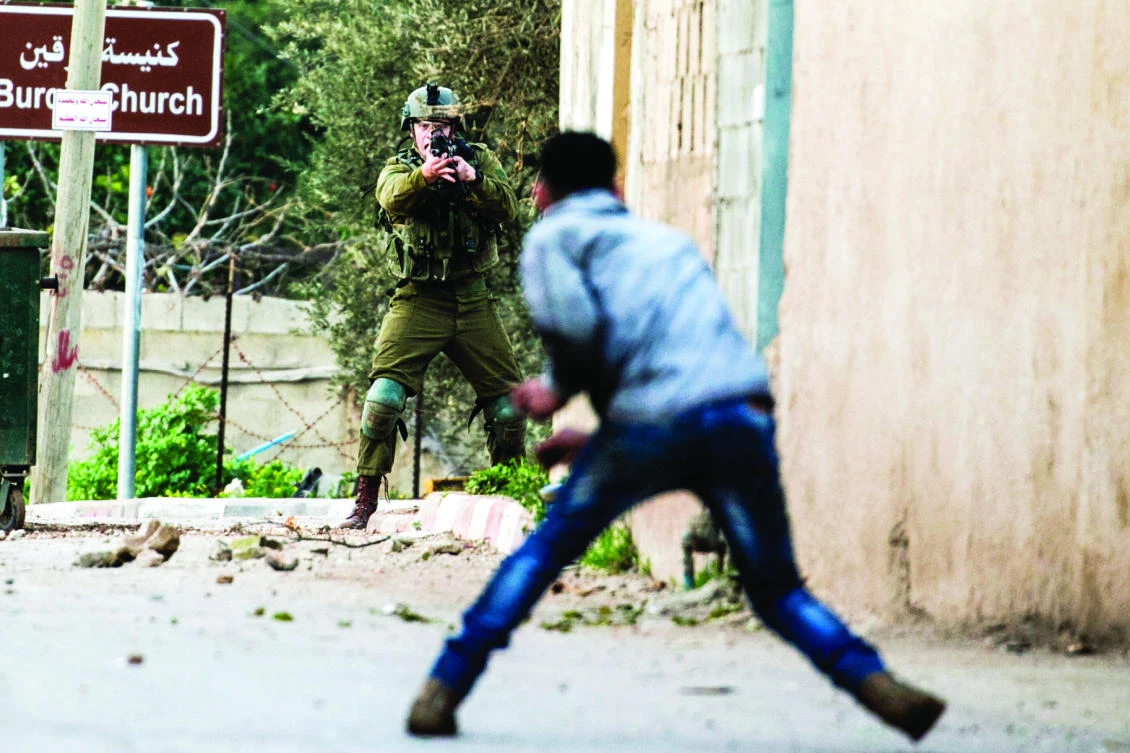
If extra funding is not found urgently to replace the US funds, schools operated by the aid agency, attended by 500,000 Palestinian refugee children, face closure. “If (hundreds of thousands) of students are not getting a proper education, they will be on the streets doing what? Throwing stones, becoming violent,” Hassassian warned. “This will jeopardize the national interests of the Americans (and) escalate tensions in the occupied territories.”
Support for Palestinian refugees, who insist on their right to return to lands occupied by Israel, and the status of Jerusalem, are among the most sensitive issues for the peace process. By siding against Palestine on both issues, the Trump administration attempted to take them off the negotiating table, Hassassian explained.
“But if he knocks those off the table, we say we’ll knock the entire table.”
When Trump announced he was withholding the UNRWA funds, he said they would not be restored “unless (the Palestinians) sit down and negotiate peace” with Israel.
Chris Doyle, director of the Council for Arab-British Understanding (CAABU), described Trump’s decision to cut UNRWA funding as “another example unfortunately of the Trump administration shooting the wrong target.”
“If it is annoyed at the Palestinian authority… it shouldn’t be UNRWA, which has a humanitarian agenda, that is punished,” he added.
UNRWA launched an emergency funding appeal after the US announcement. “This is without a doubt the worst crisis in UNRWA’s near 70-year history,” said the agency’s spokesman, Chris Gunness.
Expressing particular concern about the fate of schools managed by UNRWA, Gunness said that young, vulnerable young people could be left without access to education “at a time when extremist groups are in full recruitment mode around the Middle East.”
“The implications for regional stability are grave,” he added.
After concluding that the US leadership is unwilling to conduct impartial negotiations, the Palestinian leadership is seeking alternative solutions, Manuel Hassassian, the Palestinian ambassador to the UK, told Arab News.
The move follows US President Donald Trump’s recognition of Jerusalem as the Israeli capital and the decision to slash funding to refugee aid agency UNRWA. Both policies clearly showed the administration’s pro-Israel bias, Hassassian said.
After playing the lead role in negotiating a Palestinian-Israeli peace settlement for half a century, the era of US’ “unilateral brokership,” is finished, he said. “The Americans have discredited themselves,” Hassassian added.
Talks between the EU’s top diplomat, Federica Mogherini, and Palestinian President Mahmoud Abbas at the World Economic Forum in Davos, Switzerland, were part of the new diplomatic tack. The Palestinians hope to see “extended participation” by the EU in negotiations with Israel, said Hassassian, and had received encouragement from Brussels.
While Hassassian acknowledged that the US still has a role in future talks, he said the US “cannot (hold) the monopoly of the political process any more in the Middle East.”
The unilateral decision to recognize Jerusalem as the capital of Israel, which flouts a UN Security Council resolution that the eastern part of the city is Occupied Palestinian land, was a flagrant “challenge to the international legal system,” said Hassassian. “They are on the wrong side of history.”
The Trump administration’s style has annoyed the Palestinian leadership, Hassassian said: “He is dealing with us as if we are a small business enterprise.”
Meanwhile, other parties hitherto less involved in the negotiations had impressed the Palestinians with a more even-handed approach. Russia, he said, “has maintained a balance… they treat us as a state.”
After a trip by his Israeli counterpart, Palestinian leader Mahmoud Abbas will soon travel to Moscow to meet Russian President Vladimir Putin. Following the Trump administration’s announcement in December that it would move the US Embassy in Israel from Tel Aviv to Jerusalem, Putin phoned Abbas to express support for ongoing negotiations about the city.
Meanwhile, the US cuts to UNRWA funding, which provides Palestinian refugees with health care and education in Gaza, the West Bank, Syria, Lebanon and Jordan, risked inflaming an already tense situation, Hassasian said. “The consequences of this will affect the entire Middle East region,” he warned.
If extra funding is not found urgently to replace the US funds, schools operated by the aid agency, attended by 500,000 Palestinian refugee children, face closure. “If (hundreds of thousands) of students are not getting a proper education, they will be on the streets doing what? Throwing stones, becoming violent,” Hassassian warned. “This will jeopardize the national interests of the Americans (and) escalate tensions in the occupied territories.”
Support for Palestinian refugees, who insist on their right to return to lands occupied by Israel, and the status of Jerusalem, are among the most sensitive issues for the peace process. By siding against Palestine on both issues, the Trump administration attempted to take them off the negotiating table, Hassassian explained.
“But if he knocks those off the table, we say we’ll knock the entire table.”
When Trump announced he was withholding the UNRWA funds, he said they would not be restored “unless (the Palestinians) sit down and negotiate peace” with Israel.
Chris Doyle, director of the Council for Arab-British Understanding (CAABU), described Trump’s decision to cut UNRWA funding as “another example unfortunately of the Trump administration shooting the wrong target.”
“If it is annoyed at the Palestinian authority… it shouldn’t be UNRWA, which has a humanitarian agenda, that is punished,” he added.
UNRWA launched an emergency funding appeal after the US announcement. “This is without a doubt the worst crisis in UNRWA’s near 70-year history,” said the agency’s spokesman, Chris Gunness.
Expressing particular concern about the fate of schools managed by UNRWA, Gunness said that young, vulnerable young people could be left without access to education “at a time when extremist groups are in full recruitment mode around the Middle East.”
“The implications for regional stability are grave,” he added.