BEIRUT: Syria’s main opposition National Coalition yesterday said any political settlement to the country’s conflict must start with the departure of President Bashar Assad, implicitly rejecting a US-Russian call for dialogue with the regime.
“The National Coalition welcomes all international efforts which call for a political solution to achieve the aspirations of the Syrian people and their hope for a democratic state, so long as they begin with the departure of Bashar Assad and his regime,” the umbrella group said.
The response could be a blow to the US-Russian initiative, which is based on a deal agreed in Geneva that makes no mention of Assad stepping down.
The opposition has long insisted that the embattled president cannot stay on as part of any resolution to the conflict.
But the regime insists that Assad’s future will be decided in elections, with a presidential vote scheduled for 2014.
The US-Russia initiative was announced by US Secretary of State John Kerry and his Russia counterpart Sergei Lavrov at a Moscow news conference on Tuesday.
“We agreed that Russia and the United States will encourage both the Syria government and opposition groups to find a political solution,” Lavrov said.
He said both nations were ready to use all their resources to bring “the government and opposition to the negotiating table.” Lavrov and Kerry said they hoped they could convene an international conference by the end of May to build on a deal agreed by world powers in Geneva last June for a peaceful solution in Syria.
The Geneva agreement, which was never implemented, set out a path toward a transitional government but without spelling out Assad’s fate.
Meanwhile, Syrian troops pushed yesterday into a strategic town along the highway leading to the Jordanian border as a massive Internet outage engulfed most of the country for a second day.
The regime’s advance into Khirbet Ghazaleh, a town south of Damascus along a key artery to the border, came after weeks of fighting and government attempts to secure the highway.
The push was part of a wider offensive against rebels in which Assad’s troops have regained some areas around Damascus, in the central province of Homs near the Lebanese border and in the region of Aleppo to the north.
The violence came as Iran, one of Assad’s strongest allies, declared that it is ready to help any attempt to end Syria’s crisis. In an opinion published in Lebanon’s daily Al-Akhbar, Iranian Foreign Minister Ali Akbar Salehi wrote that it is up to the Syrian people to choose their political system and president.
It was not immediately clear if the government had pulled the plug on the Internet, triggering a blackout similar to a two-day outage that Syria experienced late last fall. Cellphone and phone services also were out in much of the country yesterday.
The Britain-based Syrian Observatory for Human Rights and another activist group, the Aleppo Media Center, said opposition fighters shot down a fighter jet that was bombing rebel positions in the battle for the Mannagh air base near the border with Turkey.
Rebels stormed the besieged air base on Sunday and the fighting is now taking place inside the sprawling facility, the activists said. Also Sunday, the rebels downed a military helicopter in the eastern Deir el-Zour region, killing eight government troops who were on board.
Assad’s forces yesterday attacked a military post they had lost to the rebels earlier in the northern town of Khan Al-Assal, the two activist groups said.
The Observatory reported heavy fighting in Qusair, a town near the Lebanese border under government siege. Rami Abdul-Rahman, who heads the Observatory, said mediation is underway between people close to the regime and some regional “elements” to make the rebels withdraw from the town although many are still rejecting to leave.
As the violence continued on the ground, the United States and Russia, a key ally of Assad’s government, said they’ll convene a new international conference later this month to build on a transition plan they set out last year in Geneva.
Speaking in Moscow after his discussions with Russian President Vladimir Putin and other officials, US Secretary of State John Kerry said the plan should be a roadmap for peace and not just a “piece of paper.” The goal is still to bring the Assad regime and representatives from the opposition together for talks on setting up an interim government, Kerry said Tuesday. The Geneva plan, which never gained traction, allowed each side to veto candidates it found unacceptable.
The Geneva proposal also calls for an open-ended cease-fire and the formation of a transitional government to run the country until new elections can be held and a new constitution drafted.
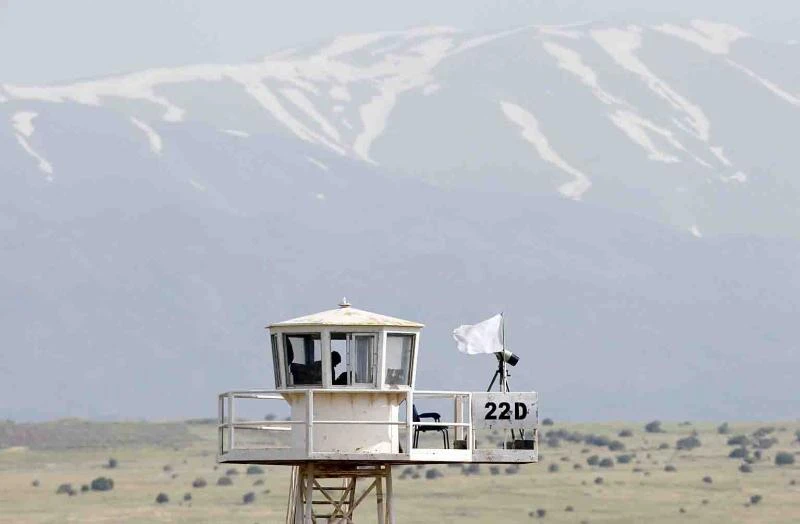
In southern Syria, rebels were holding four UN peacekeepers who were abducted Tuesday near the Israeli-occupied Golan Heights.
The abduction was the second such incident in the area in two months. It exposed the vulnerability of the UN peacekeeping mission during the Syrian civil war and sent a worrisome signal to Syria’s neighbors — including Israel — about the ensuing lawlessness along their shared frontiers.
Syria’s two-year crisis that has so far claimed the lives of more than 70,000 people, according to the United Nations.
Syria opposition insists on Assad out before any deal