- Syria views the security and stability of Gulf states as a key component of its own national security and will actively respond to aggression against its neighbors
- Al-Shaibani stated that Syria is committed to ensuring a stable environment conducive to regional security and integration with Gulf partners.
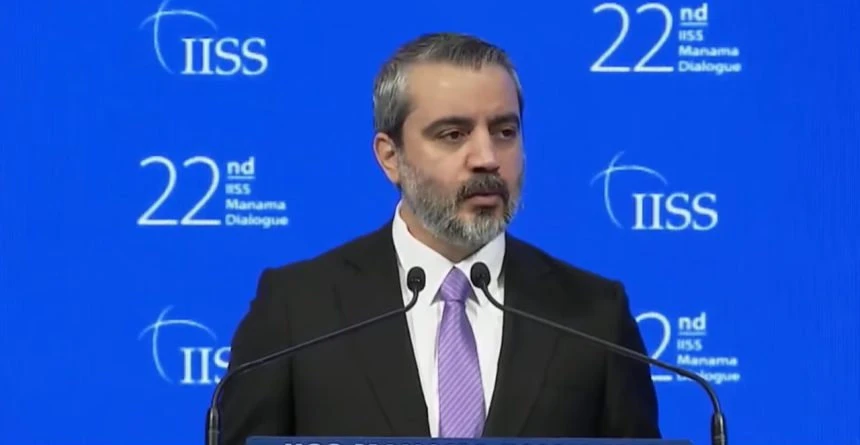
MANAMA: Syria considers the security and stability of Gulf states an integral part of its own national security and will not remain on the sidelines in the face of aggression against its neighbors, Foreign Minister Asaad Hassan Al-Shaibani said on Saturday.
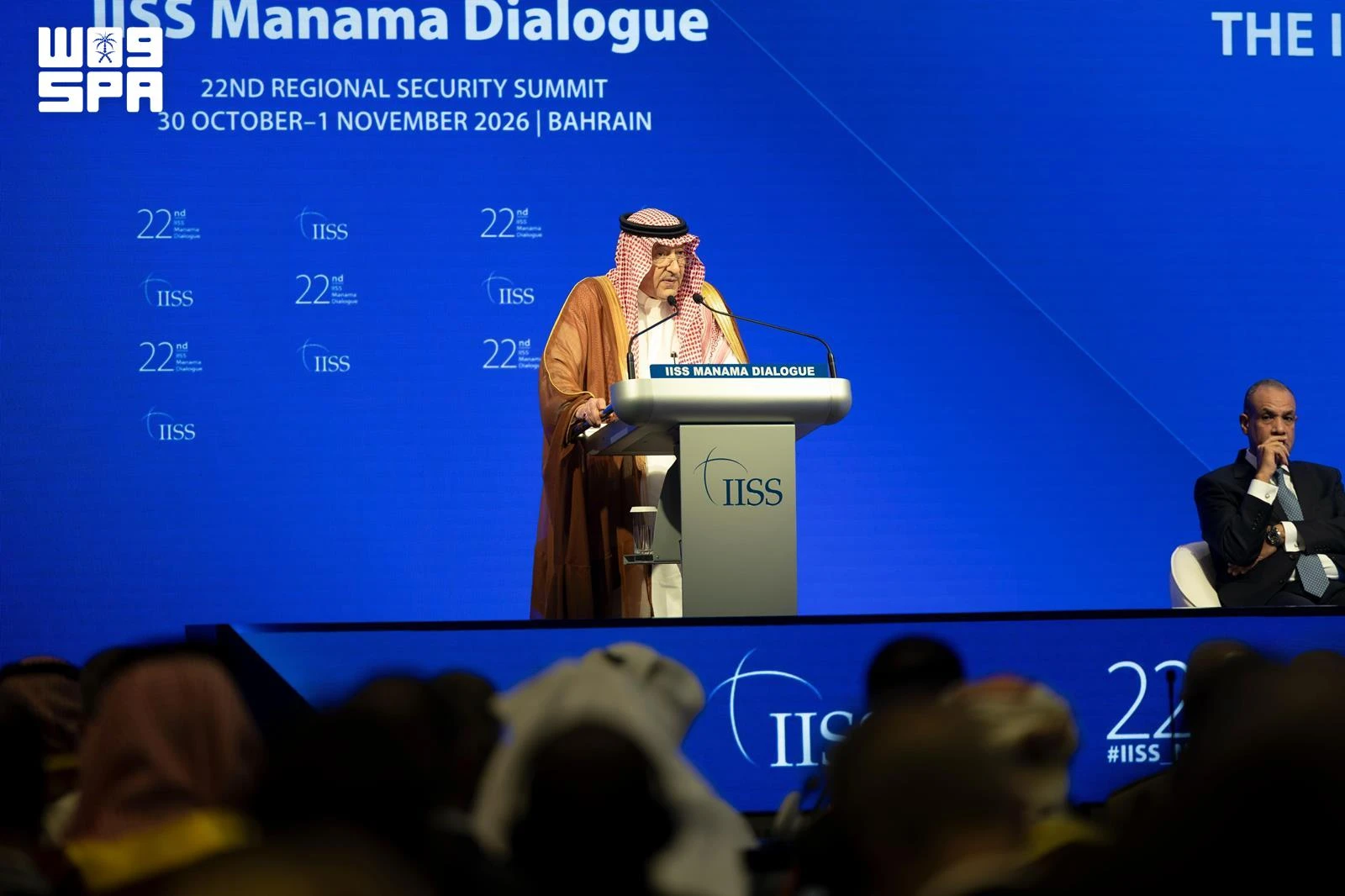
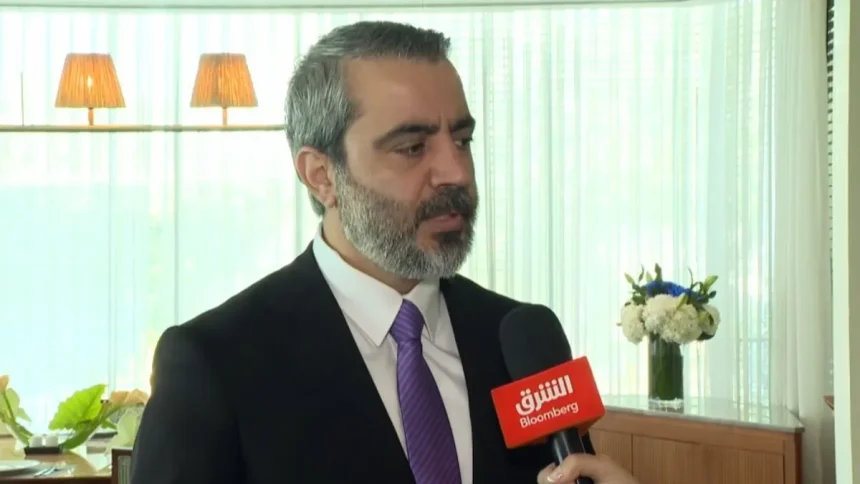
In an interview with Asharq News on the sidelines of the 22nd IISS Manama Dialogue in Bahrain, al-Shaibani said Damascus was holding high-level discussions with Gulf countries on political, economic, security and military cooperation, describing post-Assad Syria as a trusted regional partner.
The dialogue, organized by the International Institute for Strategic Studies from Oct. 30 to Nov. 1, brings together delegations from more than 50 countries, including over 40 ministers and senior military commanders, as well as leaders of international organizations.
“We will not stand by as a spectator in the face of any aggression against the Gulf states,” Al-Shaibani said, adding that a stable Syria was essential to broader regional stability.
The minister confirmed discussions on Syria’s possible integration into a regional security and defense architecture with Gulf partners, including consultations on the proposed Makkah Pact or equivalent collective-security arrangements.
He said Syria stood with Gulf states and Jordan against aggression and strongly condemned missile and drone attacks, stressing that its regional policy was based on international law, respect for sovereignty and cooperation with neighboring countries.
“Geography is destiny, and integration is a choice,” he said, describing Syria as a potential bridge for prosperity and economic cooperation rather than a platform for threatening its neighbors.
Regional security and relations with Jordan
Al-Shaibani also addressed recent Israeli strikes in the Daraa countryside, saying intensive communications with Jordanian officials had helped contain the situation.
He said Jordan’s leadership understood the need to close the chapter while safeguarding Syrian rights and preventing similar incidents from recurring.
“Relations between Syria and Jordan are far too deep to be compromised by temporary friction,” he said, expressing confidence that the two countries could overcome the recent tensions.
On border arrangements, he said discussions were focused on modernizing and refining existing coordination mechanisms rather than negotiating an entirely new agreement. He stressed that cooperation must respect the sovereignty of both countries and ensure effective joint border control.
Speaking earlier at a plenary session on the foundations of regional security, Al-Shaibani described Syria’s decision to join the international coalition against Daesh as a historic step.
He said Damascus had turned the page on the legacy of the ousted regime and was working to establish stability, restore state institutions and confront cross-border crime.
Arms, he said, derived their legitimacy exclusively from the state, adding that Syria wanted to share its experience in addressing militias and weapons outside government control, which he described as threats to regional security.
He called for greater intelligence-sharing and operational coordination to combat cross-border smuggling networks, warning that actions taken outside agreed coordination mechanisms undermined trust among neighboring countries.
Israeli attacks and Syria’s sovereignty
Al-Shaibani said Syria had faced more than 1,000 Israeli attacks in less than two years, resulting in dozens of deaths.
He condemned the repeated strikes and questioned how efforts to secure borders and bring weapons under state control could be reconciled with continued violations of Syrian sovereignty.
Damascus, he said, was calling for a return to the lines in place before Dec. 8, 2024, and implementation of the 1974 Disengagement Agreement between Syria and Israel.
He also reiterated that the Golan Heights was Syrian territory, citing UN Security Council Resolution 497, which declared Israel’s 1981 decision to impose its laws and administration on the occupied Golan null and void and without international legal effect.
The minister added that regional stability also depended on ending the suffering in Gaza and establishing a path toward an independent Palestinian state.
Post-Assad recovery and international cooperation
Turning to domestic challenges, Al-Shaibani said the new authorities had inherited an administrative system marked by corruption and institutions shaped to serve the former regime.
He acknowledged that restructuring state institutions was slowing recovery and complicating efforts to establish the foundations for domestic stability and regional security.
He said parliamentary life had resumed and that authorities had begun holding those responsible for violations under the former government accountable. More than 3.7 million Syrians had returned to their homes, he added.
On international obligations, Al-Shaibani said Syria was cooperating transparently with the Organization for the Prohibition of Chemical Weapons and the International Atomic Energy Agency to resolve outstanding files through technical and institutional processes.
He also welcomed the lifting of broad sanctions and Syria’s removal from terrorism-related lists, expressing hope that the improved political climate would translate into investment, economic cooperation and tangible benefits for Syrians.
Al-Shaibani called on international partners to support the country’s recovery, saying the scale of suffering endured by Syrians placed a shared moral and historical responsibility on the international community.
“Syria has left the trenches of conflict to take its place at the table where security is shaped,” he said.