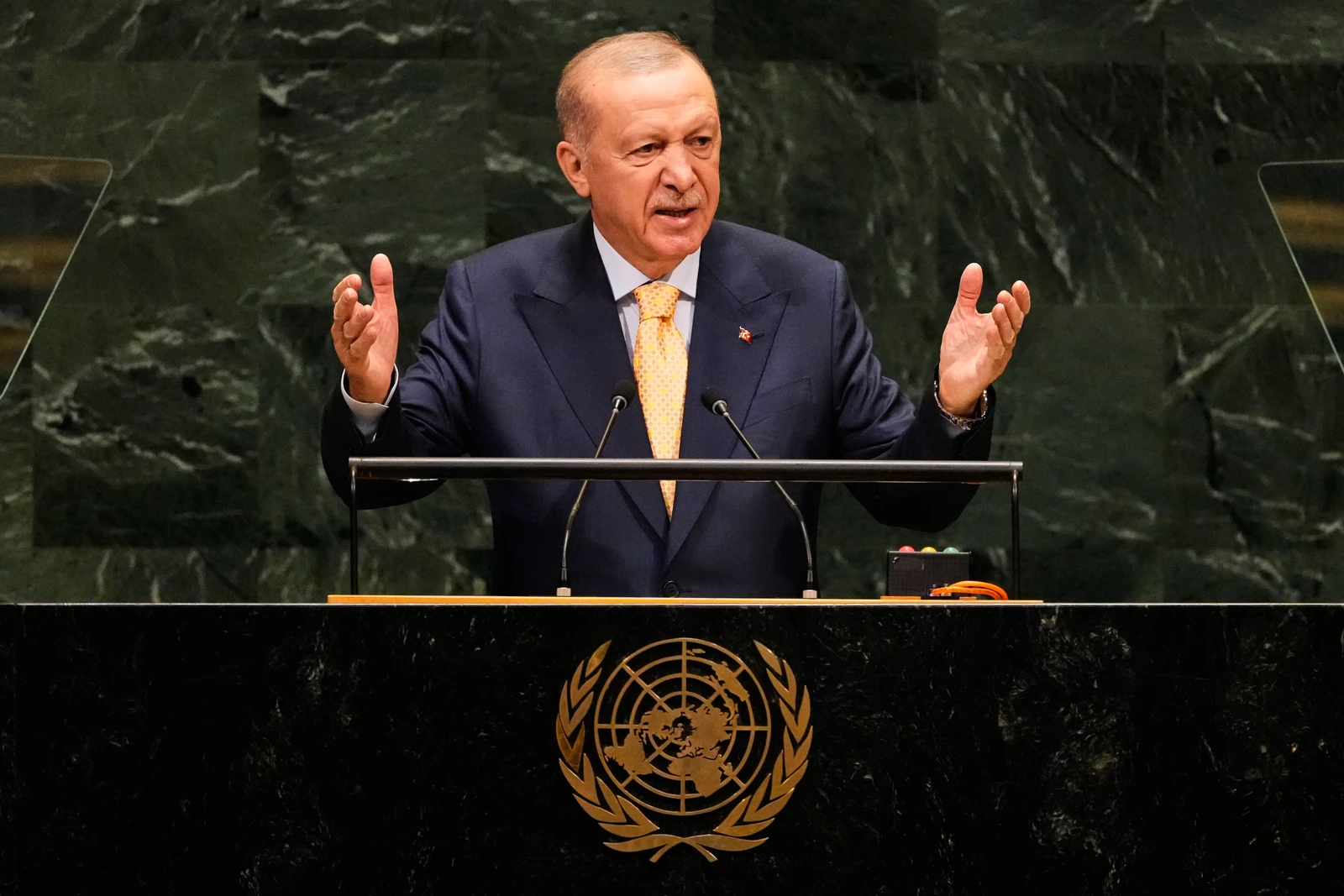
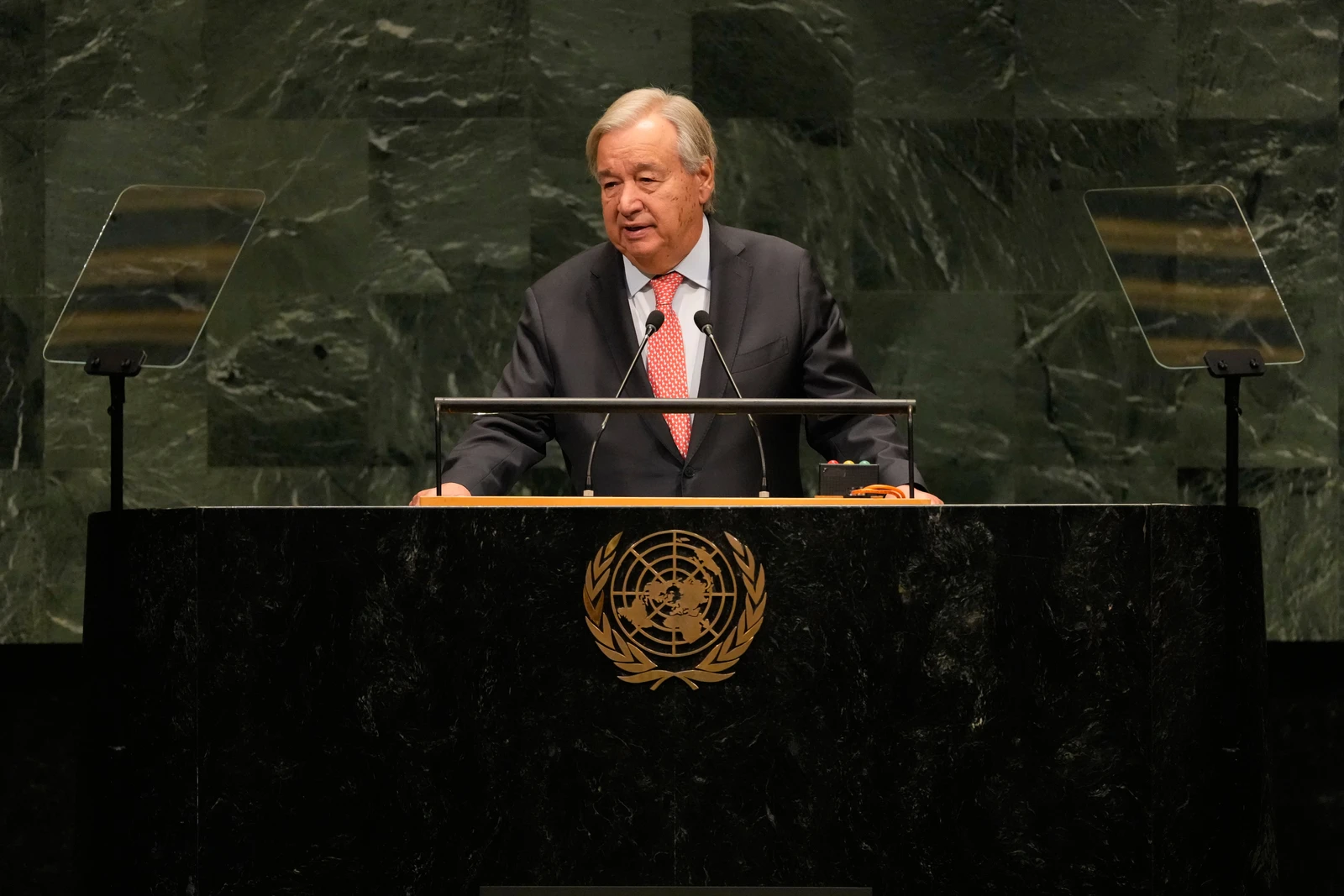
- ‘If international law can be ignored for decades, then what exactly is that law worth?’
- ‘The world’s political inaction isn’t for lack of options. So let’s call it what it is: a choice’
LONDON: Israel is a “regional threat” that behaves with “terrifying levels” of impunity, Jordan’s King Abdullah II said on Tuesday as the issue of Palestine was placed front and center of his speech to the 81st UN General Assembly in New York.
On the event’s opening day, he delivered an impassioned speech that remarked on a “unique moment in history” in which the “the scale of knowledge and speed of change are unprecedented.”
He added: “Every day brings another crisis, another tragedy, another emergency demanding our attention. Every generation believes the challenges they face are unmatched; perhaps for us that’s true.”
Attention has become a crucial, scarce asset worldwide, determining “which conflicts receive sustained diplomacy and which fade from the agenda, whether a ceasefire holds after the cameras leave … and whether humanitarian suffering remains intolerable or becomes familiar,” King Abdullah said.
The Middle East is witnessing protracted conflict that is deepening humanitarian suffering, he added, highlighting wars in Lebanon, Yemen, Sudan and Iran.
“If anyone had any doubt that a crisis in our part of the world stays there, just look at the energy and grocery bills of ordinary families from Mumbai to Madrid to Minnesota. The Iran war has shown how quickly instability can disrupt trade, investment and lives beyond the region,” he said.
“Then there’s Gaza. For decades, I’ve stood before this assembly and warned of the dangers of leaving the Palestinian-Israeli conflict unresolved.”
Rather than confront and resolve the conflict, the international community has elected to “manage” it, he said, questioning the value and legitimacy of international law in light of “one of the world’s longest-running occupations.”
He added: “If international law can be ignored for decades, then what exactly is that law worth? And how can we enforce it if we won’t even call out its violations?
“In Gaza, the evidence is overwhelming: In the first 300 days of the so-called ceasefire, at least 300 Palestinian children were killed.”
The king condemned the Israeli government for “moving the goalposts,” continuing attacks and the destruction of civilian infrastructure in Gaza, and refusing to withdraw from the war-torn Palestinian enclave.
This has forced the Palestinian population there into barely one-third of Gaza’s land, he warned.
In light of this, observers must no longer dismiss Israeli policies as “temporary military measures” or a “consequence of war,” he said.
“Accountability begins when we call things what they are: an attempt to erase Palestinian life and impose a new territorial reality in Gaza,” he added.
“While the world has been focused on Gaza, something extraordinarily dangerous is unfolding in the West Bank.
“Some may think we’ve seen this before: settlements, violence, displacement, more of the same. But it isn’t, nor is it simply an escalation.
“This is a fundamental shift. What was once a creeping process has exploded into something far more aggressive.”
The king highlighted the surge in settler attacks on Palestinians, as well as the destruction of their land and property.
Israel is seeking to “tighten its grip” on the occupied West Bank, expand settlements and push Palestinians out, he said.
“Israeli soldiers stand by as settlers attack Palestinians, often protecting the attackers or joining them,” he added.
“They’ve blocked ambulances from reaching the injured. They’ve targeted international journalists who are trying to say the truth.
“And when soldiers watch, enable, and sometimes even participate in violence against civilians, this is no longer about ‘a handful of rioters.’”
Israeli activity in the West Bank must be understood as a policy of forced displacement, he said, urging the international community to treat Gaza and the West Bank as part of a unified entity of the Palestinian people.
The former has been “destroyed” and the latter is “de-facto annexed,” thereby “making a viable Palestinian state impossible.”
King Abdullah rejected claims that the Arab world has refused peace with Israel, highlighting the 2002 Arab Peace Initiative spearheaded by Saudi Arabia, and Tel Aviv’s refusal to normalize ties with 57 Arab and Muslim states in exchange for peace and a Palestinian state.
“For over 20 years, that offer has stood; the obstacle hasn’t been the absence of a partner for peace, but the absence of an Israeli government willing to accept it,” he said.
“This Israeli government understands the power of attention. And lately, it hasn’t liked the attention it’s been getting. When confronted with evidence of wrongdoing, rather than change course, it opts for distraction, discrediting its critics,” he added.
“Distractions won’t fly anymore; people across the world are paying attention. The question now is: Will we act? Because the world’s political inaction isn’t for lack of options. So let’s call it what it is: a choice.”
The king highlighted the tools available to the international community: sanctions, asset freezes, embargoes and diplomatic isolation.
However, in relation to Israel, “resolutions end where they begin … on paper,” he said, warning that the end result is a “state without restraint.”
He added: “This government’s sense of impunity has reached terrifying levels … It no longer feels compelled to ask, ‘Can we get away with this?’ It already knows the answer.”
The international community must not assume that Israel’s ambitions stop at Palestine, he said, adding that it possesses an expansionist appetite that makes it a regional threat.
“Today, Syria is the warning the international community is choosing not to see … step by calculated step, Israel is testing how far it can go. And every time the international community looks away, Israel learns that it can go even further across border lines and legal limits,” he said.
“Jordan understands this all too well. We know what it means to live in a region where one crisis arrives before the last has receded, and we know that we can’t choose between responding to the emergency before us and building the future beyond it.”
Jordan will never abandon its commitment to a just peace, and will always support Palestinian resilience, and uphold the historic and legal status quo at Muslim and Christian holy sites in Jerusalem, he said.
Jordan aspires to be a “country the world can count on … true to our principles, true to our word, ready to talk to everyone and ready to work with anyone seeking peace,” he added.
“Whether in Gaza, Sudan, Ukraine, or anywhere people live with war, displacement and fear, whether a crisis began weeks ago or has endured for decades, our principles can’t change with the world’s attention,” he said.
“In a world competing for our attention, we must be deliberate about where we direct it, and vigilant about what seeks to distract it. The future is shaped not only by what we do, but by what we choose to ignore.”