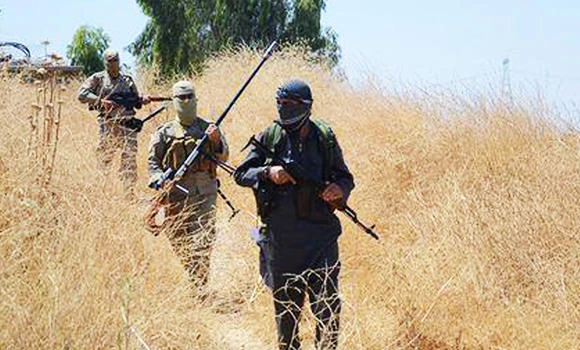
KOS, Greece: When the Daesh group took over their Iraqi city and burned down the family’s home, two teenaged brothers decided to risk everything to leave Iraq, cross Syria and reach Europe.
One night in October 2014, “a Syrian man drove us from Al-Qaim (Iraq) to Albu Kamal (Syria). We wore the veil” to avoid being recognized at Daesh checkpoints on the way, 18-year-old Tayib said.
Tayib and his brother Mustafa traveled from the east of Syria across to the northwestern border with Turkey — an epic journey riddled with danger at least 600 km long.
Tayib says they paid the smuggler $1,100 for this part of the journey, and then another $1,200 each to travel earlier this week on an inflatable boat from Bodrum in Turkey to the Greek island of Kos.
The two are now waiting to take a ferry to Athens, and onward to northern Europe. They decided to leave their home city, Mosul, which was seized by Daesh in June last year, after militants demanded the family pay $1,000 in “tax.”
“My mother refused to give them $1,000 so they burnt our house down,” Tayib told AFP as he rested by his tent on the beach on the resort island of Kos.
Reaching Kos was also a challenge, but Tayib says he is glad “that the most dangerous part is over — they call them the boats of death.”
On Monday, “we will leave here, and then go from Macedonia to Serbia to Bulgaria to Austria. We will see the situation there and choose the best country” to apply for asylum, Tayib says.
Mustafa, 17, expressed fears for their family who are now in Baghdad.
“The family has received threats from Daesh and the militias,” he said.
But unlike Syrians, Iraqis are being registered in Greece as “immigrants, not refugees,” according to Maj. Gen. Zakharoula Tsirigoti, the head of the Greek police’s immigration department.
Because registration takes significantly longer for non-Syrians, several Iraqis interviewed by AFP have admitted lying to the authorities about their nationality.
Jaber, 35, was a soldier who decided to flee after the Iraqi army lost the battle last summer against Daesh. He is now living in a tent with his family on the beach, waiting to leave for Athens.
“My wife, my three children and I were smuggled out of Mosul in the back of a truck. We hid in stacks of hay as we crossed the (Iraqi) border and traveled across Syria to Turkey,” Jaber said, using a pseudonym for fear of reprisal against relatives in Iraq.
When Iraq brothers wore burqas to escape terror