- The latest developments suggest that Yemen is moving from a period of relative calm into a broader, multi-front escalation
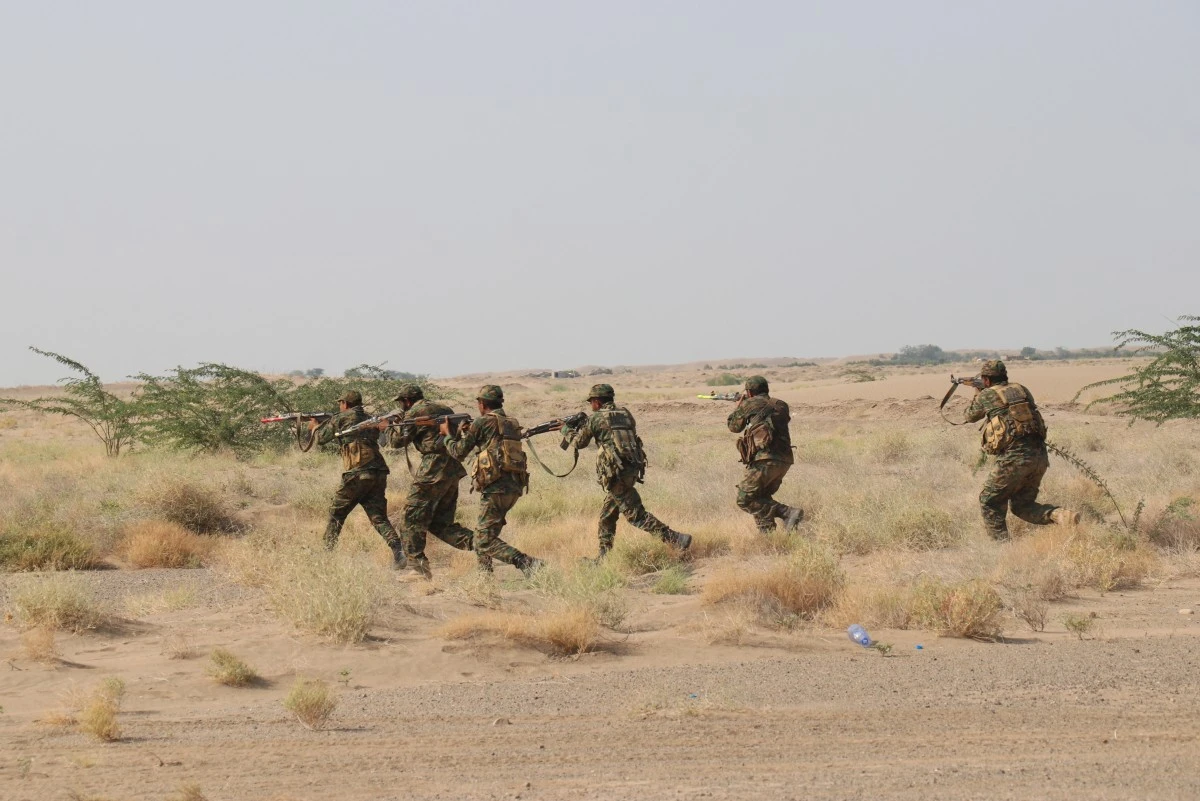
- Government forces reported successful advances in Jouf, disrupting Houthi supply routes and aiming to recapture all Houthi-held territory
DUBAI: Fighting is intensifying across Yemen as government forces launch or prepare offensives against the Houthi movement, in the most significant escalation in years.
Yemen remains effectively divided between two main areas of control.
The Houthis control the capital Sanaa and most of northern and western Yemen, including the Red Sea port of Hodeidah, while the internationally recognized government controls much of the south and east.
The two sides have largely remained separated by front lines since a UN-brokered truce sharply reduced fighting in 2022.
The latest escalation is being reported across several of those front lines, with government forces reporting advances in the north and fighting intensifying in the southwest and along the Red Sea coast.
Jouf: Government forces report advance
One of the clearest reported government advances is in Jouf, a largely desert province in northern Yemen bordering Saudi Arabia.
Much of Jouf is controlled by the Houthis, making it an important gateway between Houthi-held northern Yemen and government-controlled areas further east and south.
Government forces advanced into the eastern part of Al-Hazm, the provincial capital, on Wednesday and cut supply routes to Houthi forces, according to the government’s military media office, The Associated Press reported.
Government forces said they launched a multi-pronged offensive in recent days after the Houthis attempted to advance on government positions.
The government has said its objective is to recapture all Houthi-held territory.
The Houthis have reported airstrikes in Jouf, although those claims have not been independently verified.
Taiz: Long-standing front line in southwest Yemen
Taiz, in southwestern Yemen, is one of the country’s most important and long-running battlefields.
The city and surrounding governorate sit between Houthi-controlled territory to the north and government-held areas to the south.
Control of Taiz is strategically important because the governorate links Yemen’s western coast with the country’s central and southern regions.
Government forces remain active around Jabal Habashi and Al-Kadha, where senior military officials have called for greater readiness and coordination.
Military commanders have reported advances on several fronts in Taiz but have not specified which positions were captured.
The claims therefore indicate increased pressure on Houthi positions but do not yet establish a significant change in territorial control.
The Houthis have also reported heavy airstrikes in Taiz, including around the Mokha area on the Red Sea coast. However, the Houthi claims of strikes across several provinces could not be independently verified.
Abyan-Al-Bayda: Government forces preparing to attack
Further south, government forces are preparing for a possible offensive along the Abyan-Al-Bayda front.
Abyan is a southern governorate largely under government control, while Al-Bayda, immediately to the north, is largely controlled by the Houthis.
The area therefore forms part of the dividing line between government-held southern Yemen and Houthi-held territory.
Abyan Gov. Maj. Gen. Mukhtar Al-Rabash Al-Haythami, speaking to Asharq Al-Awsat, said forces were ready for “zero hour” to launch an offensive against the Houthis.
He said the front stretches for about 76 km and has seen frequent clashes, while government forces have been reinforced with weapons and are increasing their combat readiness.
Maareb: Strategic government-held territory under pressure
Maareb, in central-eastern Yemen, is another strategically important front.
The governorate is largely controlled by the government and contains major oil and gas infrastructure, making it economically important.
The Houthis have repeatedly sought to capture Maareb city and the surrounding energy-producing areas.
Recent fighting has included attacks on civilian areas. Government sources accused the Houthis of shelling displaced people in Mafraq Harib, killing three children and wounding six civilians.
Another attack in Raghwan reportedly killed two children and wounded 15 people.
The Houthis have also reported airstrikes around Al-Juba, in southern Maareb.
The latest reports indicate renewed violence around Maareb but do not establish a significant change in control of territory.
Red Sea coast: The most strategically important front
The Red Sea coast is potentially the most consequential battlefield because it runs alongside one of the world’s most important shipping routes.
The Houthis control much of Yemen’s western coastline, including the major port of Hodeidah. Government forces control territory farther south along parts of the coast.
At the southern end of this coastline lies Mokha, a historic port, and Dhubab, near the entrance to the Bab Al-Mandab Strait.
Bab Al-Mandab is the narrow maritime passage connecting the Red Sea with the Gulf of Aden, between Yemen and the Horn of Africa. It is a major route for global trade and energy shipments traveling between the Indian Ocean, the Suez Canal and European markets.
Reuters reported Thursday that Yemeni government military sources said Houthi forces were advancing towards Mokha and Dhubab as they seek greater control of the Yemeni Red Sea coast.
The sources said this could give the Houthis significant leverage over Bab Al-Mandab.
The claims have not been independently verified, and it is not yet clear if the Houthis have captured either Mokha or Dhubab.
What has changed?
The latest developments suggest that Yemen is moving from a period of relative calm into a broader, multi-front escalation.
The clearest reported government ground gain is currently in Jouf, where government forces say they have advanced into eastern Al-Hazm and disrupted Houthi supply routes.Elsewhere, government forces are consolidating or preparing for offensives in Taiz and along the Abyan-Al-Bayda front, while fighting and attacks continue around government-held Marib.
At the same time, the situation on the Red Sea coast could be moving in the opposite direction, with Reuters reporting Houthi advances toward Mokha and Dhubab.
The developments point to an increasingly active front line across a country that remains divided between Houthi-held northern and western areas and government-held territory in much of the south and east.