- Migrant workers in Qatar are banned from joining trade unions or going on strike, and risk arrest, dismissal and deportation — all without receiving outstanding wages
- Qatari authorities have failed to abolish the exploitative “kafala” sponsorship system that gives employers almost total control over migrant workers
LONDON: Human Rights Watch (HRW) has accused Qatar of failing to implement a system to ensure construction companies in the country pay employees, particularly migrant workers, on time.
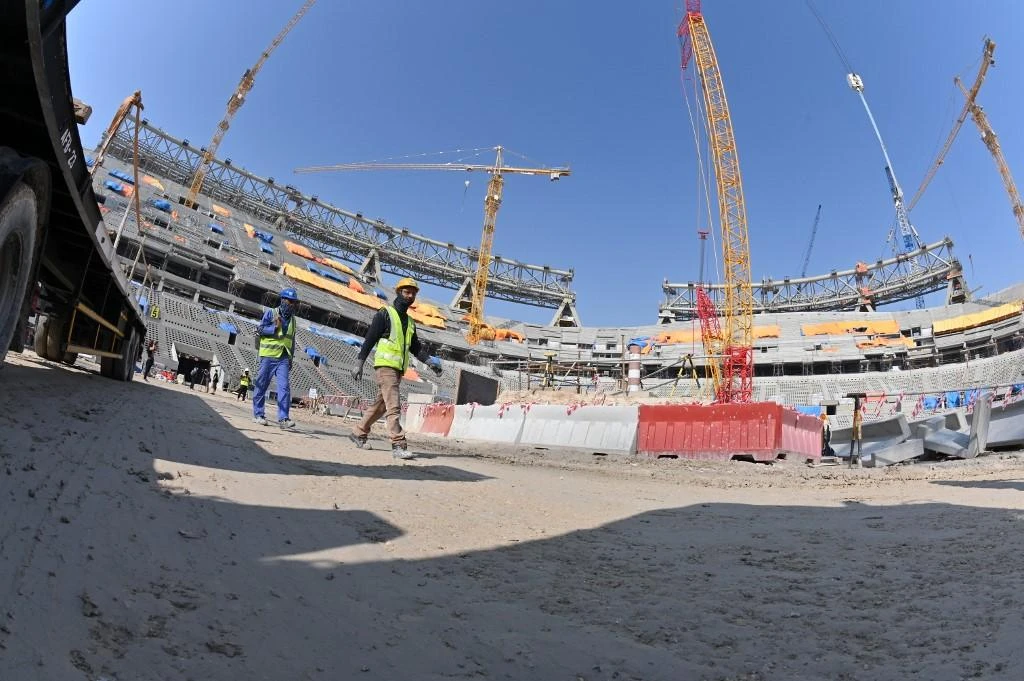
One employer failed to pay workers for five months, the global watchdog said, forcing managerial staff and laborers to publicly protest their lack of remuneration for work on projects related to the 2022 FIFA World Cup.
“Qatar has passed some laws to protect migrant workers, but the authorities seem more interested in promoting these minor reforms in the media than making them work,” Michael Page, HRW’s Middle East deputy director, said.
“FIFA and the Qatari government should ensure that any employer that has delayed payments immediately releases them, as well as levy appropriate fines.”
Qatar unveiled a new online Wage Protection System (WPS) in 2015, designed to monitor the flow of wages from employers to employees, and to ensure all workers in the Gulf state received wages no later than the seventh day of each month via a direct bank transfer.
Qatar’s Supreme Committee for Delivery and Legacy also put rules in place to protect workers’ rights, including the establishment of welfare committees. The moves were designed to allow greater government scrutiny of employer behavior, giving it the potential to fine companies that failed to meet minimum requirements.
However, Qatari authorities have failed to abolish the exploitative “kafala” sponsorship system that gives employers almost total control over migrant workers.
HRW said it had spoken to numerous staff at one company with more than 6,000 employees operating across 25 projects in Qatar related to the 2022 FIFA World Cup. Staff claimed the firm had failed to pay surveyors, engineers and supervisors over a five-month period until Feb. 13, 2020.
The watchdog suggested as many as 500 employees had been left unpaid, with more owed outstanding wages. There were also suggestions payments had been made in February only after the government stepped in following protests.
Under the “kafala” system, companies need to give employees permission to leave or transfer jobs. HRW claimed unpaid employees had been given the option to leave during protests to resolve the matter, but most had stayed for fear of forfeiting unpaid wages.
In that period, from September 2019, staff were threatened with wage deductions from their outstanding pay if they went on strike and were told they would be forced to keep working. In addition, no fewer than five official memos were circulated internally by the employer, asking staff to continue working in order to maintain the reputation of the company in question.
Migrant workers in Qatar are banned from joining trade unions or going on strike, and risk arrest, dismissal and deportation — all without receiving outstanding wages.
HRW suggested the experiences of employees working for the company reflected a broader culture of non-payment and abuse of employee rights across the country.
One surveyor, who received four months’ salary on Feb. 13, said: “I was so miserable — my wife is having a baby soon, I was supposed to go to India for the delivery. Instead, I had no money to live in Qatar and am thousands of riyals in debt.
“I will now go and clear months of dues with the bank, my landlord, and grocer who has been giving us vegetables on credit.”
According to the International Labour Organization’s Convention on Forced Labour, work is considered forced or compulsory when employees are made to work under threat of penalty or withholding and non-payment of wages.