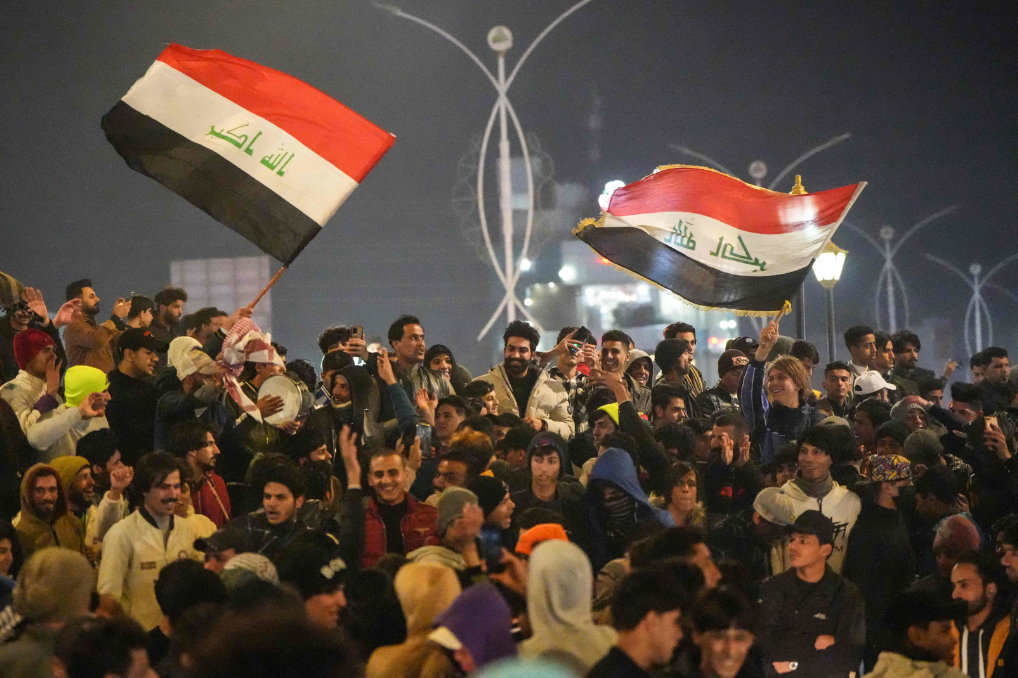
From Basra, Iraqis have painted a picture of a new future that could not be built without their neighbors’ support. Hosting the ongoing Gulf Cup football tournament is a chance for Iraqi citizens to show their true identity, away from what the global news agencies report.
The world has seen the image of the Iraqi man as a host, father, brother and neighbor instead of a criminal, murderer and militant, who are few among the people of Mesopotamia.
At the same time, the Khaleeji 25 event has restored Iraqis’ feeling that they are an essential component of the Arab world, far away from the terrorism of the Islamic Revolutionary Guard Corps and its extended hands.
The streets of Gulf Cup host city Basra have witnessed the seeds of Iraq’s return to its Arab base, which will increase its strength and independence, if nurtured. This could be the best way to decrease the Iranian influence in Iraq and the region.
The Iraqi masses have been keen to express their gratitude for hosting the tournament in Basra and have shown their readiness to build strong bridges. The message is crystal clear.
Would the regime in Tehran be pleased with that? What will the IRGC do to attempt to destroy this historic bond?
The simple answer would be, who cares? And here is why.
Iraqis have suffered from Arab isolation for decades, reflecting their desire to move to a new stage in their relations with neighboring countries.
The last Gulf Cup organized by Iraq was in 1979. Due to the political and military situations in the country, it did not happen again until 2023.
Iraqis’ increasing sense of belonging with Arab countries that share essential factors and solid historical ties will weaken the influence of the militias.
Iraq’s success in achieving integration with the Arab Gulf countries has created a new opportunity for economic, political and security improvements.
The Khaleeji 25 event has restored Iraqis’ feeling that they are an essential component of the Arab world.
Dalia Al-Aqidi
The Khaleeji 25 cup has ended the isolation that Iraq has been experiencing since its invasion of Kuwait in the early 1990s. After 2003, the regime may have been different, but the effect was similar.
The policies of successive post-2003 Iraqi governments and their links with Gulf countries were questionable and harmful due to the Iranian influence.
When do you know it is the right time for Iraqis to make up their minds and return to what they once knew and loved? When the Iranian regime creates a crisis to disrupt this massive national celebration.
In the presence of Iraqi, Arab and global audiences, Iraqi Prime Minister Mohammed Shia Al-Sudani used the term “Arabian Gulf” during the tournament’s inauguration at the Palm Trunk Stadium in Basra. And on Jan. 6, Shiite cleric Muqtada Al-Sadr welcomed, on Twitter, Iraq’s guests from the “Arabian Gulf countries.”
The Iranian regime was outraged at the Arabizing of what it calls the Persian Gulf at a football tournament, even though the Khaleeji Cup was established in 1970 with the same title.
It was dissatisfactory for Tehran to see the people of Iraq starting to drift away from their pro-Iran governments and open their arms to their Gulf neighbors.
If there is a genuine Gulf desire to help Iraq and legally limit Iran’s influence in the region, it should take advantage of these exceptional circumstances and build on them.
The countries of the Gulf Cooperation Council should start expanding their investment projects within the controls and borders that are consistent with international law and do not violate the embargo imposed on Iranian and Iraqi companies, personalities and institutions.
They should create a committee to investigate, study and approve projects to filter all proposals and ensure that the companies involved have no ties to domestic or international terrorist groups or personalities.
Only then would Iraqis be able to neutralize Iran inside their country, which would positively impact the political and electoral systems. Let Iran remain a neighbor that may be useful and sincere when its tools are terminated from within Iraqi society. It only takes faith and determination.
• Dalia Al-Aqidi is a senior fellow at the Center for Security Policy.
Twitter: @DaliaAlAqidi