



ISLAMABAD: A Pakistani woman embarked on a mission to transform the lives of special needs children in Saudi Arabia by establishing a center in Jeddah that offers specialized training and therapies, with the aim of empowering these children to independently navigate their lives within society.
Originally from Karachi, Faiza Abdulaziz relocated to Saudi Arabia with her father in the 1970s when she was just two years old. In 2013, she founded the Independent Learning Center (ILC) for children, which was registered with the Saudi Ministry of Social Affairs as a nonprofit entity.
The ILC provides programs in three languages — English, Urdu, and Arabic — to accommodate children from both local and diaspora communities who are dealing with developmental delays, hyperactivity, and Autism, all of which can impact their learning abilities.
“We provide Autism intervention therapy, speech and language therapy, school readiness program, social skills training, academic support, parental training and other such help to children with special needs and their families,” said Abdulaziz, the founding CEO of the organization, speaking with Arab News over the phone from Jeddah.
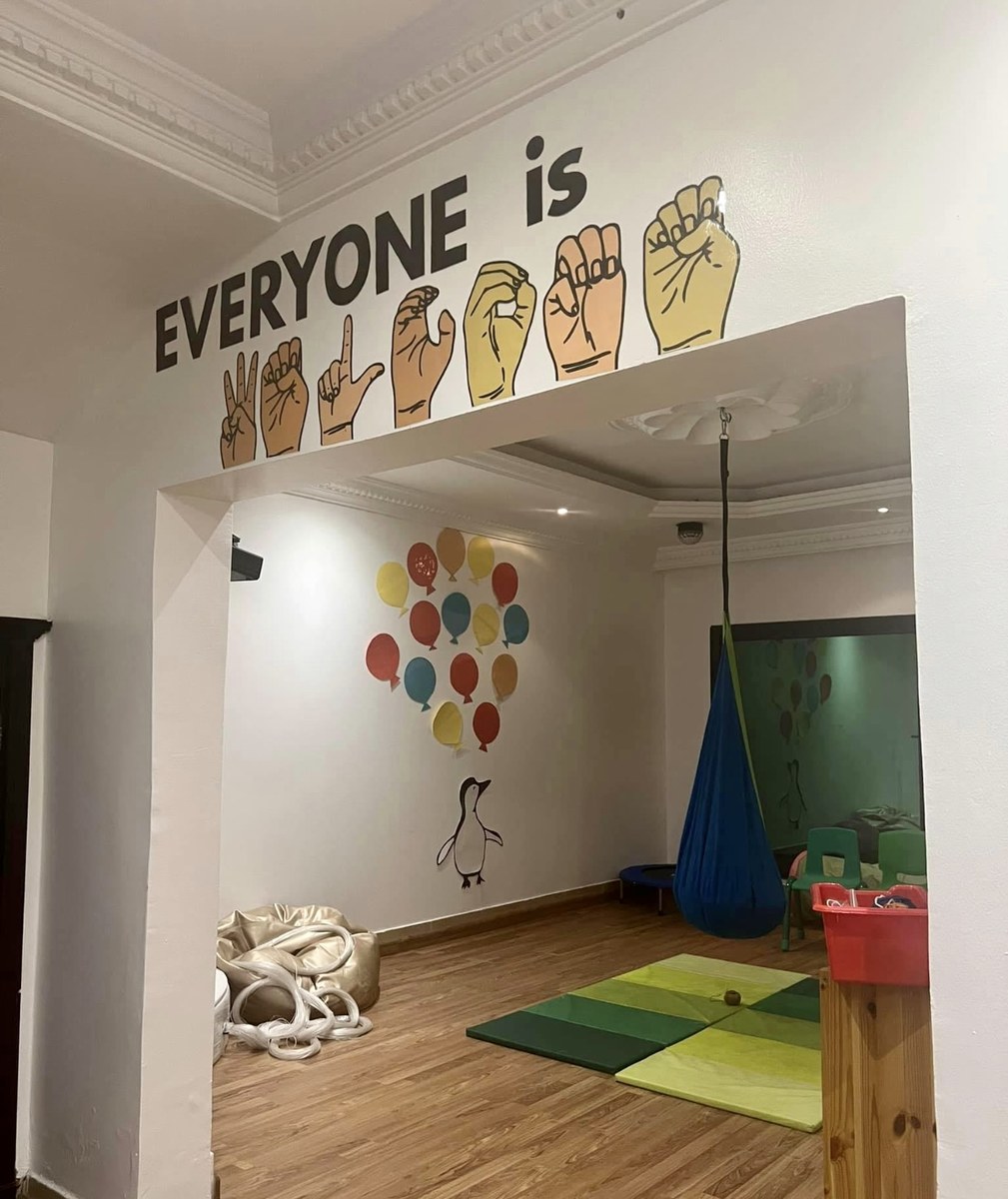
The undated picture shows a wall of the Independent Learning Center in Jeddah, Saudi Arabia. (Photo coutesy: Faiza Abdulaziz)
Her journey toward understanding the needs of special children began when she started working at another facility in 2007. During this phase, she underwent training to effectively engage with these children.
Abdulaziz noted that numerous expatriate families — primarily Pakistani workers — reached out to her in those days. They were challenged by meeting their children’s needs at local Saudi centers due to factors such as high costs, hygiene standards at home, language barriers, communication issues, and other requirements.
“These families kept approaching me, seeking help for their children,” she continued.
“In 2010, I initiated evening training sessions for children of those expatriate families who could only afford up to 300 Saudi Riyal per month,” she added. “In 2013, recognizing the need for different therapies for these children and training for their parents to make changes at home, I started an independent learning center.”

The undated picture shows a child at Faiza Abdulaziz's Independent Learning Center in Jeddah, Saudi Arabia. (Photo coutesy: Faiza Abdulaziz)
One of her friends, possessing a university degree in applied psychology, volunteered to help, and over time, they brought in more professionals.
Abdulaziz mentioned that she collaborated with local Saudi nationals to operate the center as a registered entity until last year, as she did not have her own license.
“Due to recent changes under Saudi Arabia’s Vision 2030, I applied for my own license as a foreigner in June 2022 and obtained it,” she said.
This allowed her to bring the center entirely under her own control.
Asked about the predominant nationalities of children attending the ILC, she stated that a majority of them were from Pakistan, India, and other countries.
“Currently, we have 42 registered children, because our capacity is around 40-45 children, but we intend to expand it in the future,” she added.

The undated picture of a child playing a board game at the Independent Learning Center in Jeddah, Saudi Arabia. (Photo coutesy: Faiza Abdulaziz)
Abdulaziz emphasized that her center offered continuous training and therapy programs to help these children develop into individuals capable of meeting their basic needs independently.
“Autism is not something that can be cured,” she pointed out. “It’s a neurological disorder. Therefore, we provide constant training and therapy programs to these children.”
Responding to a question about the fee structure, she explained the center determined it based on the economic background of a family.
“One significant advancement is that since 2019, due to government policies, insurance companies in the kingdom now cover some therapies and autism-related expenses, but many families are unaware of these benefits, so we educate them about their insurance coverage to alleviate payment concerns,” she added.
Abdulaziz noted she had witnessed substantial changes in the kingdom since the introduction of Vision 2030.
“Women’s empowerment has improved, and the opportunities for women in various fields have expanded,” she said.





