- New Iraqi PM Ali Al-Zaidi faces mounting pressure to curb Iran-backed militias and reassure Washington
- Despite years of tension, analysts say Iraq remains too strategic for the US to walk away
DUBAI: On April 30, US President Donald Trump congratulated Ali Al-Zaidi on his nomination to be next prime minister of Iraq, saying that he hoped the new leader would lead his country in a renewal of its relationship with the US.
“We look forward to a strong, vibrant, and highly productive new relationship between Iraq and the United States,” Trump said in a post on Truth Social.
It was the latest communication from the US president highlighting a relationship that has for decades been viewed through conflict, and more recently has become a focal point of the US conflict with Iran.
Iraq’s geopolitical position, wedged between Tehran and Washington, strategically, militarily and politically is seen by some as an asset but has caused others in the halls of Congress to question whether US interests continue to be served through its patronage.
Iraq has evolved into a central battleground where Washington and Tehran compete for regional dominance. While the US provided the framework for the post-Saddam Hussein political order and remains a critical security partner through the 2008 Strategic Framework Agreement, Tehran has successfully exploited the resulting power vacuum to exert a chokehold over Iraqi decision-making.
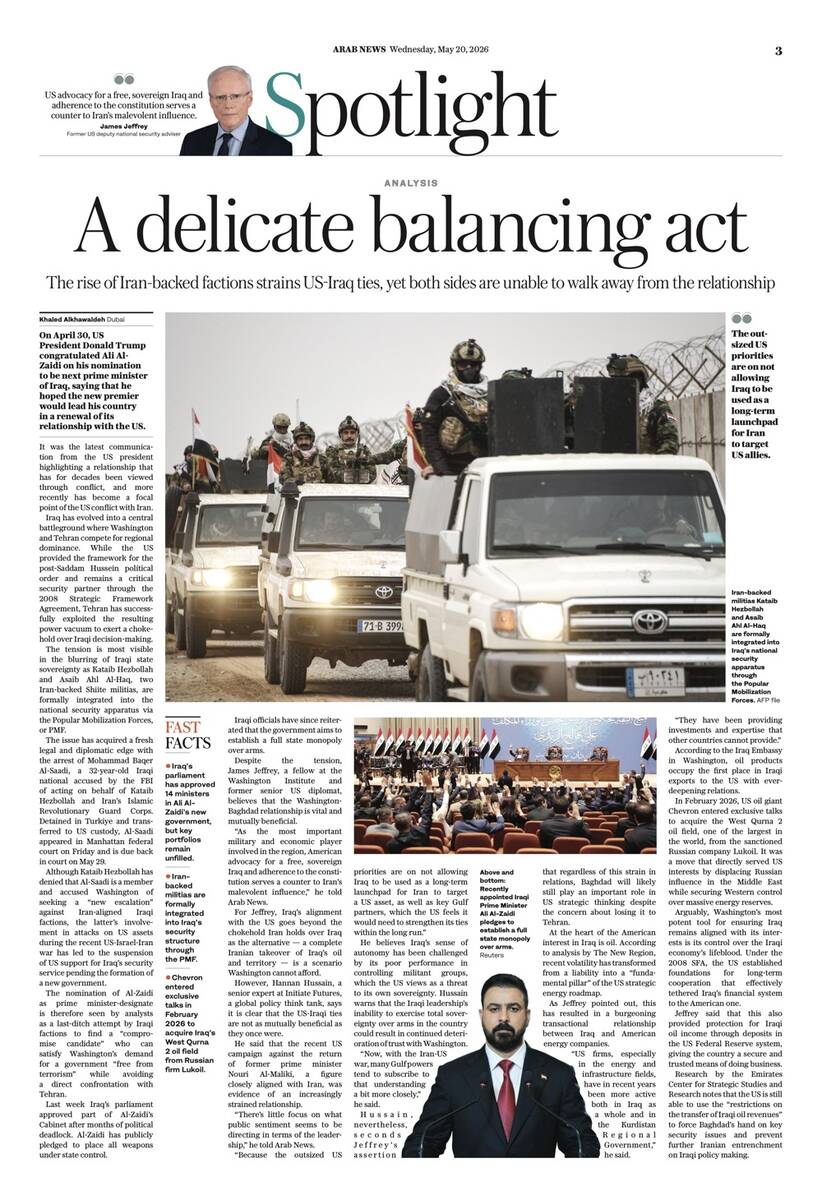
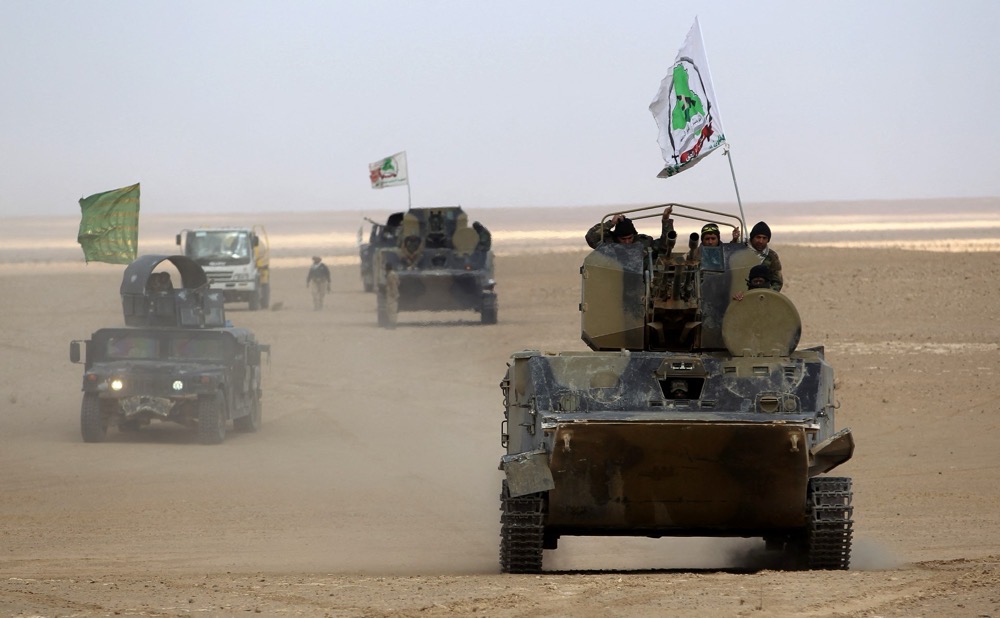
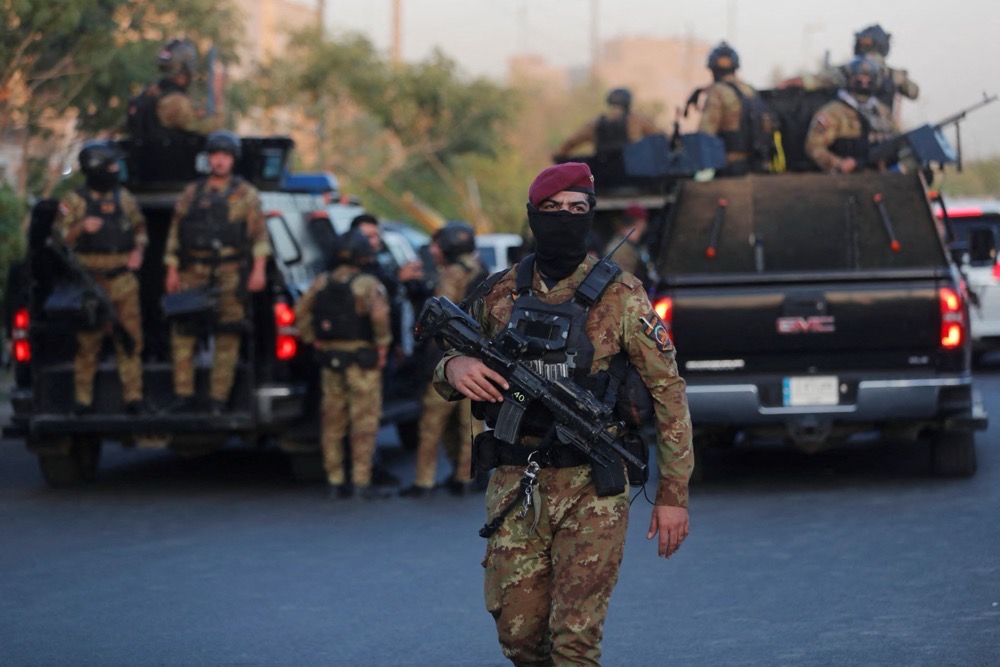
The tension is most visible in the blurring of Iraqi state sovereignty as Kataib Hezbollah and Asaib Ahl Al-Haq, two Iran-backed Shiite militias, are formally integrated into the national security apparatus via the Popular Mobilization Forces, or PMF.
The issue has acquired a fresh legal and diplomatic edge with the arrest of Mohammad Baqer Al-Saadi, a 32-year-old Iraqi national accused by the FBI of acting on behalf of Kataib Hezbollah and Iran’s Islamic Revolutionary Guard Corps. Detained in Turkiye and transferred to US custody, Al-Saadi appeared in Manhattan federal court on Friday and is due back in court on May 29.
Although Kataib Hezbollah has denied that Al-Saadi is a member and accused Washington of seeking a “new escalation” against Iran-aligned Iraqi factions, the latter’s involvement in attacks on US assets during the recent US-Israel-Iran war has led to the suspension of US support for Iraq’s security service pending the formation of a new government.
The nomination of Al-Zaidi as prime minister-designate is therefore seen by analysts as a last-ditch attempt by Iraqi factions to find a “compromise candidate” who can satisfy Washington’s demand for a government “free from terrorism” while avoiding a direct confrontation with Tehran.
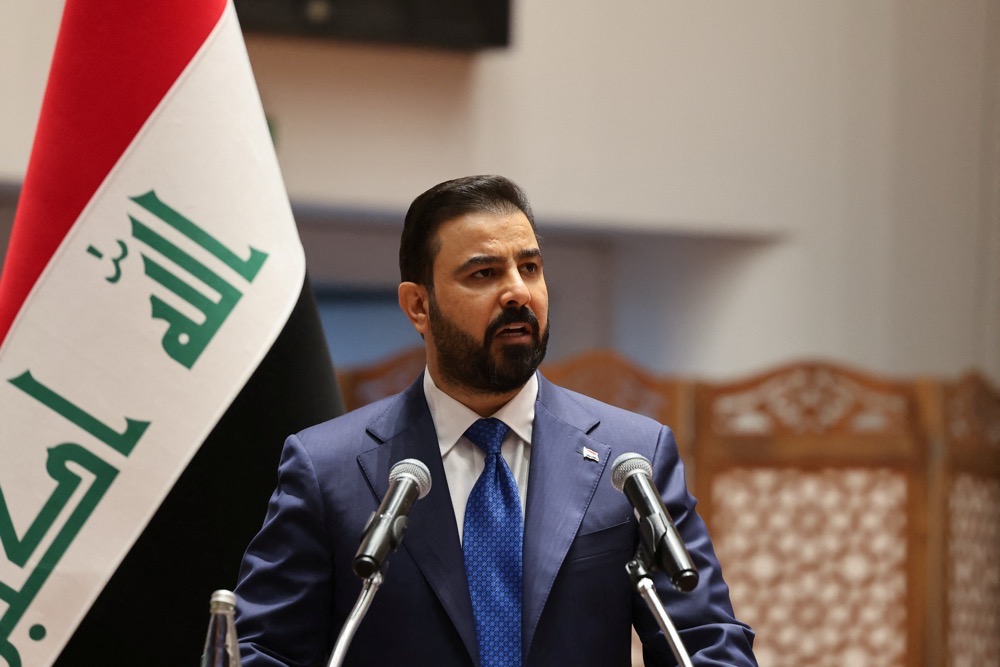
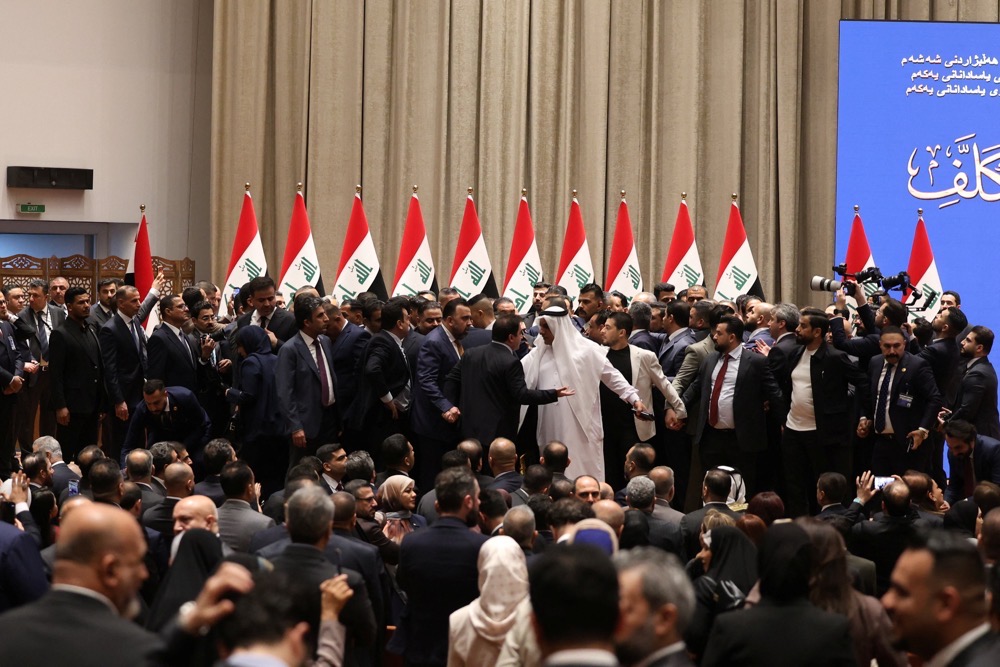
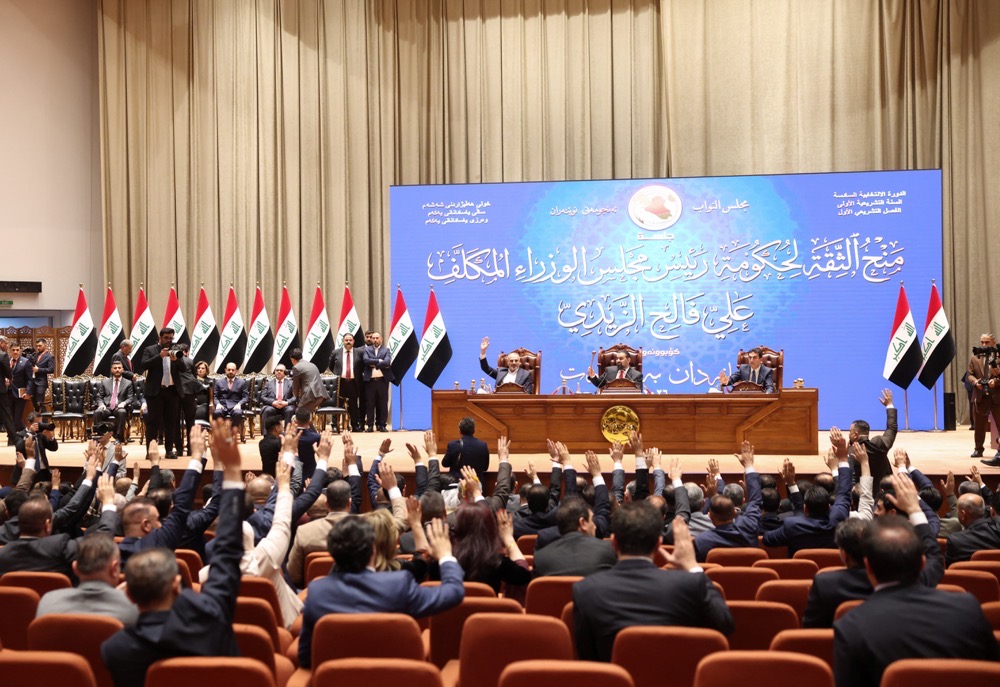
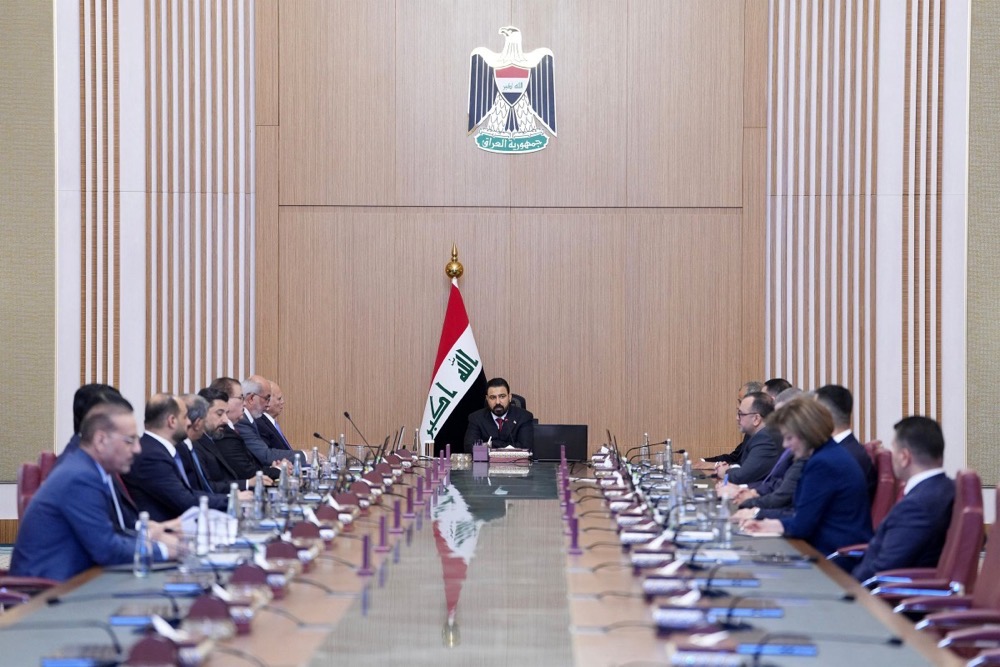
The urgency of that balancing act has only intensified in recent days. Last week Iraq’s parliament approved part of Al-Zaidi’s Cabinet after months of political deadlock, although key ministries including defense and interior remain unresolved amid disputes over candidates linked to armed factions.
Al-Zaidi has publicly pledged to place all weapons under state control — a move widely interpreted as an attempt to reassure Washington while avoiding a rupture with the Iran-backed groups.
Iraqi officials have since reiterated that the government aims to establish a full state monopoly over arms, even as analysts caution that translating those promises into action will be extraordinarily difficult given mounting US pressure for disarmament and Iran’s determination to preserve its regional network of allies.
Despite the tension, James Jeffrey, a fellow at the Washington Institute and former senior US diplomat, believes that the Washington-Baghdad relationship is vital and mutually beneficial.
“As the most important military and economic player involved in the region, American advocacy for a free, sovereign Iraq and adherence to the constitution serves a counter to Iran’s malevolent influence,” he told Arab News.
For Jeffrey, Iraq’s alignment with the US goes beyond the chokehold Iran holds over Iraq as the alternative — a complete Iranian takeover of Iraq’s oil and territory — is a scenario Washington cannot afford.
He said that the bilateral 2008 Strategic Framework Agreement between the two countries was designed to provide a guarantee for US interests in Iraq, and that goal remains the “north star” for American policy.
However, Hannan Hussain, a senior expert at Initiate Futures, a global policy think tank, says it is clear that the US-Iraqi ties are not as mutually beneficial as they once were. He said that the recent US campaign against the return of former prime minister Nouri Al-Maliki, a figure closely aligned with Iran, was evidence of an increasingly strained relationship.
“There’s little focus on what public sentiment seems to be directing in terms of the leadership,” he told Arab News.
“Because the outsized US priorities are on not allowing Iraq to be used as a long-term launchpad for Iran to target a US asset, as well as key Gulf partners, which the US feels it would need to strengthen its ties within the long run.”
He believes Iraq’s sense of autonomy has been challenged by its poor performance in controlling militant groups, which the US views as a threat to its own sovereignty. Hussain warns that the Iraqi leadership’s inability to exercise total sovereignty over arms in the country could result in continued deterioration of trust with Washington.
“Now, with the Iran-US war, many Gulf powers tend to subscribe to that understanding a bit more closely,” he said.
Hussain, nevertheless, seconds Jeffrey’s assertion that regardless of this strain in relations, Baghdad will likely still play an important role in US strategic thinking despite the concern about losing it to Tehran.
“The US would obviously want, from its perspective, not to cede much ground to Iran. Much of that also translates into the US trying to maintain a strong posture and a victorious narrative around this entire round war,” he said.
“Iraq, no matter which leadership comes into play, simply cannot ignore US interests in the region. So, I think that turns out to be long-term constraint, where both sides will have to look for compromises and deal with protracted spells of distrust. But doing away with cooperation completely is something is still a far cry and an afterthought.”
At the heart of the American interest in Iraq is oil. According to analysis by The New Region, a digital news platform and media outlet headquartered in Iraq, recent volatility has transformed from a liability into a “fundamental pillar” of the US strategic energy roadmap.
As Jeffrey pointed out, this has resulted in a burgeoning transactional relationship between Iraq and American energy companies who have won many of the contracts to redevelop the country’s vast energy reserves.
“US firms, especially in the energy and infrastructure fields, have in recent years been more active both in Iraq as a whole and in the Kurdistan Regional Government,” he said.
“They have been providing investments and expertise that other countries cannot provide.”
According to the Iraq Embassy in Washington, oil products occupy the first place in Iraqi exports to the US with ever-deepening relations.
In February 2026, US oil giant Chevron entered exclusive talks to acquire the West Qurna 2 oil field, one of the largest in the world, from the sanctioned Russian company Lukoil.
It was a move that directly served US interests by displacing Russian influence in the Middle East while securing Western control over massive energy reserves.
Arguably, Washington’s most potent tool for ensuring Iraq remains aligned with its interests is its control over the Iraqi economy’s lifeblood. Under the 2008 SFA, the US established foundations for long-term cooperation that effectively tethered Iraq’s financial system to the American one.
Jeffrey said that this also provided protection for Iraqi oil income through deposits in the US Federal Reserve system, giving the country a secure and trusted means of doing business.
Research by the Emirates Center for Strategic Studies and Research notes that the US is still able to use the “restrictions on the transfer of Iraqi oil revenues” to force Baghdad’s hand on key security issues and prevent further Iranian entrenchment on Iraqi policy making.
For Washington, the strategic friction is a price worth paying to maintain its anchor in the heart of the Middle East. As Initiate Futures’ Hannan puts it, with many levers still available to it, and amid a simmering coflict with Tehran, Iraq is likely to remain part of US regional thinking for some time.
“I think there’s going to be cautious optimism, optimism on the front that, despite all of its recent — I would say contested reception in Washington — Iraq still remains a very pivotal player in terms of Washington’s long-term security engagement,” Hannan said, as Iraq’s new government navigates growing US demands for reform while containing pressure from powerful Iran-backed factions.