- Vision 2030 goals to increase female workforce participation in spotlight
- Business, government, investment, tech, policy leaders represented
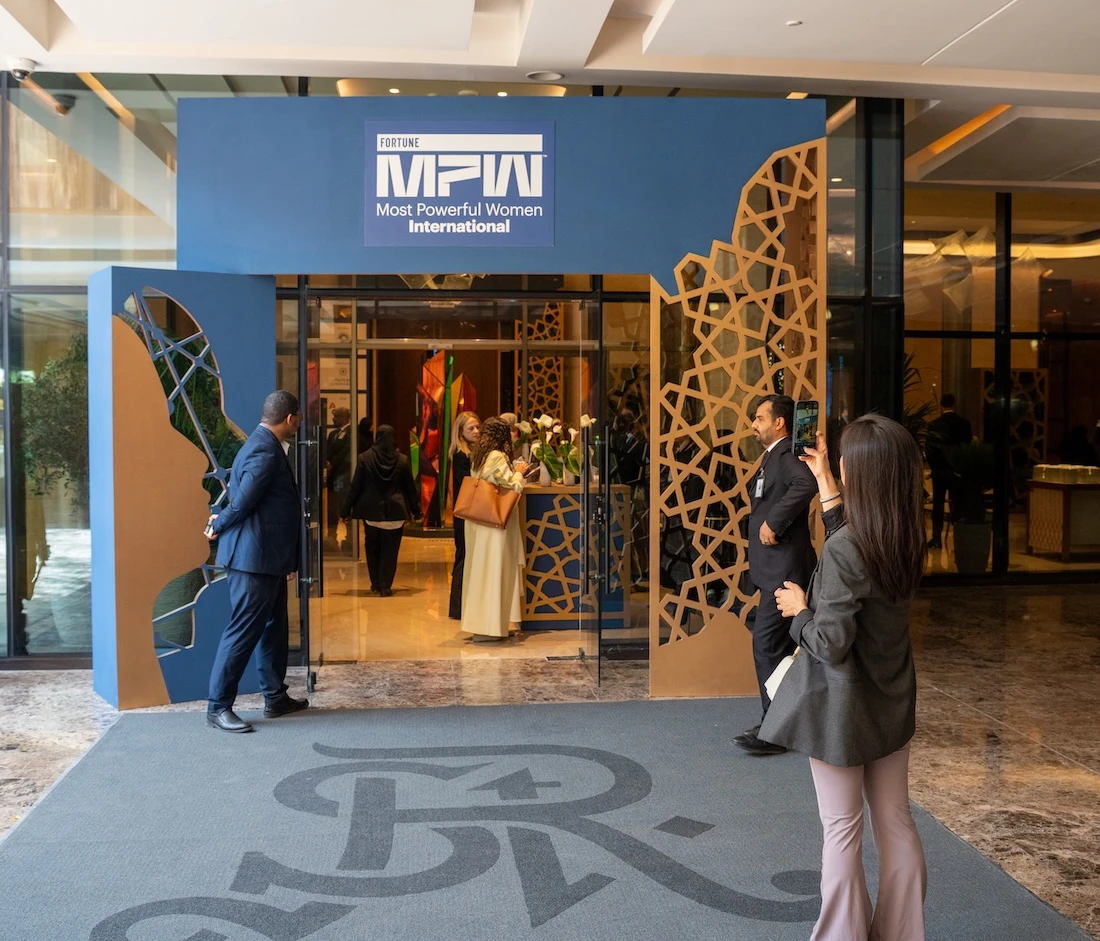
RIYADH: The first Fortune Most Powerful Women International summit in the Middle East convened in Riyadh this week.
The event brought together a global network of female leaders from business, government, investment, tech and policy sectors.
“As women, we often find ourselves needing to prove our capabilities more when it comes to our careers,” said Dr. Giovanna Carnevali, executive director of master planning at ROSHN Group.
“At the same time, we bring deep passion to our work and put our heart and soul into everything we do. I always say that what truly matters is letting your work speak for you.”
Speaking to Arab News during the event, Carnevali said her career in Saudi Arabia reflected the country’s transformation.
“The experiences I have had here are unique. Living and working in the Kingdom has been a continuous journey of growth, and I am truly grateful for what the country has offered me and to women more broadly,” she said.
From geopolitics and sustainability to artificial intelligence and banking, the forum’s sessions highlighted how Saudi Arabia — and its women — are reshaping the global conversation on leadership.
Lubna Olayan, chair of Saudi Awwal Bank, talked about how Vision 2030 had already surpassed its workforce target for women and called for greater ambitions.
“We need to set a new benchmark,” she told moderator Diane Brady. “In my company, we now have 36 percent women. When we started hiring women in 2001, there was just one.”
Olayan, the first Saudi woman to chair a bank and join a public board, said real progress depended on investment in leadership.
“We need to bring more women into decision-making roles. If the candidates are equal, I’ll back the woman — because we’re still behind,” she added.
Technology was another recurring topic. Prof. Lilac Al-Safadi, CEO of IKONIC Educational Holding, outlined Saudi Arabia’s position as an emerging AI powerhouse.
“The Kingdom has trained more than 60,000 AI professionals and launched the world’s first cognitive city — not just smart, but fully AI-integrated,” she said.
And Ellie Rubenstein, co-founder of Manna Tree and one of the first US food investors to enter the Saudi market, said demand in her sector was shifting fast: “Seven years ago, we were seen as a food security fund. Today, it’s about wellness. The consumers here — especially women — are driving that shift.”
She emphasized the importance of understanding what women wanted: “It’s not just about selling products. Brands need to speak to values — wellness, empowerment, sustainability. Women here are not just shaping their families. They’re shaping their country.”