- Kingdom takes decisive steps to secure water availability for future generations
RIYADH: Saudi Arabia is confronting one of the world’s most urgent environmental challenges: water scarcity.
Faced with limited natural freshwater resources and a rapidly expanding population, the Kingdom is taking decisive steps to secure water availability for future generations.
Central to this ambitious transformation is a strategic focus on the “Three As” of water management: availability, accessibility, and affordability.
In recent years, Saudi Arabia has become a global leader in water desalination, investing heavily in cutting-edge technologies and large-scale infrastructure projects.
These efforts are not only reshaping the nation’s water landscape but also setting an example for other arid regions grappling with similar issues.
Speaking to Arab News, Tariq Nada, executive vice president of the Center of Excellence at ACWA Power, highlighted the Kingdom’s dominant role in the water sector.
“The Kingdom’s current desalinated water supply capacity stands at over 12 million m3/day with a target to reach approximately 20 million m3/day by 2030,” Nada explained.
He further noted: “As of 2024, the Kingdom had committed $6.28 billion in ongoing projects focused on water distribution, water treatment plants, wastewater collection projects and wastewater treatment plants.”
Nick Strange, principal at Arthur D. Little, pointed out Saudi Arabia’s massive achievements over the past five decades.
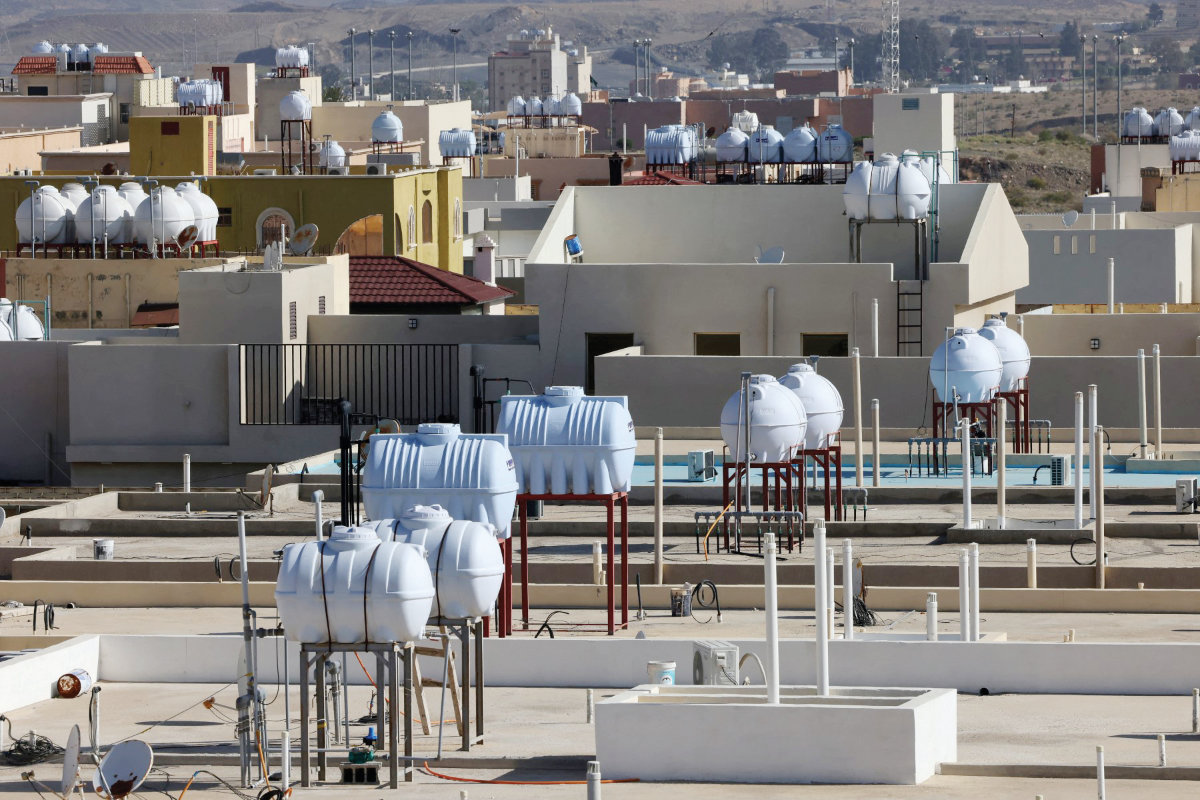
“The country plans to more than double its desalination capacity to around 20 million m³/d by 2030. New mega plants are under development in strategic locations including the Eastern Province, Makkah, Jazan and Madinah (regions). In parallel, the transmission network will also be expanded in scale and reach to accommodate the growing demand and new production hubs,” he told Arab News.
Strange added: “However, the Kingdom is not relying on desalination alone. Recognizing the importance of water sustainability, Saudi Arabia is also accelerating efforts in wastewater treatment and reuse. Current treated water capacity is 6-7 million m³/d, with approximately 30 percent being utilized.”
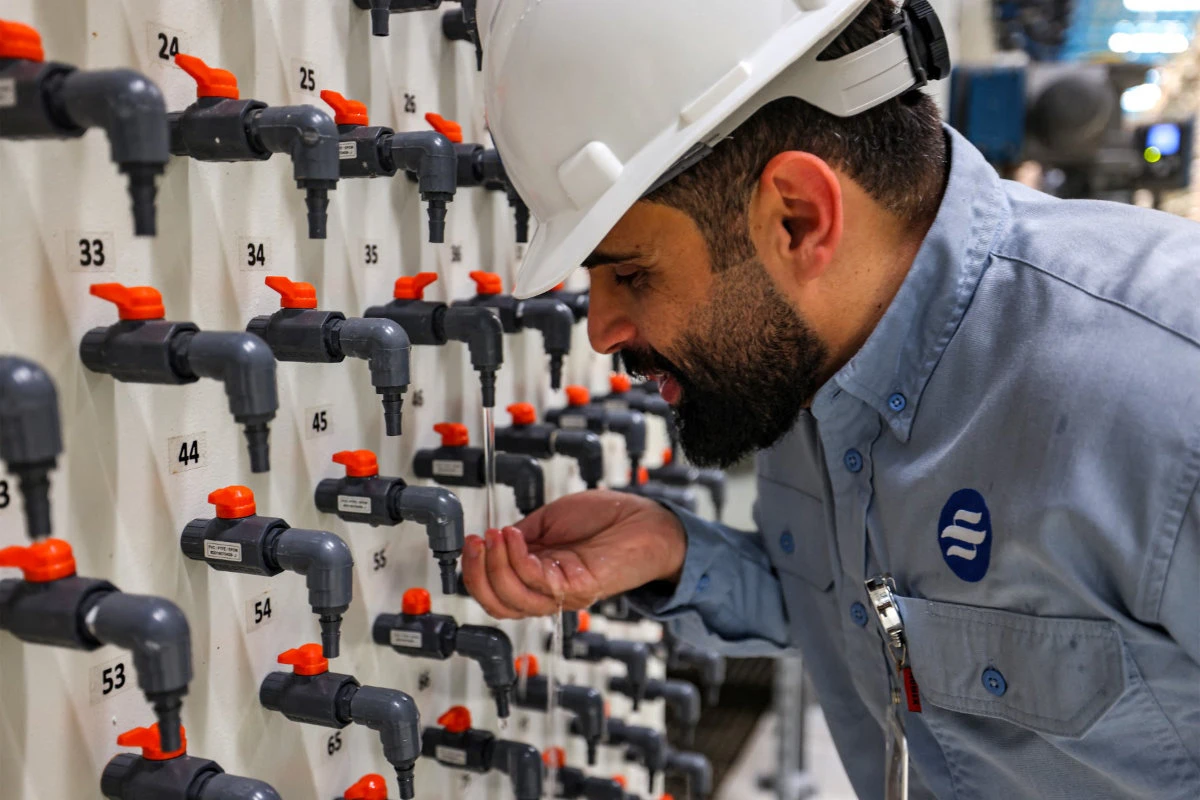
Saudi Arabia’s approach includes deploying advanced, energy-efficient technologies such as reverse osmosis systems and integrating renewable energy sources into desalination and wastewater treatment plants.
Meanwhile, the reuse of treated wastewater is gaining momentum as part of a wider push for sustainable resource management.
Public-private partnerships have been instrumental in driving this transformation, accelerating investments and expediting the development of critical infrastructure.
Nicolas Boukhalil, PwC Middle East’s energy, resources and sustainability deals leader, emphasized the benefits of opening the sector to international competition.
HIGHLIGHTS
• Saudi Arabia is poised to make major strides in water infrastructure, innovation, and resource management — key to securing supplies, boosting the economy, and advancing Vision 2030.
• Saudi Arabia’s approach includes deploying advanced, energy-efficient technologies such as reverse osmosis systems and integrating renewable energy sources into desalination and wastewater treatment plants.
“These partnerships are introducing new technology, improving efficiency, and making water more affordable for homes, businesses, and farmers alike. The result: a more sustainable financial model that eases pressure on public budgets and supports long-term economic growth,” he said.
He also stressed the importance of distribution networks, stating, “Producing water is only half the battle, getting it where it’s needed is just as critical. That’s why major investments are also going into water transmission networks, storage reservoirs, and smart management systems.”
Hani Tohme, partner and Middle East and Africa sustainability lead at Kearney, shed light on the current wastewater situation.
“Saudi Arabia treats over 6.5 million cubic meters of municipal wastewater each day, yet only around 25 percent of that is reused, with wastewater network coverage reaching approximately 65 percent,” he said.
The National Water Strategy aims to boost treatment and reuse significantly by 2030 — targeting treatment of up to 10 million cubic meters daily and reuse rates of 70 percent.
Tohme explained: “This enables groundwater preservation, supports industrial and agricultural reuse, and reduces dependency on energy-intensive desalination — which still provides 60 percent of urban water supply today.”
Enhancing water security
Saudi Arabia’s expansion of desalination and water purification is a cornerstone of Vision 2030, reinforcing national water security and the Kingdom’s broader transformation goals.
Nada from ACWA Power sees investment in advanced desalination as a critical response to water scarcity that also promotes economic growth through job creation and industry development.
“Since its inception, ACWA Power has consistently been an early adopter of new technologies, in full cooperation and collaboration with the full ecosystem, led by KSA Water offtaker, SWPC, achieving 87 percent reduction in specific power consumption over the last decade. This commitment to innovation is reflected in the company’s ongoing efforts to integrate sustainable and cost-effective water solutions,” Nada said.
From Arthur D. Little’s perspective, these initiatives boost economic diversification and elevate Saudi firms globally.

The Kingdom’s current desalinated water supply capacity stands at over 12 million m3/day with a target to reach approximately 20 million m3/day by 2030.
Tariq Nada, executive vice president of the Center of Excellence at ACWA Power
“For businesses, this presents significant opportunities across engineering, clean technology, and supply chain localization — while for the nation, it reinforces resilience, global competitiveness, and leadership in addressing one of the 21st century’s most pressing challenges: the sustainable management of water,” Strange explained.
PwC also notes the alignment between the Kingdom’s water strategy and Vision 2030’s goals of economic diversification and sustainability.
“As global demand for desalination and sustainable water solutions rises, Saudi Arabia has the tools, talent, and ambition to become a world leader in water technology, creating new revenue streams while solving a shared global issue,” Boukhalil said. Kearney’s Tohme emphasized the wastewater sector’s growing role in attracting private investment.
“For businesses, this creates significant opportunities in EPC contracting, localization of technologies including membrane technologies, operations and maintenance, and treated water offtake agreements, particularly in industrial zones and giga developments,” he said.
Evolution of water purification
In 2025, Saudi Arabia is poised to make major strides in water infrastructure, innovation, and resource management — key to securing supplies, boosting the economy, and advancing Vision 2030.
Highlighting upcoming developments, Nada said: “In 2025, we anticipate an increased integration of renewable energy, with water desalination plants increasingly powered by solar energy and battery energy storage systems, further reducing their environmental impact and operational costs.”
He added: “We also expect to see a rise in the deployment of advanced membrane technologies, where next-generation membrane technologies will improve the efficiency and effectiveness of RO plants, reducing energy consumption and increasing water recovery rates.”
Nada also pointed to the role of digital technologies: “Digital technologies, such as AI, including machine learning, (will) enable real-time monitoring, optimization, and predictive maintenance of water purification plants.”
Kearney’s Tohme foresees three major shifts by 2025. He expects accelerated deployment of decentralized purification plants in underserved and remote areas, adoption of digital twins and predictive maintenance technologies to reduce operational costs and non-revenue water, and the strategic integration of treated water into agriculture and district cooling systems.
He concluded: “These trends are not just technical — they enhance Saudi Arabia’s economic resilience by separating water supply from climate stress.”