
Global Markets — stocks rise, yields fall as Powell opens door to September rate cut

Global Markets — stocks rise, yields fall as Powell opens door to September rate cut
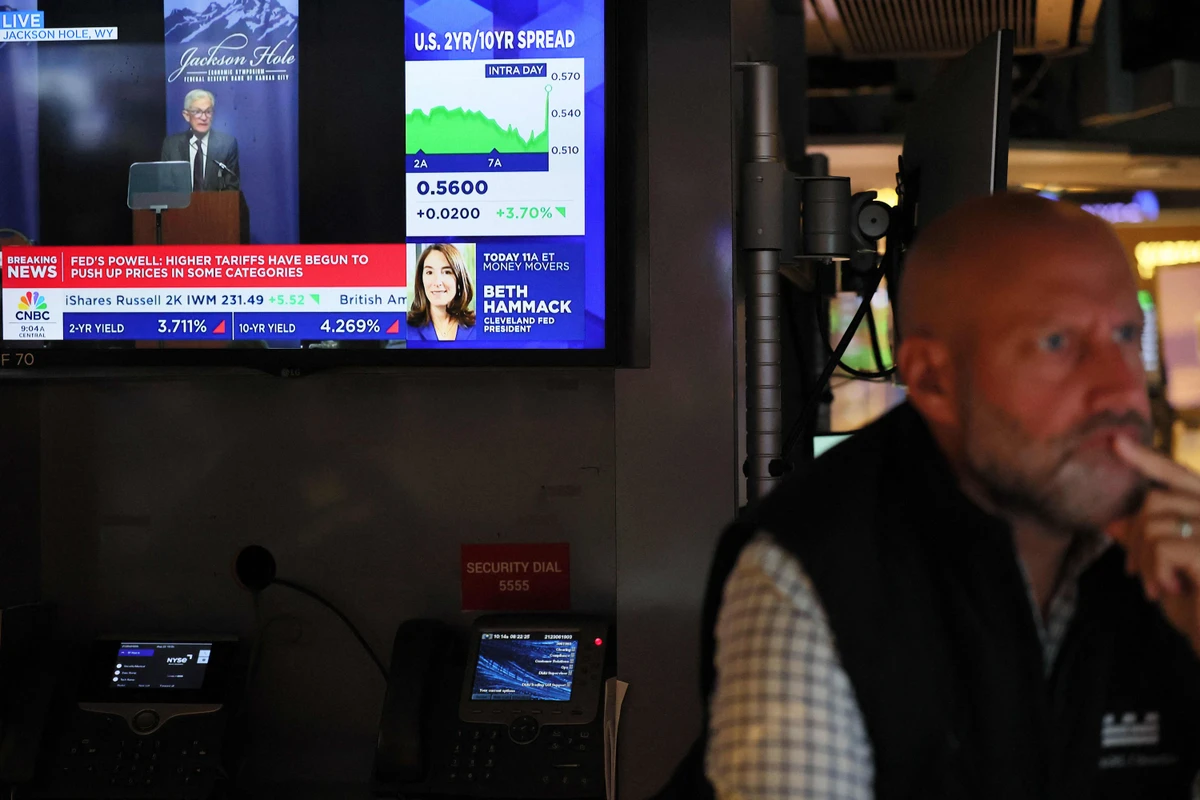
Federal Reserve Chair Jerome Powell speech is displayed on a television as traders work on the floor of the New York Stock Exchange during morning trading on August 22, 2025 in New York City. Getty Images via AFP
Short Url
Updated 22 August 2025
Follow

Global Markets — stocks rise, yields fall as Powell opens door to September rate cut

Global Markets — stocks rise, yields fall as Powell opens door to September rate cut

LONDON: Stocks rose and US Treasury yields and the dollar fell on Friday after Federal Reserve chair Jerome Powell pointed to a possible rate cut at the central bank’s September meeting.

Powell stopped short of committing to cutting interest rates as he tried to walk a narrow line acknowledging growing risks to the job market while also saying risks of higher inflation remain.

His remarks, to the annual central banking symposium at Jackson Hole, are his final address as chair of the Fed.

Share markets rallied in response to Powell’s speech, and the S&P 500 and Nasdaq Composite rose 1.4 percent and 1.6 percent respectively. The Dow Jones Industrial Average rose 1.6 percent to a record intraday high.

Government bonds also welcomed the news with the rate-sensitive two-year Treasury yield down nearly 10 basis points at 3.69 percent. Benchmark 10-year yields fell 6 bps to 4.27 percent.

Powell’s past speeches at the event have often moved markets, and this year’s remarks are under particularly close scrutiny as his position has come under heavy criticism from US President Donald Trump, sparking concerns about potential threats to the Fed’s independence.

His comments open the door to a rate cut at the Fed’s Sept. 16-17 meeting, and while he put heavy weight on jobs and inflation reports that will be received before then, analysts said Powell appeared to be putting greater weight on the former.

“Chair Powell was able to talk about the balance of risk shifting and therefore the potential of shifting of policy would be appropriate,” said Art Hogan, chief market strategist, B. Riley Wealth.

“That’s a clear hint that Chair Powell is open to supporting rate cuts in the future.”

But he offered little guidance about how soon or how quickly rates might continue to move lower, likely stoking further pressure from Trump, who contends there is no risk of inflation and that the Fed should slash rates immediately.

European markets echoed the moves by their US peers, but in a more muted manner.

Europe’s broad STOXX 600 index was last up 0.6 percent, while Germany’s 10-year yield, the euro zone benchmark, was down 3 bps at 2.72 percent.

The comparatively larger fall in US yields weighed on the dollar, which was down 0.7 percent on the Japanese yen at 147.3 yen.

The euro rose 0.64 percent to $1.1683.

China tech

Earlier in the day, the focus was on Chinese shares and the CSI 300 Index gained 2.1 percent, after DeepSeek released an upgrade to its flagship V3 AI model and Reuters reported that Nvidia had asked Foxconn to suspend work on the H20 AI chip, lending support to Chinese rivals.

Tech stocks listed in Hong Kong rose 2.7 percent.

Also in Asia, Japanese data showed core consumer prices slowed for a second straight month in July but stayed above the central bank’s 2 percent target, keeping alive expectations for a rate hike in the coming months.

Riyadh office rents surge 15% as reforms boost Saudi property market: CBRE 

Riyadh office rents surge 15% as reforms boost Saudi property market: CBRE 
Updated 1 min 9 sec ago
Follow

Riyadh office rents surge 15% as reforms boost Saudi property market: CBRE 

Riyadh office rents surge 15% as reforms boost Saudi property market: CBRE 

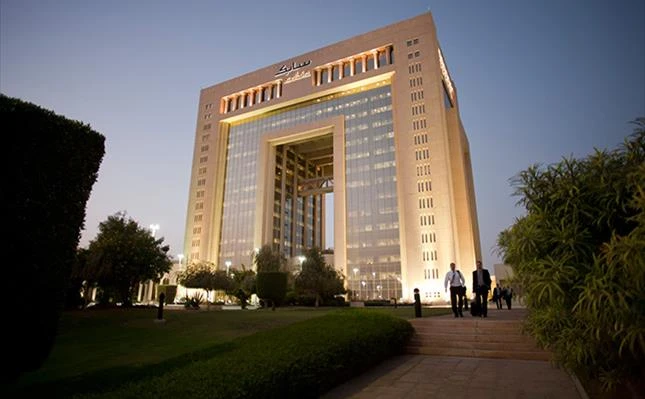
RIYADH: Saudi Arabia’s ongoing economic diversification push is energizing its property market, with office rents in Riyadh climbing 15 percent year on year and occupancy hitting 98 percent, CBRE said. 

Backed by $1.55 trillion in potential long-term investments and major reforms such as the expanded white land tax and a five-year rent freeze. 

In its Q3 2025 Saudi Arabia Real Estate Market Review, CBRE said the office sector continues to drive momentum, buoyed by the Kingdom’s non-oil economic expansion and an influx of multinational companies relocating regional headquarters to Riyadh. 

Strengthening the property market is central to Vision 2030, as the Kingdom works to position itself as a global business and tourism hub. The Real Estate General Authority forecasts the sector will reach $101.6 billion by 2029, expanding at an 8 percent compound annual growth rate from 2024. 

Matthew Green, head of research at CBRE for the Middle East and North Africa region, said: “Saudi Arabia’s real estate market is currently moving through a major transformation phase, amidst significant regulatory reforms, and sustained strategic investments, creating a dynamic environment for investors, developers, and occupiers alike.” 

According to the report, the Kingdom’s regional headquarters program is playing a key role in the office sector’s expansion, with 34 new licenses issued in the second quarter, bringing the total to 634. 

The initiative offers incentives including a 30-year corporate income tax exemption and withholding tax relief, along with regulatory support for multinationals operating in the Kingdom. 

Demand is strongest in the technology, financial, and health care sectors, with limited supply prompting some firms to secure office space through early pre-leasing arrangements, CBRE said. 

The King Abdullah Financial District remains at the center of Riyadh’s real estate expansion, with plans to double its footprint and accommodate 40,000 daily visitors. Infrastructure upgrades — including the reactivation of the 3.6-km monorail — are further enhancing KAFD’s appeal as a “10-minute city.” 

Policy interventions 

CBRE highlighted three major policy measures expected to boost the real estate sector’s growth trajectory. 

The new ownership law for non-Saudis, announced in July and set to take effect in January 2026, will open the market to foreign investors, supporting the Kingdom’s goal of attracting $100 billion in annual foreign direct investment by the end of the decade. 

The expanded white land tax, first announced in April and detailed in August, introduces a tiered rate structure targeting more than 411 million sq. meters of undeveloped land, aimed at curbing speculation and encouraging development. 

Additionally, the five-year rent freeze in Riyadh, effective since September, is expected to stabilize costs for residents and businesses, enhancing the capital’s competitiveness as a global business hub. 

“Saudi Arabia’s development pipeline remains vast, with $440 billion in committed projects and $1.55 trillion in potential long-term investments,” CBRE said, adding that giga-projects such as Neom and Qiddiya City dominate the pipeline. 

It added that Riyadh’s Expo 2030 preparations and municipal restructuring underscore a strategic push toward urban transformation. 

Residential, retail and hospitality sectors 

The report said residential transactions increased 17.9 percent quarter on quarter in the third quarter of 2025, reaching a total value of SR7.7 billion ($2.05 billion). 

In Riyadh, apartment prices rose 6.3 percent year on year in the third quarter, while villa prices increased by 11.6 percent over the same period. 

The retail sector’s performance was buoyed by stronger consumer spending so far this year, with sales volumes expected to grow at a compound annual rate of 4.4 percent through 2027. However, rental growth remained modest over the past 12 months, reflecting balanced market conditions.

Saudi Arabia’s retail pipeline includes 800,000 sq. meters of new space, with 100,000 sq. meters due by year-end. Major developments such as Westfield Riyadh, Bellevue Riyadh, and Avenues Mall are scheduled for completion between 2026 and 2027. 

In hospitality, revenue per available room rose 11 percent year on year in August, supported by an equivalent 11 percent increase in occupancy rates. 

In the industrial segment, Riyadh’s logistics rents continue to rise, led by Al Faisaliyah and Al Mashael districts, where rents reached SR299 per sq. meter per year. 

Jeddah’s Asfan submarket recorded the highest national rent at SR350 per sq. meter annually, despite more moderate growth overall.