Council of Europe says asylum policies may put lives in danger

Council of Europe says asylum policies may put lives in danger
The Council of Europe urged its 46 member states on Thursday not to outsource the processing of asylum seekers to third countries, saying these people risked being tortured or killed. (AFP/File)
Short Url
Updated 04 September 2025
Follow

Council of Europe says asylum policies may put lives in danger

Council of Europe says asylum policies may put lives in danger
  • Several European nations have begun outsourcing the handling of asylum seekers to countries outside the EU
  • “Externalization policies might result in people being subjected to torture,” said O’Flaherty

STRASBOURG, France: The Council of Europe urged its 46 member states on Thursday not to outsource the processing of asylum seekers to third countries, saying these people risked being tortured or killed.
Several European nations have begun outsourcing the handling of asylum seekers to countries outside the European Union.
They include Italy, whose hard-right government opened migrant reception centers in Albania that have now morphed into repatriation outfits.
“Externalization policies might result in people being subjected to torture or other ill-treatment, collective expulsions and arbitrary detention or may put their lives in danger,” said the Council of Europe’s Commissioner for Human Rights, Michael O’Flaherty.
“Such policies might also hinder effective access to asylum and deprive individuals of legal remedies,” he said.
A new report by the council — Europe’s human rights watchdog — identifies three areas in which risks are “particularly acute.”
These are “external processing of asylum claims; external return procedures..; and the outsourcing of border control to other countries, some of which have a documented history of serious violations against people on the move.”
Last month, the EU Court of Justice ruled in favor of Italian judges who had ordered the repatriation to Italy of asylum seekers expelled to Albania by Giorgia Meloni’s government.
In 2022, the European Court of Human Rights, which is part of the Council of Europe, blocked the transfer of asylum seekers from the UK to Rwanda.
Britain, which has since formally left the EU, has now set up an agreement with France that provides for asylum seekers to be sent back from the UK to France.
Four African countries — Eswatini, Rwanda, South Sudan and Uganda — have agreed to accept migrants expelled en masse from the United States by the administration of President Donald Trump.
El Salvador was the first Latin American country to accept migrants deported from the United States.
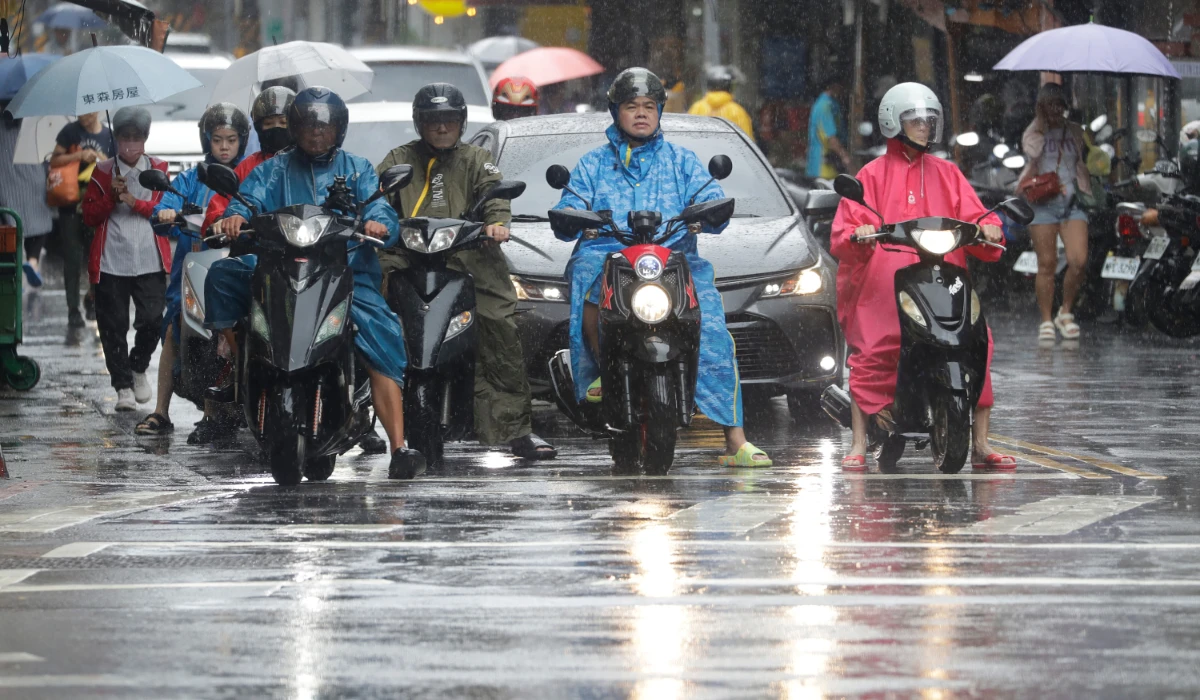

Philippines warns of deadly storm surges as massive Typhoon Fung-wong nears super typhoon strength

Philippines warns of deadly storm surges as massive Typhoon Fung-wong nears super typhoon strength
Updated 20 sec ago
Follow

Philippines warns of deadly storm surges as massive Typhoon Fung-wong nears super typhoon strength

Philippines warns of deadly storm surges as massive Typhoon Fung-wong nears super typhoon strength
  • The typhoon’s massive circulation, spanning 1,500 kilometers, is already lashing parts of eastern Philippines with heavy rains and winds
  • Weather forecaster urged residents in low-lying and coastal areas to evacuate to higher ground and halt all marine activities
MANILA: The Philippines’ weather bureau warned of life-threatening storm surges of up to five meters and destructive winds as Typhoon Fung-wong churns toward the country’s eastern coast, where it is forecast to intensify into a super typhoon before making landfall on Sunday night.
The typhoon’s massive circulation, spanning 1,500 kilometers (932 miles), is already lashing parts of eastern Philippines with heavy rains and winds, PAGASA weather forecaster Benison Estareja said in a briefing.
“It can cover almost the entire country,” Estareja said.
Fung-wong, locally named Uwan, is currently packing maximum sustained winds of 140 kph and gusts of up to 170 kph, and could intensify to 185 kph as it nears land, Estareja said, powerful enough to destroy homes, topple trees and structures.
Up to 200 mm of rainfall is expected in eastern Philippine provinces, particularly in the Bicol region, as well as parts of Samar, raising the risk of widespread flooding and landslides, while northern and central Luzon could see 100-200 mm rainfall during its passage.
PAGASA urged residents in low-lying and coastal areas to evacuate to higher ground and halt all marine activities, warning of destructive storm surges that could inundate coastal communities, and warned of violent winds.
Several local governments have suspended classes for Monday, and the Philippines’ flag carrier has canceled some flights, ahead of Fung-wong’s expected landfall.
The warning comes just days after Typhoon Kalmaegi left a trail of destruction across the region, ripping through coastal communities, toppling trees, and shredding roofs and windows.
Kalmaegi killed 204 people in the Philippines and five in Vietnam, displaced hundreds of thousands, and knocked out power across wide areas.
Vietnam’s disaster agency reported damage to nearly 2,800 homes, and said about 500,000 people remain without electricity. In the Philippines, raging floods destroyed homes and clogged streets with debris.
Vietnam and the Philippines are highly vulnerable to tropical storms and typhoons due to their locations along the Pacific typhoon belt, regularly experiencing damage and casualties during peak storm seasons.
In Thailand, Kalmaegi’s lingering impact caused heavy rain and localized flooding in parts of the northeast and central regions.
Scientists have warned that storms such as Kalmaegi are becoming more powerful as global temperatures rise.